
Alissa Link, MPH; Rachel Worman, PT, DPT, PhD; Nick Kavassalis; Liz Miracle, PT, MPT, PWCS; 2026
Executive Summary
Telehealth research in pelvic health rehabilitation has predominantly used a non-inferiority framework, evaluating whether virtual care can replicate in-person outcomes. This white paper reports a retrospective analysis of patient-reported outcomes and care utilization data from Origin, a multi-state pelvic health physical therapy practice, comparing in-person, hybrid, and virtual care delivery. We contextualize the quantitative findings with clinician views on the perceived strengths of each care setting.
Using retrospective longitudinal outcome data from 4,662 female patients across three care delivery settings (in-person, hybrid, and virtual), we demonstrate:
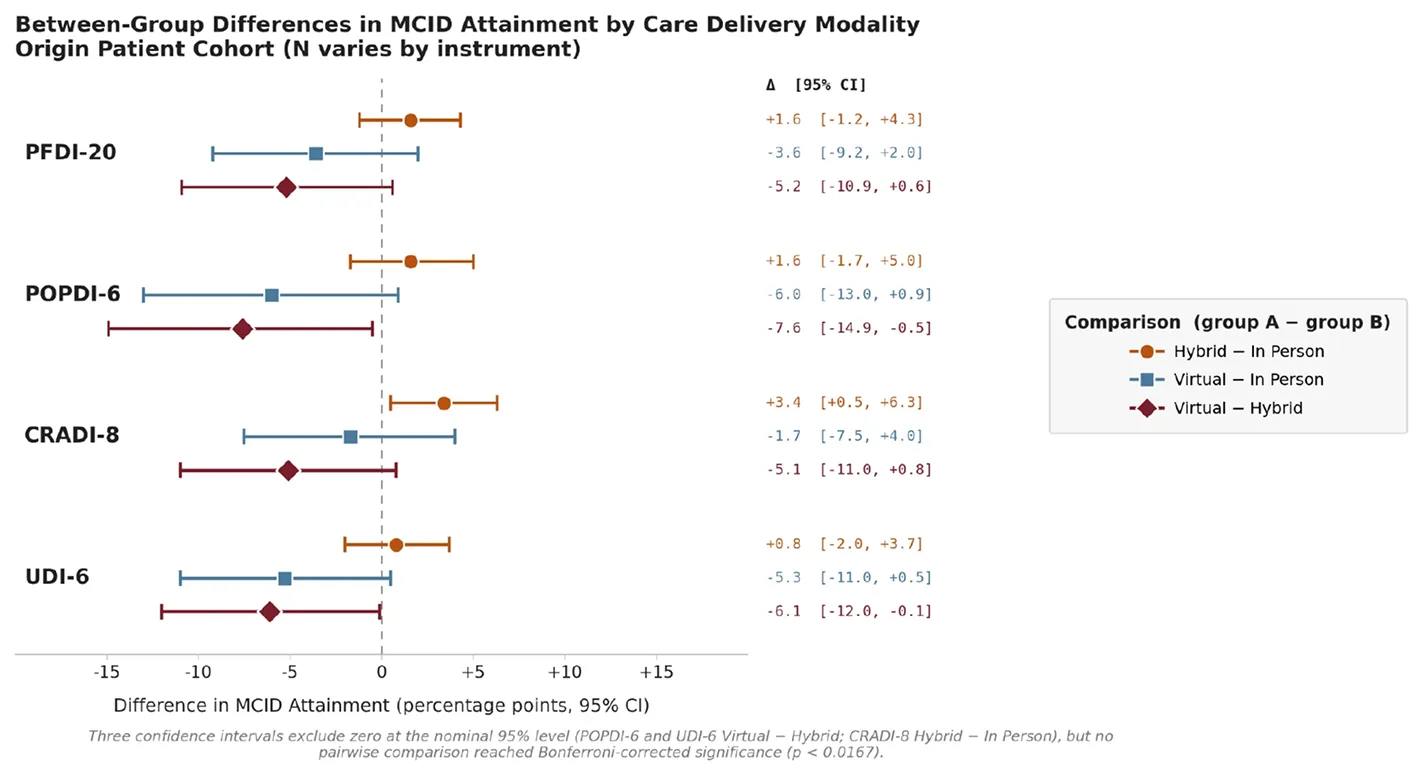
- Virtual care patients achieved clinically meaningful improvement (MCID) on the PFDI-20 and its subscales at rates consistent with in-person and hybrid care. No pairwise between-group comparison reached Bonferroni-corrected significance, and between-group differences were small in magnitude across all four instruments.
- Virtual patients who achieved MCID did so with fewer than half the attended visits of in-person patients (mean 6.7 vs. 13.8) and in roughly half the care episode duration (116 vs. 210 days; both p < 0.0001).
1. Introduction
1.1 The Access Crisis in Pelvic Health Care
Pelvic health conditions, including urinary incontinence, pelvic organ prolapse, bowel dysfunction, and chronic pelvic pain, affect 25% to 50% of women, with prevalence rising substantially with age (1–4). Pelvic floor physical therapy is recommended as a first-line conservative treatment for urinary incontinence (5), and is guideline-recommended, with varying levels of supporting evidence, for fecal incontinence, and pelvic pain (6–8), yet access remains profoundly unequal and underutilized (9–12). Insurance noncoverage is the single strongest predictor of nonparticipation (10); many specialized providers do not accept insurance or operate on a cash-pay basis (13); and pelvic floor PT locations are disproportionately concentrated in high-income areas, with patients in the lowest income quartile living twice as far from the nearest provider (9).
Telehealth has emerged as a promising strategy to address these gaps (14). By removing geographic and logistical barriers, virtual care has the potential to reach patients who would otherwise go without treatment.
The clinical evidence base for virtual pelvic health care is growing but remains limited in scale. Systematic reviews have identified only 5–8 clinical trials of pelvic floor telerehabilitation, with individual study samples typically ranging from 22 to 100 participants (14–16). Meta-analytic pooling of these small trials demonstrates efficacy of virtual care and shows significant effects (pre-post improvement) on UI severity (large effect size), pelvic floor muscle strength (large effect size), and quality of life (medium effect size) (15). A Cochrane review found little to no difference between clinic-supervised and remotely supervised PFMT for urinary incontinence in women, though based on a single trial with very low-certainty evidence (16). The only US-based retrospective study to date (n = 282) found no significant difference in meeting PFPT discharge goals between majority-telehealth and majority-office-visit cohorts (35.4% vs. 24.4%, p = 0.113) (17). A pilot RCT (n = 22) demonstrated comparable outcomes with higher patient satisfaction in the telehealth group (89% vs. 71% "very satisfied") (18).
This white paper builds on that literature by reporting outcome and care utilization data from a large clinical cohort and by summarizing clinician perspectives on the strengths of virtual care settings.
1.2 Specific Aims
Primary Aim: Evaluate between-group differences in rates of clinically meaningful improvement across three pelvic health care delivery settings (virtual, in-person, and hybrid).
Secondary Aims:
- Characterize differences in care episode duration and total attended visits among patients achieving MCID across the three care delivery settings.
- Summarize Origin clinician views of the benefits of virtual pelvic health care, as a hypothesis-generating complement to the quantitative analysis.
2. Methods
2.1 Population
This analysis included patients treated for pelvic health conditions at Origin, a specialized provider of women's abdominal and pelvic health physical therapy, between June 2022 and June 2024. Conditions treated fell into one or more of the following broad categories: pain, urologic, bowel, reproductive, and procedural (related to pre- and post-surgical care).
Patients were either referred to Origin by their provider, or self-referred, and then self-selected their initial care setting. Patients were classified into three care setting groups based on their cumulative visit history: in-person (all visits conducted in-person), hybrid (combination of in-person and video visits), and virtual (live-stream video visits only). All patients were screened by a physical therapist with regards to their appropriateness for their elected care setting. Analysis was restricted to patients recorded female at birth, as the outcome measures used have been validated only in this population.
2.2 Design
A retrospective cohort analysis used patient-reported outcomes and data from the electronic health record. Patient-reported outcomes were collected via Origin's secure, HIPAA-compliant patient portal and repeated at least 30 days apart throughout the course of treatment.
The retrospective outcomes analysis was paired with a convergent parallel design: in addition to quantitative outcomes data, qualitative data and thematic analysis of provider views were collected via open-ended provider surveys.
2.3 Outcome Measures
Pelvic Floor Distress Inventory-20 (PFDI-20)
The PFDI-20 is a validated, 20-item self-report questionnaire that measures the severity and quality-of-life impact of pelvic floor symptom disorders (score range 0–300; higher scores indicate greater symptom bothers), with excellent test-retest reliability (ICC: 0.93), strong internal consistency (α = 0.79–0.93) and strong criterion validity with the original long-form PFDI (subscale correlations r = 0.86–0.94) (19–21). The PFDI-20 is responsive to conservative treatment (effect size 0.49) (22). It comprises three subscales (each scored 0–100): the Pelvic Organ Prolapse Distress Inventory-6 (POPDI-6), which captures distress from prolapse symptoms; the Colorectal-Anal Distress Inventory-8 (CRADI-8), which captures distress from bowel symptoms; and the Urogenital Distress Inventory-6 (UDI-6), which captures distress from urinary symptoms (19).
Web-based administration of the PFDI-20 has been validated as equivalent to paper-based administration (ICC = 0.91), supporting its use via digital patient portals in virtual and in-person care settings (23).
Selection of MCID thresholds. MCID has not been derived for a pelvic-health population comprised of varying symptoms and diagnoses, therefore, the published threshold best matched to conservative (non-surgical) care for each instrument was used. These were ≥ 13.5 points (PFDI-20 - conservative prolapse management) (24), ≥ 5 (CRADI-8 - nonsurgical fecal incontinence) (25,26), and ≥ 11 (UDI-6 long form - conservative stress urinary incontinence) (27), with short-form scores converted using the published equation UDI long = (1.9 × UDI-6) + 11 (20). No POPDI-6 conservative-care MCID data has been published; therefore, ≥ 11, the clinically relevant difference recommended by the only available study (a surgical cohort; median of estimates 11.3) (28) was selected as the proxy for conservative care.
Care Utilization Variables
Care episode duration (days from first to last attended visit) and total attended visits were extracted from Origin's electronic health records for all patients who achieved MCID on the PFDI-20.
Clinician Survey
Clinician views were collected via a brief internal survey administered to Origin pelvic health providers with virtual and in-person care experience. The survey consisted of open-ended questions asking providers to describe their observations about virtual care delivery. Data were categorized and thematically analyzed. Quotations were selected to illustrate clinician-perceived strengths of virtual care and to generate hypotheses for future prospective evaluation.
2.4 Statistical Analysis
Differences in the proportion of patients achieving MCID across care delivery groups were assessed using pairwise chi-square tests of independence. Three pairwise comparisons were performed per instrument (in-person vs. hybrid, in-person vs. virtual, hybrid vs. virtual). A Bonferroni correction was applied to control for multiple comparisons within each instrument, with statistical significance defined as p < 0.0167. Between-group differences in MCID attainment are reported as percentage point deltas with Wald 95% confidence intervals.
Differences in attended visit counts and care episode duration (days from first to last attended visit) were compared between virtual and in-person MCID achievers using Mann-Whitney U tests; hybrid patients were excluded from this comparison for the reasons described in Section 4. Median time to MCID attainment was estimated using Kaplan-Meier methods, with patients who did not achieve MCID within the observation window censored at last follow-up; the log-rank test was used to compare virtual and in-person groups.
As a sensitivity analysis, the primary PFDI-20 MCID comparison was repeated using logistic regression adjusting for age at baseline, with care delivery group as the predictor of interest and in-person care as the reference. A likelihood-ratio test for the group-by-age interaction was used to evaluate whether the care setting effect varied across the age range.
Themes from the qualitative data were tabulated for frequency.
3. Results
3.1 Patient Population
A total of 4,662 female patients were included in the primary PFDI-20 analysis, comprising 2,833 in-person, 1,536 hybrid, and 293 virtual patients. Demographic characteristics (Table 1) differed between groups. In-person patients were older on average (mean 40 years) than hybrid and virtual patients (36 years for both groups; p < 0.001), and the distribution of older patients (60+) was concentrated in the in-person group. Geographic distribution reflected Origin's care delivery footprint: patients treated in-person were predominantly in Texas (63%), patients treated in hybrid settings were mostly in California (71%), while patients treated virtually were distributed more broadly across states, with higher representation outside Origin's physical-clinic states. Insurance coverage also varied: patients treated virtually had a substantially higher share of self-pay / unknown coverage (25%) compared to those seen in-person (7%) and in hybrid settings (6%). Referring provider ICD-10 codes were available for 65.7% of the cohort and are summarized by care setting in Appendix A.
Table 1. Demographic characteristics of the PFDI-20 eligible cohort by care delivery setting. P-values from Kruskal-Wallis (continuous variables) and chi-square (categorical variables) tests for between-group differences.
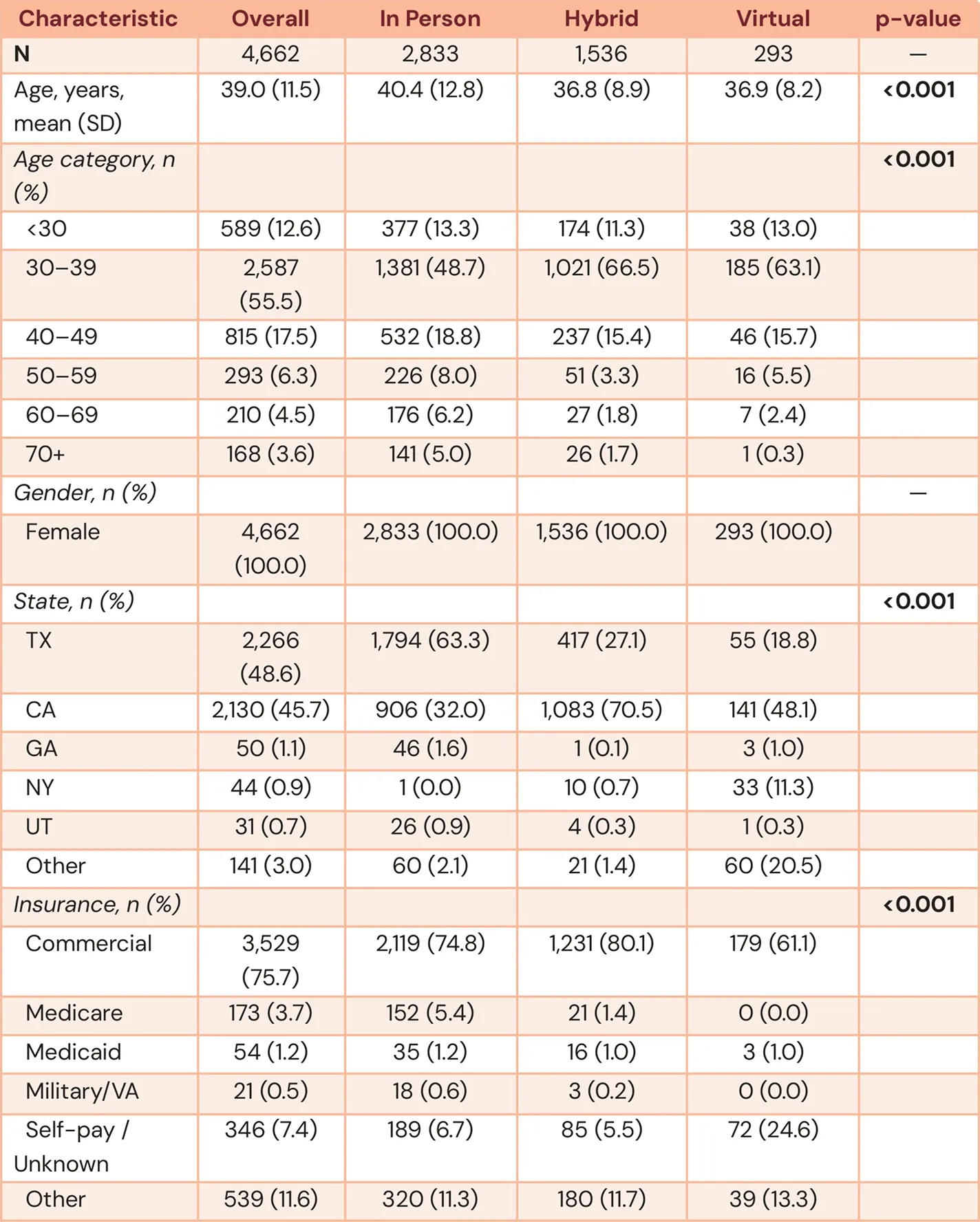
^As of June 2024, Origin had 7 clinics in Texas, 4 in California, 2 in Georgia, 1 in Utah, 1 in Florida, 1 in Maryland, and 1 in Tennessee.
Table 2. Number of patients included in each subscale analysis by care delivery setting, defined as baseline subscale score meeting or exceeding the MCID threshold. Subscale eligibility was determined independently per instrument.
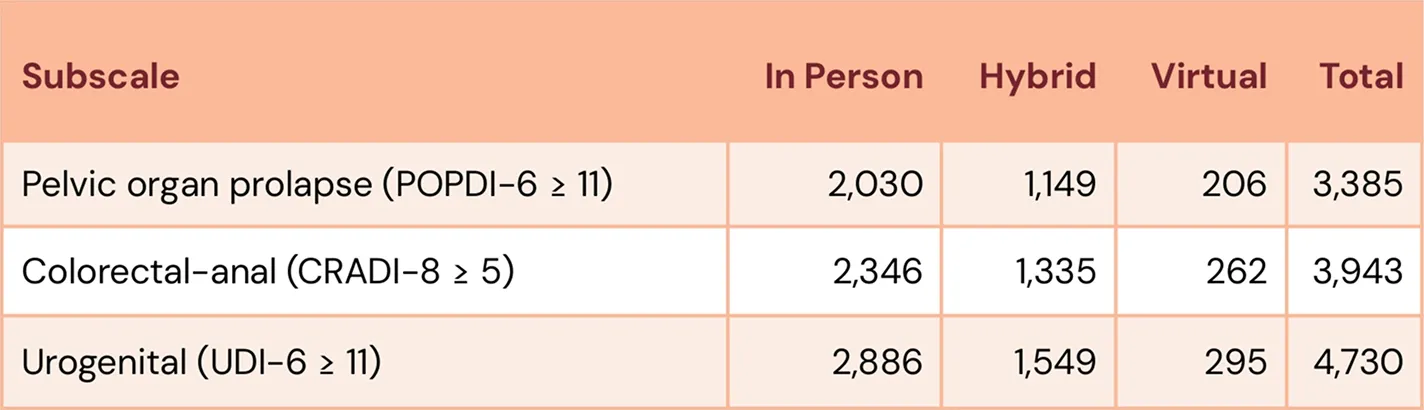
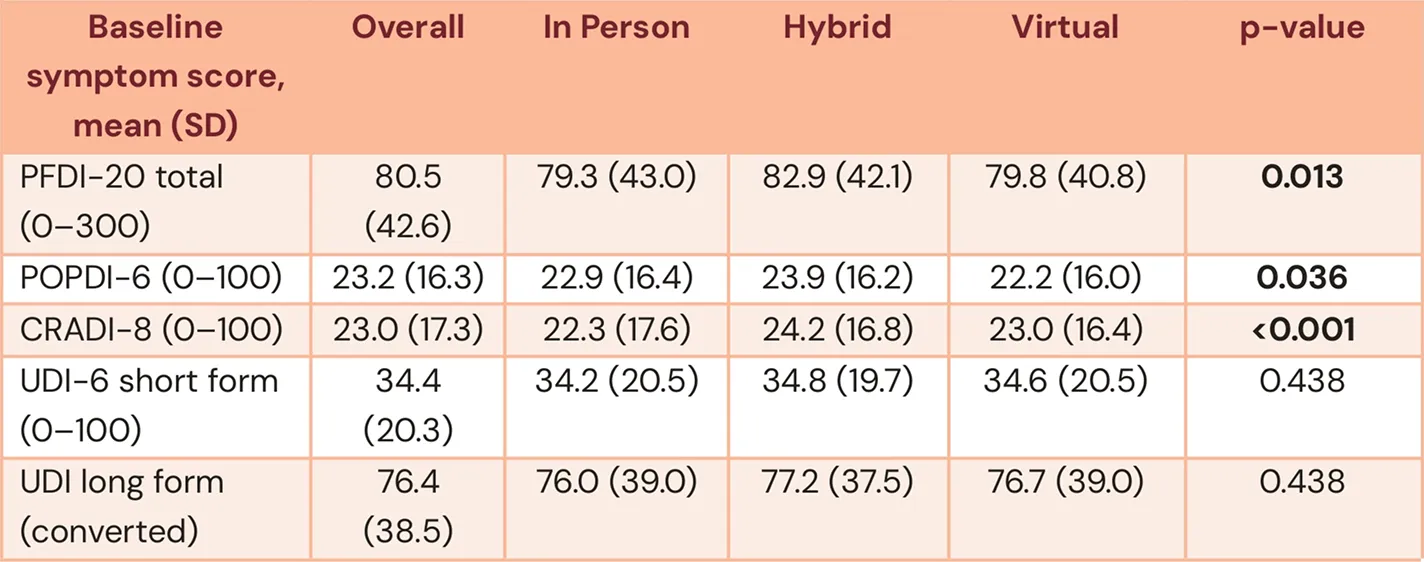
Baseline symptom stress scores were generally comparable across care settings (Table 3). On the PFDI-20 (mean 79.3 in-person, 82.9 hybrid, 79.8 virtual), POPDI-6 (22.9, 23.9, 22.2), CRADI-8 (22.3, 24.2, 23.0), and UDI-6 (34.2, 34.8, 34.6), between-group differences were small in magnitude, typically within 2–5% of the observed score ranges, and well below the minimal clinically important difference threshold for each instrument. While several comparisons reached statistical significance given the large sample size, the absolute differences are not clinically meaningful.
Table 3. Baseline symptom scores for the PFDI-20 eligible cohort by care delivery setting. For all instruments, higher scores indicate greater symptom distress.
3.2 Primary Outcomes: MCID Attainment
The majority of patients achieved clinically meaningful improvement on the PFDI-20 and its subscales. Between-group differences in MCID attainment were small across all comparisons (Table 4). No pairwise comparison reached Bonferroni-corrected significance (required threshold p < 0.0167).¹
Table 4. Pairwise between-group differences in MCID attainment rates by care delivery setting. H = Hybrid, IP = In Person, V = Virtual. Δ = difference in percentage points with 95% Wald confidence interval. N varies by instrument due to floor exclusions (see Section 2.2). No comparison reached Bonferroni-corrected significance (p < 0.0167).
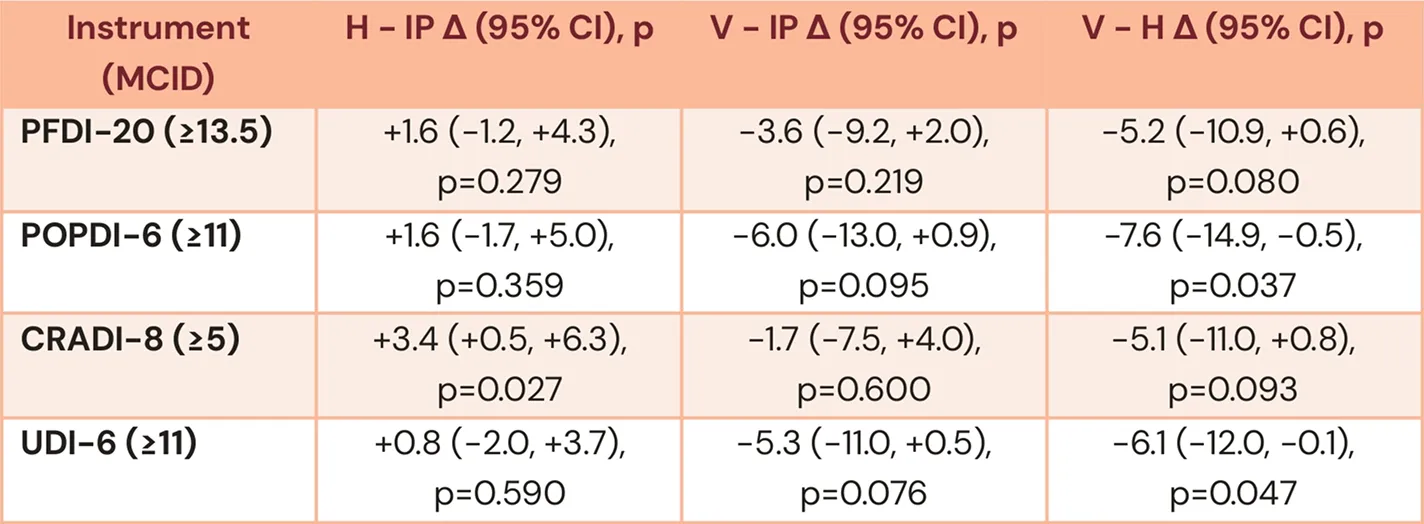
¹ Because in-person, hybrid, and virtual cohorts differed in mean age at baseline (Table 1, p < 0.001), the primary comparison was repeated using logistic regression adjusting for age. Age-adjusted estimates were within ~2 percentage points of the unadjusted analysis, and no pairwise comparison newly reached or lost statistical significance (virtual vs. in-person adjusted OR 0.86, 95% CI 0.66–1.11, p = 0.244; hybrid vs. in-person adjusted OR 1.10, 95% CI 0.96–1.27, p = 0.177). The age effect itself was small (OR 1.005 per year, 95% CI 0.999–1.011, p = 0.092), and there was no significant interaction between age and setting (likelihood-ratio χ² = 2.10, df = 2, p = 0.350); MCID attainment rates were similar across settings within each of three age strata (≤40, 41–55, 56+).
Figure 1. Forest plot of pairwise between-group differences in MCID attainment.
3.3 Visits and Care Episode Duration
Among PFDI-20 MCID achievers in the virtual and in-person care delivery groups (n = 2,246), total attended visits and care episode duration differed significantly between care delivery settings (Mann-Whitney U p < 0.0001 for both).
Those achieving MCID in the fewest visits attended the virtual care setting (mean 6.7 attended visits [median 6, IQR 4–9] over 116 days [median 83, IQR 42–134]). In-person MCID achievers completed a mean of 13.8 visits (median 11, IQR 7–17) over 210 days (median 162, IQR 94–265).
The hybrid category in this dataset conflates planned hybrid care with reactive care setting mixing within otherwise single-setting episodes and is not interpretable as a coherent care plan; it is therefore excluded from the primary care duration comparison (see Section 4). These are observed associations and may reflect both care setting and selection effects (Section 4).
Table 5. Care utilization among MCID achievers on the PFDI-20 by care delivery setting.² Overall' refers to in-person and virtual MCID achievers combined. P-values from Mann-Whitney U tests (continuous) and chi-square (categorical) for in-person vs. virtual.
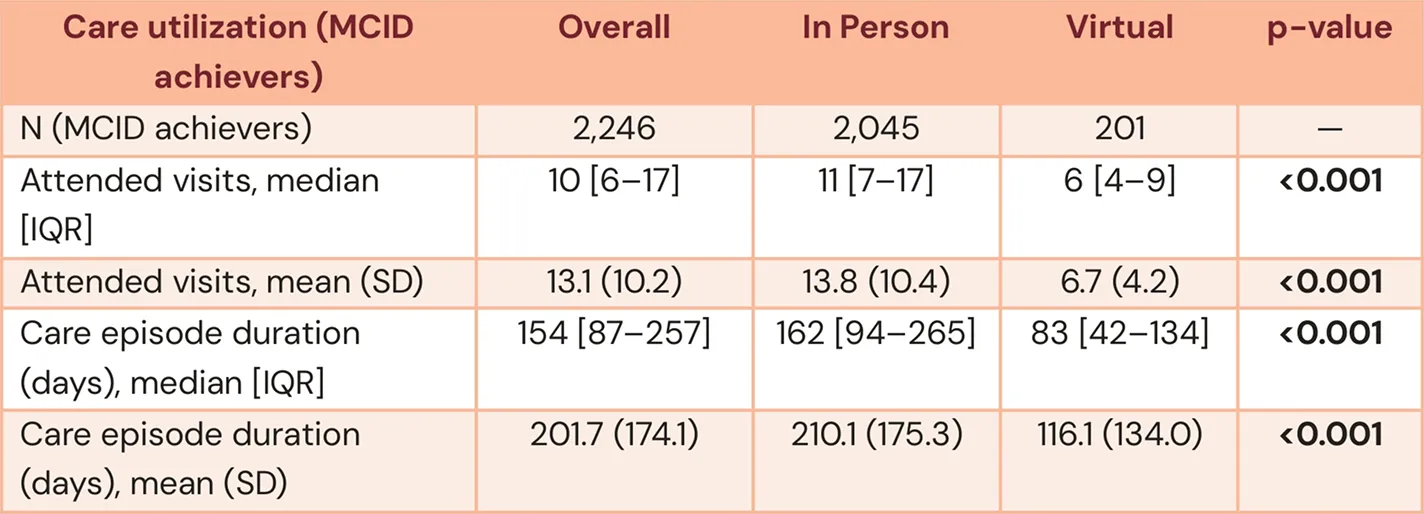
² Hybrid patients are excluded from this table because the hybrid category in this dataset is not interpretable as a coherent care plan (see Section 4).
Among MCID achievers, median time to MCID was 73 days for virtual care and 94 days for in-person care (log-rank p = 0.0024).
3.4 Clinician Perceptions of Virtual Pelvic Health Care: Themes
Responses were received from 16 Origin pelvic health providers with virtual and in-person care experience. Content analysis identified four recurring themes: access to care [n=13 respondents], applied settings [n=8], psychological safety [n=6], clinician-guided, and patient-executed care focus [n=5]. Respondents described a wide range of patient subgroups perceived as well-suited for virtual care; reproductive (postpartum and prenatal patients [n=11]) were the most frequently mentioned, followed by pain (vaginismus or dyspareunia [n=3], pelvic pain [n=3]), urologic (urinary incontinence [n=3]), and bowel (fecal incontinence or bowel dysfunction [n=3]). The following sections present representative quotations illustrating each theme.
Access to Care
Access to care was the most frequently cited theme across respondents [n=13, 81%], spanning geographic barriers, postpartum constraints, transportation, childcare, and work schedules. Clinicians described virtual care not as a convenience feature but as a clinical enabler, the difference between a patient receiving care and not receiving it, and in some cases accelerating symptom reduction.
"I have one patient in mind who would not have been able to receive care due to living 90+ minutes from in-person care. This patient has IBS diarrhea and needs to be able to access a bathroom quickly. We have accomplished a lot virtually." — Origin virtual care provider
"Early postpartum is great for virtual care. Many people aren't able to get out of the house at this time and they aren't able to access care until later… sometimes not at all due to challenges with childcare and making time for themselves… so it's much easier to see someone from the comfort of their own home." — Origin virtual care provider
"I've worked with several patients experiencing urinary and even fecal incontinence who reported noticeable symptom reduction within just 3–5 days of starting pelvic floor exercises. These improvements were most common among people who sought care very early — often within the first few weeks of symptom onset. The accessibility of virtual care made it much easier for them to reach out quickly, without the delays or logistical hurdles that often come with in-person visits." — Origin virtual care provider
Applied Settings
Eight clinicians [50%] described observations about conducting care in the patient's own environment, including real-time assessment of symptoms in the context where they occur and elimination of the translation gap between clinic-based instruction and home-based practice.
"I had a postpartum patient with urinary leakage while riding her spin bike, even after her symptoms had already been improving. During a virtual session, we were able to watch her posture and mechanics on her actual bike in real time. With targeted cueing, we helped her better manage her intra-abdominal pressure and resolve her symptoms on the spot." — Origin virtual care provider
"Being able to observe patients in their own environment (at home) is very helpful to check on things like body mechanics (i.e. taking baby in/out of crib, how they are nursing, or carrying baby) and give live feedback, which we cannot always do in the clinic." — Origin virtual care provider
"When in a clinic session, it is hard for patients to become compliant with HEP because they don't have a lot of the equipment used at the clinic at home. Virtual care easily translates because we are using what they have and going through it with them. They can easily take what we did in session and replicate it without much difficulty." — Origin virtual care provider
Psychological Safety
Six Origin clinicians [38%] made observations about patients for whom the clinic setting itself is a barrier, including patients with trauma history, stigma-related concerns, and anxiety about in-person care:
"Another patient had a significant trauma history and was fearful of entering a clinic setting...virtual visits allowed us to start from a place that felt safe and manageable for her…Over time, she felt empowered enough to transition into the clinic setting when she was ready. That experience really highlighted how virtual care can be an important bridge rather than an either/or model." — Origin virtual care provider
"Removing the clinical environment actually reduces threat load significantly for this population, and I've found patients progress faster because they're practicing in the exact space where they need to feel safe." — Origin virtual care provider
Clinician-Guided, Patient-Executed Care Focus
Five Origin clinicians [31%] described that in virtual care settings, patient education, therapeutic exercise, therapeutic activities, neuromuscular re-education and self-care treatments are available, whereas manual therapy is not an option. The absence of manual therapy re-orients the care toward tools that rely both on communication and demonstration of the provider, as well as the patient's execution and strong collaboration between the patient and provider.
"Virtual care definitely promotes patient autonomy and self-efficacy. We are unable to rely on passive/manual treatments in the clinic, so our tools focus heavily on education and empowering patients with tools they can implement for their own rehabilitation and self care. When patients improve, they believe that they have the tools to change, rather than attributing improvements to our 'magic hands' in the clinic." — Origin virtual care provider
"Patients who have seen in-person providers in the past without success do surprisingly well in the virtual setting. In virtual care, providers and patients must work together as a team. There can be no 'fix me' approach from the patient, and once they understand this and are able to adopt a 'let's fix this together' approach, their improvements are real and lasting. As they improve, they are also building confidence in their ability to care for their own body, and they are building independence in each session in order to no longer need care." — Origin virtual care provider
4. Discussion
This retrospective analysis of 4,662 female patients treated at Origin demonstrates that virtual pelvic health care produces clinically meaningful improvement across the PFDI-20 and its subscales, with between-group differences that are small in magnitude and consistent in direction. These findings complement the existing telerehabilitation literature, which has similarly reported no clinically meaningful differences between telehealth and in-person pelvic floor rehabilitation across randomized and observational designs.
These findings are consistent with a growing body of evidence supporting virtual pelvic health care. A retrospective study of 282 patients found no statistically significant difference in achieving treatment goals between majority-telehealth and majority-office-visit cohorts (35.4% vs. 24.4%, p = 0.113). Both groups received mixed-setting care, and the small telehealth subgroup limited statistical power, so this reflects an absence of a detected difference rather than demonstrated equivalence (17). A cross-sectional survey of 812 patients, 141 of whom completed it, found that telehealth, alone or hybrid, was associated with moderate or much improvement in over half of patients (29). A pilot non-inferiority randomized controlled trial demonstrated comparable outcomes between telehealth and face-to-face pelvic floor muscle training for urinary incontinence, with higher patient satisfaction in the telehealth group (89% vs. 71% "very satisfied") (18). A postpartum RCT found telerehabilitation produced significantly greater improvement in urinary symptoms than supervised in-person training (30). A large prospective cohort of over 3,000 postmenopausal women using a fully remote digital pelvic program demonstrated a 77.6% completion rate and clinically meaningful symptom improvement in nearly 60% of participants (31).
Systematic reviews and meta-analyses reinforce these findings. Pooled analyses have demonstrated significant effects of pelvic floor telerehabilitation on urinary incontinence severity, pelvic floor muscle strength, and quality of life (32,33). A Cochrane review found little to no difference between clinic-supervised and remotely supervised PFMT, though the certainty of evidence remains very low (16). While there have not been any telehealth related RCTs focused on prolapse, several RCTs have demonstrated efficacy of internet-based psychological interventions for pelvic pain conditions including vulvodynia, vestibulodynia, genito-pelvic pain/penetration disorder, and endometriosis-related pain. Emerging evidence also suggests that hybrid care incorporating a range of internet-based and psychological interventions alongside manual therapy can be effective (6,15,32,34–42).
As a retrospective study, it cannot establish causal relationships between care setting group and outcomes. Patients were not randomized to care setting groups, and unmeasured confounders, including patient technology literacy, reasons for self-selection to a given care delivery setting, clinician experience with virtual delivery, experience of those hired for virtual care delivery, and geographic factors, may influence the observed results.
Demographic characteristics differed between care delivery groups in ways that may reflect both self-selection and structural differences in how Origin delivers care across geographies. In-person patients were older on average, consistent with older patients' known preference for face-to-face care (43) and the distribution of Medicare coverage in the cohort. Geographic distribution reflected Origin's clinic footprint: in-person and hybrid care were concentrated in states with physical clinics (primarily Texas and California), while virtual care reached a broader distribution of states. Virtual patients had higher rates of self-pay coverage, consistent with out-of-pocket access to virtual care in states without Origin clinics. Importantly, baseline symptom severity on the PFDI-20 and its subscales was comparable across groups, with between-group differences small in absolute magnitude and well below the MCID threshold for each instrument. While several baseline comparisons reached statistical significance given the large overall sample size, these differences are not clinically meaningful. The three groups can therefore be considered clinically similar at the point of care initiation. The factors driving self-selection into a particular care setting are a point of clinical and business interest that warrant direct investigation alongside outcomes research; patients choose virtual, hybrid, or in-person care for reasons that may reflect both structural access factors and personal preferences. Understanding these drivers is a priority for future work.
The virtual care group was substantially smaller than the in-person and hybrid groups (n = 293 PFDI-20 eligible patients versus 2,833 in-person and 1,536 hybrid), which limited statistical power to detect moderate between-group differences and produced wide confidence intervals around the virtual-vs-in-person comparisons. The virtual group sample size (n = 293) provided 80% power to detect differences in PFDI-20 MCID attainment of approximately 9.5 percentage points or greater between virtual and in-person care. The observed difference in MCID attainment between the virtual and in-person groups was 3.6 percentage points, which is not clinically meaningful given that the majority of patients achieved their MCID threshold. The consistent direction and small magnitude of differences across the PFDI-20 and its three subscales are reassuring with respect to comparability, but this analysis is not powered to formally characterize between-setting differences. A prospective, adequately powered study with a pre-specified design would be needed for a formal between-setting comparison.
The hybrid care category includes both patients who intentionally elected mixed-setting care and patients whose care setting shifted reactively during their treatment episode (for example, due to illness, travel, or temporary scheduling conflicts). Because these two populations are not distinguishable in the current dataset, hybrid results would conflate planned and incidental setting mixing and are therefore excluded from the primary efficiency comparison in Section 3.3 and from the time-to-MCID analysis. Hybrid patients are included in the MCID attainment analysis in Section 3.2, where the comparison is rate-based and less sensitive to episode structure. A future analysis will attempt to distinguish patients with planned hybrid care from those with incidental care setting shifts.
The observed care episode duration among virtual MCID achievers (a mean of 116 days over 6.7 attended visits) reflects a visit frequency of approximately one session every 17 days, closer to biweekly than weekly. Whether more frequent scheduling would have shortened the time to MCID attainment is unclear from this dataset. Two competing interpretations are plausible: that episode duration reflects scheduling patterns and patient availability, in which case higher visit frequency might accelerate goal attainment; or that episode duration reflects the biological timeline of tissue adaptation and symptom resolution, in which case visit frequency matters less than total dose and time. A third consideration is that episode duration reflects when patients completed outcome measures in the portal rather than standardized assessment intervals; variability in assessment timing may therefore influence time-to-MCID estimates independently of true symptom trajectory. Distinguishing among these explanations would require a prospective study with standardized assessment schedules and randomized visit frequency arms.
The clinician views described in Section 3.4 converge on a candidate mechanism: virtual delivery, by removing the option of passive hands-on treatment, may structurally shift the therapeutic relationship toward patient education, active self-management, and home exercise practice. These perceptions map onto self-efficacy and internal health locus of control, two constructs with established links to rehabilitation adherence and durability of gains (44–46). Whether this mechanism explains any portion of the observed utilization differences, and whether it produces more durable long-term outcomes, remains to be tested prospectively. A related hypothesis is that home-context delivery improves home exercise program adherence by eliminating the translation gap between clinic-based instruction and home-based practice. Whether this translates to measurable differences in adherence in pelvic health populations is not tested in this analysis, but it is consistent with broader rehabilitation literature on contextual learning and home program compliance (46). These hypotheses are drawn from clinician views and are consistent with the published rehabilitation literature, but have not been directly measured in this dataset. Further, clinicians were only asked about their perceived benefit of virtual care, but were not asked about any perceived weaknesses of virtual care. Well-planned prospective collection of self-efficacy, locus of control, and home-exercise-program adherence measures from patient interviews are required to test these mechanisms.
The PFDI-20 and its subscales are condition-agnostic measures of pelvic floor symptoms (19,21); they aggregate prolapse, colorectal-anal, and urinary distress without distinguishing among them. The present analysis is therefore not informative about whether virtual care is a better or worse fit for specific clinical presentations (e.g., pelvic pain vs. stress urinary incontinence vs. pelvic organ prolapse vs. bowel disease). The PFDI-20 has not been formally validated for measurement equivalence across care delivery settings, though the self-administered format and absence of any physical measurement component reduce the plausibility of meaningful mode effects. Further, the present study has not measured harm or tried to understand why some patients in each care setting did not achieve MCID.
Other future directions include prospective randomized comparison of virtual, hybrid, and in-person care with self-efficacy and adherence as primary outcomes; analysis of long-term symptom durability and return-to-care rates by setting; formal cost-effectiveness modeling incorporating visit counts, per-visit and patient time costs, and long-term outcomes; and qualitative investigation of patient and clinician care setting preferences and their relationship to outcomes,satisfaction and modes of advertising care options.
5. Implications for Patients, Providers, and Payers
5.1 For Patients
Virtual care may remove barriers – transportation, scheduling, and time away from work or caregiving – that prevent many patients from accessing pelvic floor PT. For patients in rural or underserved communities, virtual care may be the only realistic path to specialized care.
5.2 For Providers
The clinical and utilization patterns observed here support virtual delivery as a primary, not fallback, setting for pelvic health care, selected intentionally based on patient preference alongside provider recommendations rather than treated as an inferior substitute.
5.3 For Payers
In this cohort, virtual pelvic health care was not associated with detectably worse outcomes than in-person care on the PFDI-20 and its subscales, and virtual MCID achievers reached MCID with fewer attended visits and over shorter care episodes. These findings, in combination with the published telerehabilitation literature, are consistent with a clinical rationale for reimbursement parity between virtual and in-person pelvic health physical therapy; they do not, on their own, establish a formal cost-effectiveness case.
Care utilization differed substantially between groups. Virtual MCID achievers reached MCID with a mean of 6.7 attended visits over 116 days, compared with 13.8 visits over 210 days for in-person MCID achievers. These differences are observed associations and may reflect both setting-related and selection-related factors (see Section 4).
A formal cost-effectiveness analysis incorporating per-session costs, patient time costs, and longer-term symptom trajectories is outside the scope of this paper; a review of the relevant cost literature can be found in Appendix B.
These findings also carry a broader access implication. When outcomes are comparable across care delivery modalities, the clinical case is not for replacing one modality with another, it is for preserving access to all three. Patients self-select into virtual, hybrid, or in-person care for reasons that may include but are not limited to geography, transportation, childcare, work schedules, history of trauma, and/or personal preference. These are legitimate patient-centered care considerations to aid in clinical decision-making, not merely logistical ones. A coverage or reimbursement framework that favors a single care delivery setting risks narrowing the options available to patients whose clinical needs or circumstances make other care delivery settings more appropriate or more accessible. The evidence presented here supports parity across care settings as the clinically sound policy position: not because all patients should receive virtual care, but because all patients should have access to the care settings that best serve them based on their individual history as well as informed and shared decision-making between patients and providers.
6. Conclusion
In this retrospective cohort of patients treated at Origin across three care settings, between-group differences in PFDI-20 MCID attainment were small and did not reach statistical significance across care settings. Confidence intervals around the virtual-vs-in-person differences were wide, and the present analysis describes observed patterns rather than tests of a pre-specified between-setting hypothesis.
Across 4,662 PFDI-20 eligible patients with comparable baseline symptom severity, the majority of patients in all three care settings achieved clinically meaningful improvement, and no pairwise between-group difference reached Bonferroni-corrected significance. Among MCID achievers, virtual patients reached MCID over shorter care episodes and with fewer attended visits than in-person patients; these are observed associations that require further investigation before clinical interpretation and translation can be made. Clinician views describe a candidate mechanism hypothesis that may be centered on collaboration self-execution and internal health locus of control; this mechanism was not directly measured and requires patient interviews and a robust qualitative research process.
For patients, these findings support virtual delivery as a viable primary care setting, with implications for geographic and logistical access. For clinicians, they support intentional selection of virtual care for appropriate patients alongside in-person and hybrid options. For payers, the absence of clinically meaningful between-group differences in MCID attainment supports a clinical rationale for telehealth reimbursement parity, pending a formal cost-effectiveness evaluation that incorporates per-session costs, patient time costs, and long-term outcomes.
7. About Origin
Origin is a national provider of pelvic health physical therapy and whole-body musculoskeletal care for women, with a specialized focus on incontinence, pregnancy, postpartum, menopause, and sexual health. Recommended by more than 10,000 doctors, Origin offers virtual and in-person physical therapy sessions, supported by proprietary digital programs, educational content, and community experiences. Origin is among the few private pelvic health clinics to take insurance and is in-network for over 50 million people.
The need is staggering: up to half of women experience pelvic health conditions, yet few ever receive care — driving billions of dollars in unnecessary medical spending and leaving a gap in women's health. Origin is raising the bar.
Origin was co-founded in 2020 by Carine Carmy, Nona Farahnik Yadegar, and David Yadegar after experiencing firsthand the power of pelvic health physical therapy — and the years of missed diagnoses, ineffective treatments, and dismissive "that's just the way it is" that too many women endure before finding pelvic health physical therapy. They built Origin to change that equation: to highlight pelvic health physical therapy, destigmatize the most significant moments in women's bodies, and make care access the rule, not the exception.
Today, Origin provides virtual care across all 50 states and in-person care at 20+ clinics nationwide. Origin is on a mission to help women feel their best at every stage of life, and to bring pelvic floor therapy to everyone. For more information, visit www.theoriginway.com or @theoriginway.
Appendix A. Referring Provider Diagnosis Codes
ICD-10 codes were extracted from Initial Evaluation and Virtual Evaluation documents generated at each patient's first visit. These codes reflect the diagnosis recorded by the referring provider at the point of referral. Data were available for 3,064 of 4,662 patients (65.7%); patients without ICD data lacked any ICD-bearing evaluation document.
Table A1. ICD data coverage by care delivery modality.
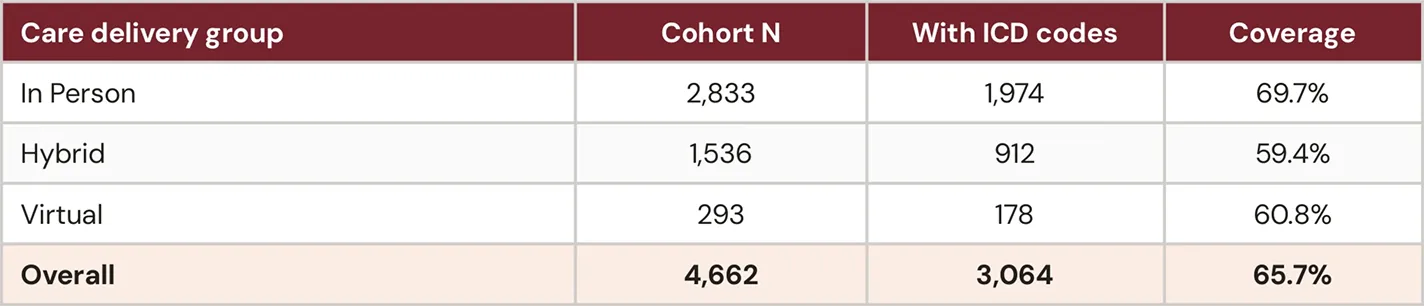
Table A2. Primary referring provider diagnosis category by care delivery setting (n = 3,064).
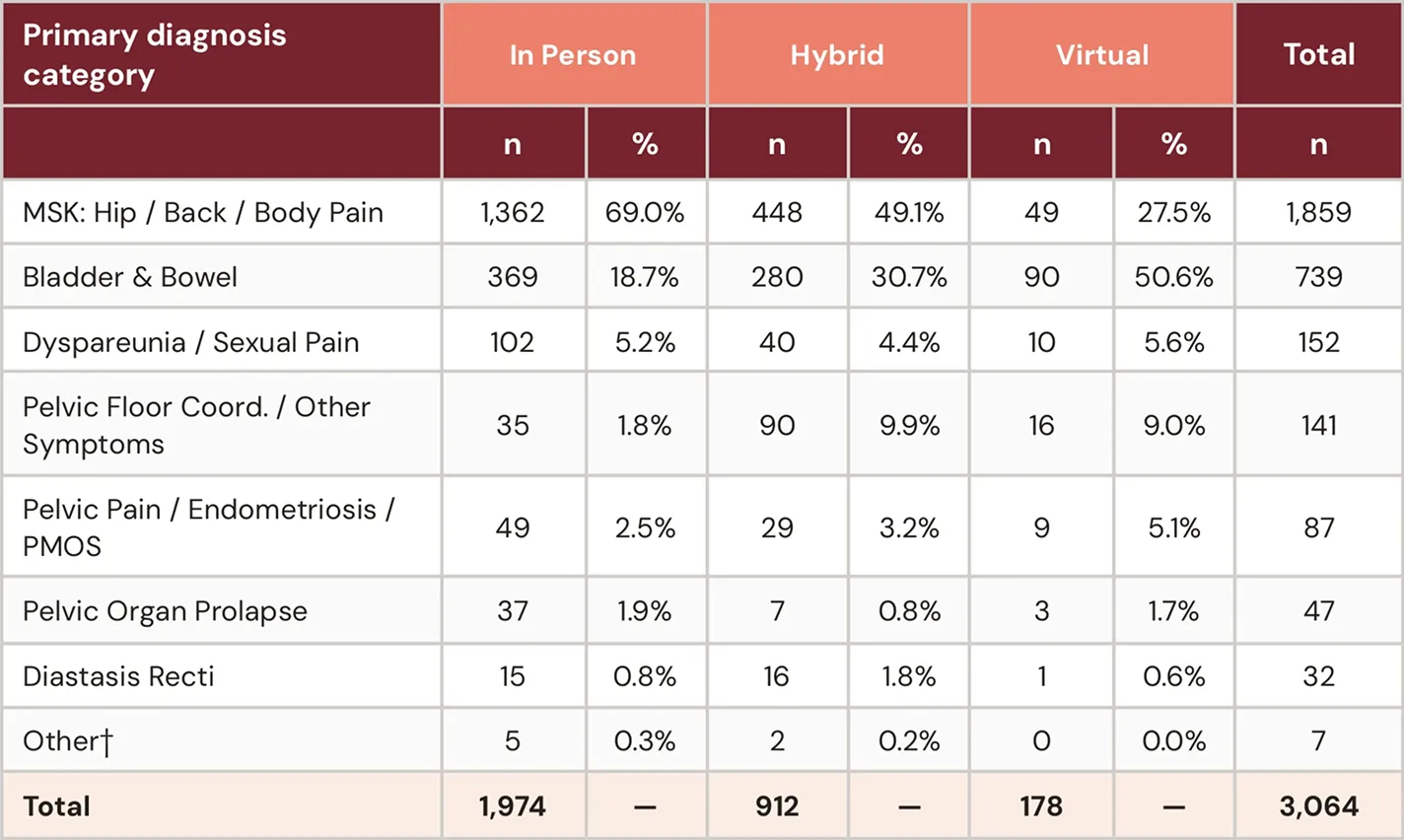
% = column percentage within modality. † Includes Pregnancy / Postpartum (n = 1), Post-Surgical / Vaginoplasty (n = 1), and other low-count codes; these categories are substantially undercoded in referring provider documentation relative to Origin's actual patient volume. Chi-square run on table with categories < 10 total collapsed into Other.

Table A3. ICD-10 code groupings by clinical category.
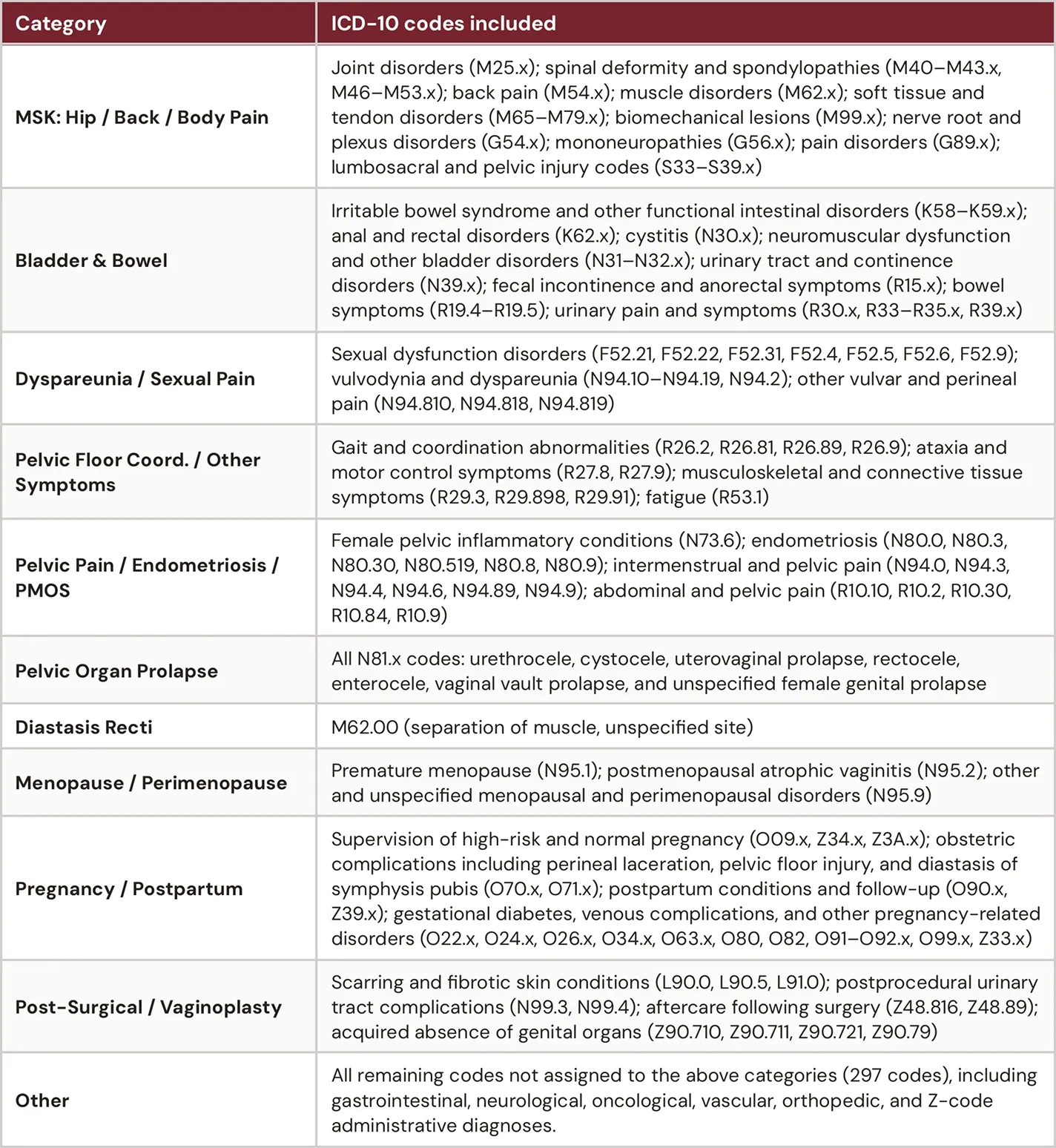
For large categories, representative code ranges are shown; the full crosswalk lists 675 individual codes. MSK: Hip / Back / Body Pain includes 177 codes spanning joint, spine, soft tissue, nerve, and musculoskeletal injury codes. Other includes 297 codes not assigned to any of the above categories.
Appendix B. Cost Literature Review: Virtual Physical Therapy and the Economics of Pelvic Health Care
No published cost-effectiveness analysis specific to virtual pelvic floor PT exists at the time of writing. The following summarizes evidence on the costs of virtual versus in-person PT broadly and the economic burden of untreated pelvic health conditions, to contextualize the reimbursement parity argument in Section 5.3 and to identify formal cost-effectiveness analysis as a priority for future research.
Virtual PT is associated with substantially lower costs than in-person care across musculoskeletal conditions. A US propensity-matched claims analysis (n = 1,368) found that virtual PT was associated with significant net per-member-per-month savings in both PT-specific costs (−$25.05 at 6 months; −$8.22 at 12 months) and musculoskeletal-related total costs (−$21.20 at 6 months). Patients receiving virtual PT had significantly lower gross musculoskeletal-related postindex costs than in-person PT controls (−$1,059 at 6 months; −$1,049 at 12 months), translating to a 1.8-times return on investment at both time points.(42). A larger US claims analysis (n = 4,366) found annual per-person savings of over $2,000 in musculoskeletal care costs (and $2,369.50 in total health care savings) with a digital care program (biofeedback with asynchronous PT management) versus in-person care, driven primarily by surgery avoidance and reduced imaging (47). A systematic review of economic analyses similarly concluded that telerehabilitation results in similar or lower costs compared to in-person rehabilitation across multiple populations and various rehab settings (48). Although these analyses address musculoskeletal PT broadly, the cost structure of virtual delivery (reduced facility overhead, eliminated travel, and comparable session duration) is likely generalizable to pelvic health care.
The economic case for expanding access to pelvic floor PT is underscored by the cost of inaction. Urinary incontinence alone imposes an estimated $19.5 billion in annual direct costs in the United States, with urgency UI projected at $66 billion including indirect costs (49–51). A US claims analysis of over 68,000 matched pairs found that women with stress or mixed UI incurred 61% higher total healthcare costs over two years than matched controls ($27,447 vs. $17,036, p < 0.0001), driven by substantially more outpatient visits, physician encounters, and hospitalizations (52). When conservative care is not accessed and symptoms progress, surgical intervention costs $3,300 to $5,700 per procedure, and a cost-effectiveness analysis found that all surgical options other than midurethral sling are dominated by pelvic floor muscle physical therapy (53,54). Whether optimal patient-setting triage could further reduce costs while maintaining outcomes, and how to extend these findings specifically to pelvic floor PT, are open questions that a formal cost-effectiveness analysis of Origin's care delivery model would be well positioned to address.
- Nygaard I, Barber MD, Burgio KL, Kenton K, Meikle S, Schaffer J, et al. Prevalence of symptomatic pelvic floor disorders in US women. JAMA. 2008;300(11):1311–6. doi:10.1001/jama.300.11.1311
- Wu JM, Vaughan CP, Goode PS, Redden DT, Burgio KL, Richter HE, et al. Prevalence and trends of symptomatic pelvic floor disorders in U.S. women. Obstet Gynecol. 2014;123(1):141–8. doi:10.1097/AOG.0000000000000057
- Kenne KA, Wendt L, Brooks Jackson J. Prevalence of pelvic floor disorders in adult women being seen in a primary care setting and associated risk factors. Sci Rep. 2022 Jun 14;12(1):9878. doi:10.1038/s41598-022-13501-w
- Alperin M, Abramowitch S, Alarab M, Bortolini M, Brown B, Cartwright R, et al. Foundational science and mechanistic insights for a shared disease model: an expert consensus. Int Urogynecology J. 2022;33(6):1387–92. doi:10.1007/s00192-022-05142-4
- Dumoulin C, Cacciari LP, Hay-Smith EJC. Pelvic floor muscle training versus no treatment, or inactive control treatments, for urinary incontinence in women. Cochrane Database Syst Rev. 2018 Oct 4;10(10):CD005654. doi:10.1002/14651858.CD005654.pub4 PubMed PMID: 30288727; PubMed Central PMCID: PMC6516955
- American College of Obstetricians and Gynecologists. ACOG Practice Bulletin No. 218: Chronic pelvic pain. Obstet Gynecol. 2020;135(3):e98–109. doi:10.1097/AOG.0000000000003716
- Wallace SL, Miller LD, Mishra K. Pelvic floor physical therapy in the treatment of pelvic floor dysfunction in women. Curr Opin Obstet Gynecol. 2019;31(6):485–93. doi:10.1097/GCO.0000000000000584
- Scott KM. Pelvic Floor Rehabilitation in the Treatment of Fecal Incontinence. Clin Colon Rectal Surg. 2014 Sep;27(3):99–105. doi:10.1055/s-0034-1384662 PubMed PMID: 25320568; PubMed Central PMCID: PMC4174224
- Regis S, Patel T, Rockenbach ER, Brown ED, Philp MM, Poggio JL, et al. Geographic Disparities by Income in Pelvic Floor Physical Therapy Locations in Philadelphia, Pennsylvania. Dis Colon Rectum. 2025 Nov 1;68(11):1344–9. doi:10.1097/DCR.0000000000003929 PubMed PMID: 40767352
- Washington BB, Raker CA, Sung VW. Barriers to pelvic health care utilization for treatment of female urinary incontinence. Am J Obstet Gynecol. 2011;205(2):152.e1-152.e9. doi:10.1016/j.ajog.2011.03.031
- Mog AC, Young JP, Mamkhezri JH, Merkel C, Gray KE. A qualitative assessment of pelvic health care experiences for women veterans in VHA care. J Gen Intern Med. 2025;40(11). doi:10.1007/s11606-025-09645-w
- McKinney JL, Datar M, Pan LC, Goss T, Keyser LE, Pulliam SJ. Retrospective claims analysis of physical therapy utilization among women with stress or mixed urinary incontinence. Neurourol Urodyn. 2022;41(4):918–25. doi:10.1002/nau.24913
- Pass AR, Knight BP, Maline GE, Saunders JA, Zheng X, Friedman S, et al. National Access to Pelvic Floor Physical Therapy: A Secret Shopper Study. Urogynecology. 2026 Apr 1;32(4):383–90. doi:10.1097/SPV.0000000000001811 PubMed PMID: 41854461
- da Mata KRU, Costa RCM, Carbone É dos SM, al et. Telehealth in the rehabilitation of female pelvic health conditions: a systematic literature review. Int Urogynecology J. 2021;32(2):249–59. doi:10.1007/s00192-020-04588-8
- Hao J, Yao Z, Remis A, Huang B, Li Y, Yu X. Pelvic floor muscle training in telerehabilitation: a systematic review and meta-analysis. Arch Gynecol Obstet. 2024 May;309(5):1753–64. doi:10.1007/s00404-024-07380-x PubMed PMID: 38340157
- Hay-Smith EJC, Starzec-Proserpio M, Moller B, Aldabe D, Cacciari L, Pitangui ACR, et al. Comparisons of approaches to pelvic floor muscle training for urinary incontinence in women. Cochrane Database Syst Rev. 2024 Dec 20;12(12):CD009508. doi:10.1002/14651858.CD009508.pub2 PubMed PMID: 39704322; PubMed Central PMCID: PMC11660230
- Coad B, Ramani S, Michel L, Peled A, Morgan J, Hartnett J, et al. Effectiveness of telehealth physical therapy for patients with pelvic floor disorders in a community hospital setting. Arch Gynecol Obstet. 2023 Jun 3;1–5. doi:10.1007/s00404-023-07078-6 PubMed PMID: 37268794; PubMed Central PMCID: PMC10238233
- Lin KY, Chen CY, Wu PC, Huang MH, Ou YC, Kao YL, et al. The feasibility and effects of a telehealth-delivered physical therapy program for postmenopausal women with urinary incontinence: A pilot mixed-methods study. Maturitas. 2025 Jun;197:108376. doi:10.1016/j.maturitas.2025.108376 PubMed PMID: 40286562
- Barber MD, Walters MD, Bump RC. Short forms of two condition-specific quality-of-life questionnaires for women with pelvic floor disorders (PFDI-20 and PFIQ-7). Am J Obstet Gynecol. 2005 Jul;193(1):103–13. doi:10.1016/j.ajog.2004.12.025 PubMed PMID: 16021067
- Barber MD, Chen Z, Lukacz E, Markland A, Wai C, Brubaker L, et al. Further validation of the short form versions of the Pelvic Floor Distress Inventory (PFDI) and Pelvic Floor Impact Questionnaire (PFIQ). Neurourol Urodyn. 2011;30(4):541–6. doi:10.1002/nau.20934
- de Arruda GT, Dos Santos Henrique T, Virtuoso JF. Pelvic floor distress inventory (PFDI)-systematic review of measurement properties. Int Urogynecology J. 2021 Oct;32(10):2657–69. doi:10.1007/s00192-021-04748-4 PubMed PMID: 33710430
- de Figueiredo VB, Ferreira CHJ, da Silva JB, de Oliveira Esmeraldo GND, Brito LGO, do Nascimento SL, et al. Responsiveness of Pelvic Floor Distress Inventory (PFDI-20) and Pelvic Floor Impact Questionnaire (PFIQ-7) after pelvic floor muscle training in women with stress and mixed urinary incontinence. Eur J Obstet Gynecol Reprod Biol. 2020 Dec;255:129–33. doi:10.1016/j.ejogrb.2020.10.039 PubMed PMID: 33129014
- Handa VL, Barber MD, Young SB, Aronson MP, Morse A, Cundiff GW. Paper versus web-based administration of the Pelvic Floor Distress Inventory 20 and Pelvic Floor Impact Questionnaire 7. Int Urogynecol J Pelvic Floor Dysfunct. 2008 Oct;19(10):1331–5. doi:10.1007/s00192-008-0651-6 PubMed PMID: 18488134; PubMed Central PMCID: PMC2705881
- Wiegersma M, Panman CMCR, Berger MY, De Vet HCW, Kollen BJ, Dekker JH. Minimal important change in the Pelvic Floor Distress Inventory-20 among women opting for conservative prolapse treatment. Am J Obstet Gynecol. 2017;216(4):397.e1-397.e7. doi:10.1016/j.ajog.2016.10.012
- Jelovsek JE, Markland AD, Whitehead WE, Barber MD, Newman DK, Rogers RG, et al. Controlling faecal incontinence in women by performing anal exercises with biofeedback or loperamide: a randomised clinical trial. Lancet Gastroenterol Hepatol. 2019 Sep;4(9):698–710. doi:10.1016/S2468-1253(19)30193-1 PubMed PMID: 31320277; PubMed Central PMCID: PMC6708078
- Keyser L, Mueller JL, Hosterman L, McKinney J, Pulliam S, Bordeianou L. A Digital Therapeutic Pelvic Health System Improves Fecal Incontinence Symptoms in a Real-World Patient Cohort. Dis Colon Rectum. 2026 Feb 27. doi:10.1097/DCR.0000000000004195 PubMed PMID: 41757635
- Barber MD, Spino C, Janz NK, Brubaker L, Nygaard I, Nager CW, et al. The minimum important differences for the urinary scales of the Pelvic Floor Distress Inventory and Pelvic Floor Impact Questionnaire. Am J Obstet Gynecol. 2009 May;200(5):580.e1-7. doi:10.1016/j.ajog.2009.02.007 PubMed PMID: 19375574; PubMed Central PMCID: PMC2680021
- Karjalainen PK, Mattsson NK, Jalkanen JT, Nieminen K, Tolppanen AM. Minimal important difference and patient acceptable symptom state for PFDI-20 and POPDI-6 in POP surgery. Int Urogynecology J. 2021;32(11):3169–76. doi:10.1007/s00192-020-04598-6
- Karhu E, Gurland B, Barten J, Miller L, Yi G, Shen S, et al. Telehealth is effective for pelvic health physical therapy. Neurogastroenterol Motil. 2024 Aug;36(8):e14844. doi:10.1111/nmo.14844 PubMed PMID: 38873829
- Razak Ozdincler A, Korkmaz Dayican D, Ozyurek B. The Effects of Pelvic Floor Muscle Training Applied via Telerehabilitation During the Postpartum Period: A Randomized Controlled Study. Telemed J E-Health Off J Am Telemed Assoc. 2025 Jul;31(7):902–13. doi:10.1089/tmj.2024.0540 PubMed PMID: 40106314
- Pereira AP, Janela D, Areias AC, Molinos M, Tong X, Bento V, et al. Innovating Care for Postmenopausal Women Using a Digital Approach for Pelvic Floor Dysfunctions: Prospective Longitudinal Cohort Study. JMIR MHealth UHealth. 2025 Apr 2;13:e68242. doi:10.2196/68242 PubMed PMID: 40173388; PubMed Central PMCID: PMC12038761
- Xu P, Wang X, Guo P, Zhang W, Mao M, Feng S. The effectiveness of eHealth interventions on female pelvic floor dysfunction: a systematic review and meta-analysis. Int Urogynecology J. 2022 Dec;33(12):3325–54. doi:10.1007/s00192-022-05222-5 PubMed PMID: 35616695; PubMed Central PMCID: PMC9135393
- Huang Z, Wu S, Yu T, Hu A. Efficacy of telemedicine for urinary incontinence in women: a systematic review and meta-analysis of randomized controlled trials. Int Urogynecology J. 2020 Aug;31(8):1507–13. doi:10.1007/s00192-020-04340-2 PubMed PMID: 32476050
- Hagen S, Glazener C, McClurg D, Macarthur C, Elders A, Herbison P, et al. Pelvic floor muscle training for secondary prevention of pelvic organ prolapse (PREVPROL): a multicentre randomised controlled trial. Lancet. 2017 Jan 28;389(10067):393–402. doi:10.1016/S0140-6736(16)32109-2 PubMed PMID: 28010994
- Hess Engström A, Bohm-Starke N, Kullinger M, Hesselman S, Högberg U, Buhrman M, et al. Internet-based Treatment for Vulvodynia (EMBLA) - A Randomized Controlled Study. J Sex Med. 2022 Feb;19(2):319–30. doi:10.1016/j.jsxm.2021.11.019 PubMed PMID: 34972640
- Hess Engström A, Bohm-Starke N, Buhrman M, Högberg U, Skalkidou A, Lagenskiöld S. Health economic evaluation of a randomized controlled trial (EMBLA study), an internet-based treatment for provoked vulvodynia. Sci Rep. 2023 Apr 17;13(1):6242. doi:10.1038/s41598-023-33406-6 PubMed PMID: 37069199; PubMed Central PMCID: PMC10110522
- Buhrman M, Hällström H, Fridén A, Kettis Moden E, Grahn G, Carlfjord M, et al. Guided internet-based acceptance and commitment therapy for provoked vestibulodynia: A randomized controlled trial. Eur J Pain. 2024 Aug;28(7):1185–201. doi:10.1002/ejp.2253 PubMed PMID: 38429870
- Zarski AC, Berking M, Ebert DD. Efficacy of internet-based treatment for genito-pelvic pain/penetration disorder: Results of a randomized controlled trial. J Consult Clin Psychol. 2021 Nov;89(11):909–24. doi:10.1037/ccp0000665 PubMed PMID: 34843312
- Giannantoni A, Rubilotta E, Balzarro M, Gubbiotti M. Continuing care for patients affected by urologic chronic pelvic pain in the era of severe acute respiratory syndrome coronavirus-2 (SARS-CoV-2) pandemic. Neurourol Urodyn. 2021;40(1):397–403. doi:10.1002/nau.24574
- Lamvu G, Carrillo J, Ouyang C, Rapkin A. Chronic Pelvic Pain in Women: A Review. JAMA. 2021 Jun 15;325(23):2381–91. doi:10.1001/jama.2021.2631
- Starzec-Proserpio M, Frawley H, Bø K, Morin M. Effectiveness of nonpharmacological conservative therapies for chronic pelvic pain in women: a systematic review and meta-analysis. Am J Obstet Gynecol. 2025 Jan;232(1):42–71. doi:10.1016/j.ajog.2024.08.006 PubMed PMID: 39142363
- Napoleone JM, Devaraj SM, Noble M, Parrinello CM, Jasik CB, Norwood T, et al. Health Care Cost Savings and Utilization Reductions Associated With Virtual Physical Therapy Care: A Propensity-Matched Claims Analysis. Phys Ther. 2025 Aug 5;105(8):pzaf084. doi:10.1093/ptj/pzaf084 PubMed PMID: 40600643
- Bhatia R, Gilliam E, Aliberti G, Pinheiro A, Karamourtopoulos M, Davis RB, et al. Older adults' perspectives on primary care telemedicine during the COVID-19 pandemic. J Am Geriatr Soc. 2022;70(12):3480–92. doi:10.1111/jgs.18035
- Ángel-García J, al et. The influence of the locus of control construct on the efficacy of physiotherapy treatments in patients with chronic pain: a systematic review. J Pers Med. 2022;12(2):232. doi:10.3390/jpm12020232
- Keedy NH, Keffala VJ, Altmaier EM, Chen JJ. Health locus of control and self-efficacy predict back pain rehabilitation outcomes. Iowa Orthop J. 2014;34:158–65. PubMed PMID: 25328476; PubMed Central PMCID: PMC4127740
- Harvie HS, al et. Exploring adherence to pelvic health rehabilitation in women using mobile apps: scoping review. JMIR MHealth UHealth. 2023;11:e45947. doi:10.2196/45947
- Pereira AP, Seet AM, Janela D, Pradhan A, Areias AC, Domingues B, et al. Economic Impact of Digital Musculoskeletal Care Versus In-person Physical Therapy: A US Claims Analysis of Health Care Utilization and Outcomes. Arch Phys Med Rehabil. 2026 Apr;107(4):665–75. doi:10.1016/j.apmr.2025.09.010 PubMed PMID: 40983123
- Grigorovich A, Xi M, Lam N, Pakosh M, Chan BCF. A systematic review of economic analyses of home-based telerehabilitation. Disabil Rehabil. 2022 Dec;44(26):8188–200. doi:10.1080/09638288.2021.2019327 PubMed PMID: 34965827
- Practice Bulletin No. 155: Urinary Incontinence in Women. Obstet Gynecol. 2015 Nov;126(5):e66. doi:10.1097/AOG.0000000000001148
- Hu TW, Wagner TH, Bentkover JD, Leblanc K, Zhou SZ, Hunt T. Costs of urinary incontinence and overactive bladder in the United States: a comparative study. Urology. 2004 Mar;63(3):461–5. doi:10.1016/j.urology.2003.10.037 PubMed PMID: 15028438
- Milsom I, Coyne KS, Nicholson S, Kvasz M, Chen CI, Wein AJ. Global prevalence and economic burden of urgency urinary incontinence: a systematic review. Eur Urol. 2014 Jan;65(1):79–95. doi:10.1016/j.eururo.2013.08.031 PubMed PMID: 24007713
- Datar M, Pan LC, McKinney JL, Goss TF, Pulliam SJ. Healthcare resource use and cost burden of urinary incontinence to United States payers. Neurourol Urodyn. 2022;41(7):1553–62. doi:10.1002/nau.24989
- Wong DG, Kim S, Christie A, Rawlings T, Lemack G, Zimmern P. Cost Analysis of Vaginal Anti-incontinence Procedures at a Tertiary Care Center. Urology. 2020 Jul;141:50–4. doi:10.1016/j.urology.2020.03.039 PubMed PMID: 32283172
- Chang OH, Cadish LA, Kailasam A, Ridgeway BM, Shepherd JP. Impact of the availability of midurethral slings on treatment strategies for stress urinary incontinence: a cost-effectiveness analysis. BJOG Int J Obstet Gynaecol. 2022 Feb;129(3):500–8. doi:10.1111/1471-0528.16850 PubMed PMID: 34314554