
The Origin Way Impact Report




Published by 60 Decibels, USA, May 2026
About this report
This report is designed to provide Origin with insights on their patients, their profile, the outcomes they experience, how satisfied they are, and how Origin can improve their impact and business performance.
The insights are based on 298 online interviews and 10 phone follow-up interviews with Origin's patients in the USA. These interviews were conducted by 60 Decibels trained researchers. We really enjoyed hearing from patients – they had a lot to say!
The online survey was distributed by Origin through multiple communication channels using a random sampling approach. Eligible respondents were patients aged 18 or older who were assigned female at birth (AFAB) and represented a range of time under care, from those who had attended only one visit to those with longer periods of care at Origin. To encourage participation, an incentive was offered. To learn more about our methodology, head to the Appendix.
We encourage Origin to use these results to set targets and identify ways they can further improve their impact performance over time.
298 patients interviewed online, 10 participated in follow-up in-depth phone surveys.
"It has only been a month of treatment after the most debilitating pain of my life, and I can walk normally again with no pain. I am so grateful, I truly did not believe I would see the day I’d wake up without pain." - 22-year-old
60 Decibels Perspective
1. Origin is often a first-of-its-kind service, mainly for women already seeking specialized care
Patients span every stage of womanhood, ranging from 18 to 85 years old, with a median age of 34. They come to Origin for a range of needs, most commonly symptom or pain management, followed by pre- and post-childbirth support. For 81%, Origin is the first service of its kind they have used. However, most are not new to seeking help: 87% had previously looked for support elsewhere, especially through conventional medical channels such as specialists (66%) and PCPs (44%). Among those, 70% say Origin is much better, primarily because of its specialized expertise and more personalized approach.
2. Patients face long-standing pain, eased in just a few sessions
Before coming to Origin, 38% of patients had been living with symptoms for less than six months, while 32% had experienced them for three or more years. Nearly half (46%) believed their symptoms were simply something they had to live with and could not be treated. Moreover, 40% report facing barriers to care, mainly high costs and limited exposure to information. Yet once at Origin, 82% say their physical health improved, with 78% reporting improvement within 2 to 6 sessions. Those who follow their home program more consistently are more likely to report significant gains.
3. Origin's impact goes beyond physical health
89% of patients say their quality of life has improved, mainly driven by better pain management and greater body awareness. When asked directly about specific areas, patients report gains in symptom management (89%), health understanding (91%), mental wellbeing (73%), self-confidence (66%), intimacy (52%), and work life (43%), showing up as less pain on the job and reduced anxiety or shame around it.
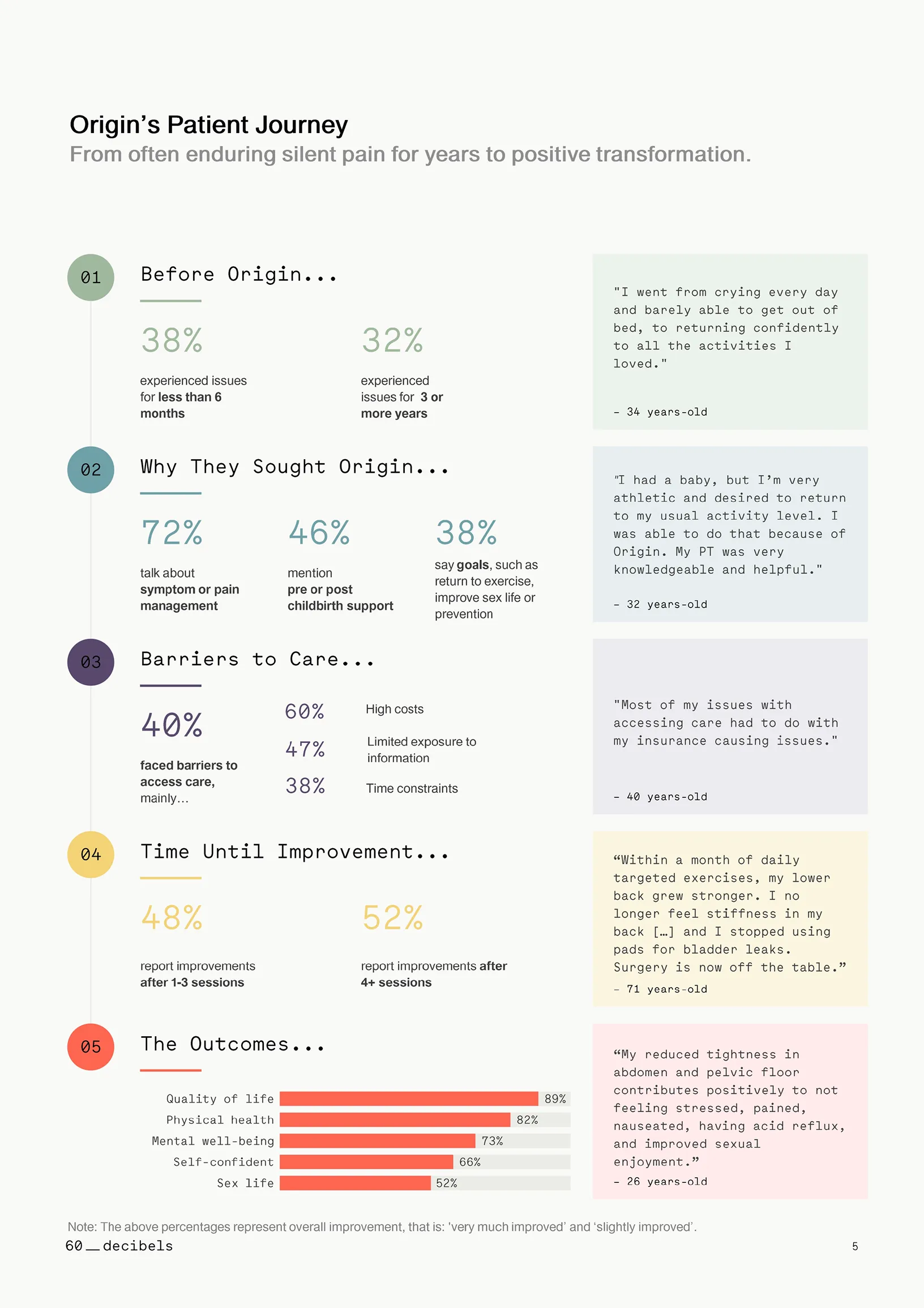
Origin's patient journey
From often enduring silent pain for years to positive transformation.
01 — Before Origin
- 38% experienced issues for less than 6 months
- 32% experienced issues for 3 or more years
"I went from crying every day and barely able to get out of bed, to returning confidently to all the activities I loved." — 34-year-old
02 — Why They Sought Origin
- 72% talk about symptom or pain management
- 46% mention pre or post childbirth support
- 38% say goals, such as return to exercise, improved sex life or prevention
"I had a baby, but I'm very athletic and desired to return to my usual activity level. I was able to do that because of Origin. My PT was very knowledgeable and helpful." — 32-year-old
03 — Barriers to Care
- 40% faced barriers to accessing care mainly 60% cited high costs
- 47% cited limited exposure to information
- 38% cited time constraints
"Most of my issues withvaccessing care had to do with my insurance causing issues."
04 — Time Until Improvement
- 48% report improvements after 1 to 3 sessions
- 52% report improvements after 4 or more sessions
"Within a month of daily targeted exercises, my lower back grew stronger. I no longer feel stiffness in my back and I stopped using pads for bladder leaks. Surgery is now off the table." — 71-year-old
05 — The Outcomes
- Quality of life improved: 89%
- Physical health improved: 82%
- Mental well-being improved: 73%
- Self-confidence improved: 66%
- Sex life improved: 52%
"My reduced tightness in abdomen and pelvic floor contributes positively to not feeling stressed, pained, nauseated, having acid reflux, and improved sexual enjoyment." – 26-years-old
Note: Percentages represent overall improvement, that is: "very much improved" and "slightly improved".
Section 01: Profile
This section helps understand patients’ journey prior to Origin.
The key indicators in this section are:
- Motivation: What motivated patients to seek Origin?
- First Access and Previous Experiences: What proportion of patients are accessing a similar service for the first time? How were their prior experiences, if any?
- Barriers to Care: For how long did patients experience issues before seeking care from Origin? What barriers did they face?
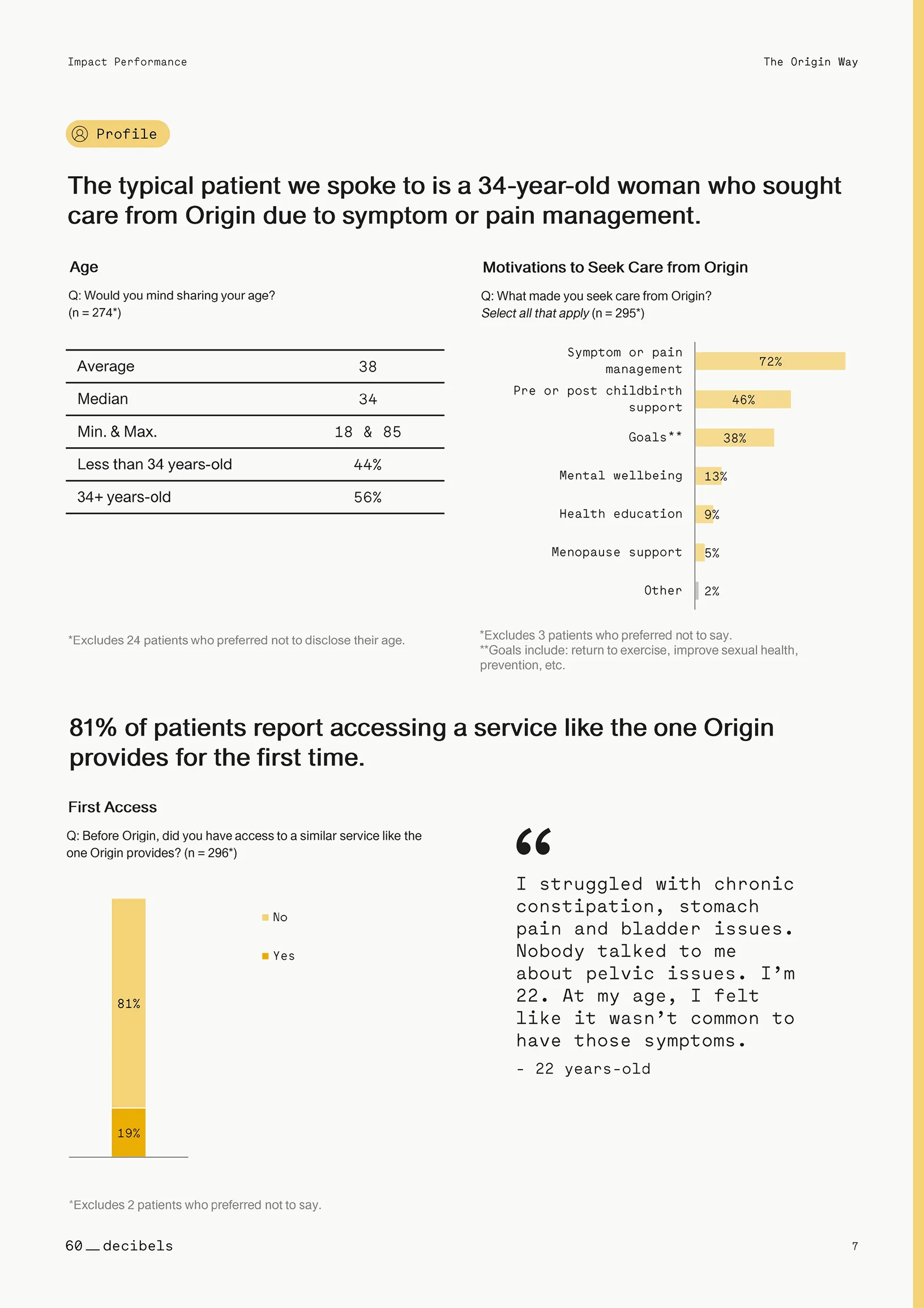
The typical patient we spoke to is a 34-year-old woman who sought care from Origin due to symptom or pain management.
Age of Patients
- Average age: 38
- Median age: 34
- Range: 18 to 85 years old
- Under 34 years old: 44%
- 34 and older: 56%
Motivations to Seek Care from Origin (select all that apply, n=295)
- Symptom or pain management: 72%
- Pre or post childbirth support: 46%
- Goals (return to exercise, improve sexual health, prevention): 38%
- Mental wellbeing: 13%
- Health education: 9%
- Menopause support: 5%
- Other: 2%
First Access
81% of patients report accessing a service like the one Origin provides for the first time.
"I struggled with chronic constipation, stomach pain and bladder issues. Nobody talked to me about pelvic issues. I'm 22. At my age, I felt like it wasn't common to have those symptoms." — 22-year-old
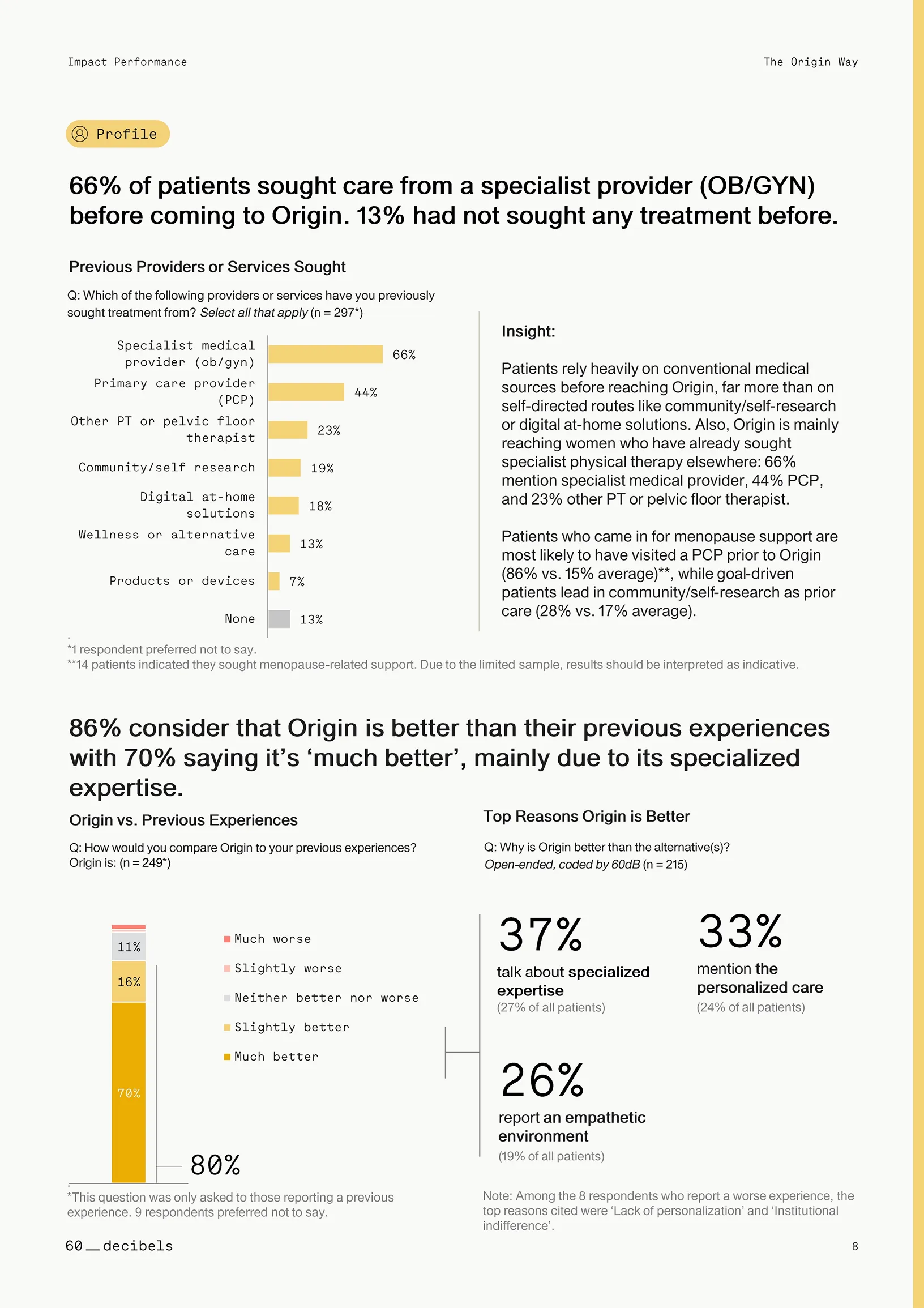
Previous Providers or Services Sought (select all that apply, n=297)
- Specialist medical provider (OB/GYN): 66%
- Primary care provider (PCP): 44%
- Other physical therapist or pelvic floor therapist: 23%
- Community or self-research: 19%
- Digital at-home solutions: 18%
- Wellness or alternative care: 13%
- None: 13%
- Products or devices: 7%
86% consider that Origin is better than their previous experiences, with 70% saying it is "much better," mainly due to specialized expertise.
Top Reasons Origin is Better
- Specialized expertise: 37% of those with prior experience (27% of all patients)
- Personalized care: 33% of those with prior experience (24% of all patients)
- Empathetic environment: 26% of those with prior experience (19% of all patients)
Insight: Patients rely heavily on conventional medical sources before reaching Origin, far more than on self-directed routes like community/self- research or digital at-home solutions. Also, Origin is mainly reaching women who have already sought specialist physical therapy elsewhere: 66% mention specialist medical provider, 44% PCP, and 23% other PT or pelvic floor therapist.
Patients who came in for menopause support are most likely to have visited a PCP prior to Origin (86% vs. 15% average)**, while goal-driven patients lead in community/self- research as prior care (28% vs. 17% average).
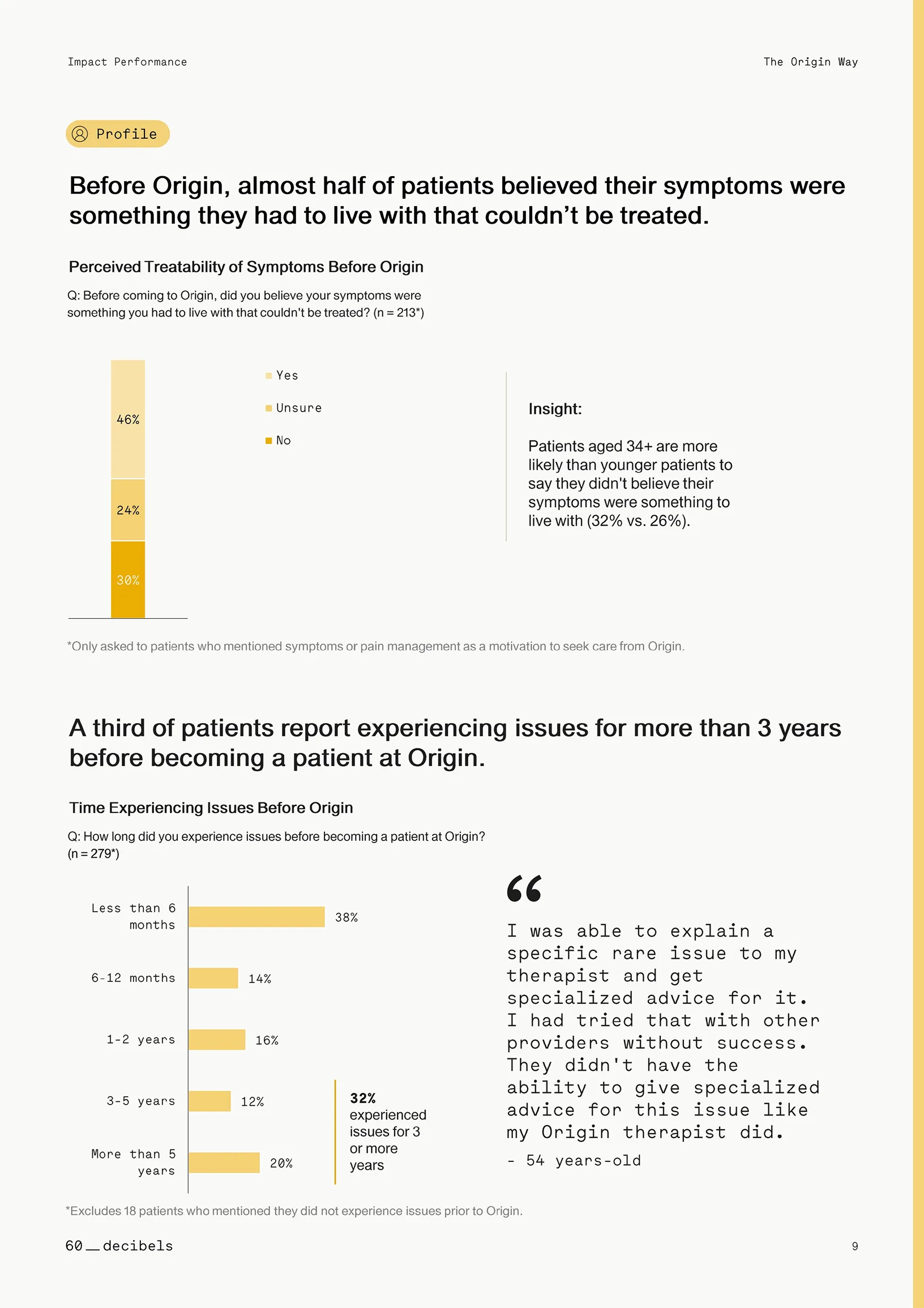
Perceived Treatability of Symptoms Before Origin
Before coming to Origin, almost half of patients believed their symptoms were something they had to live with that could not be treated.
- Yes, believed symptoms were untreatable: 46%
- Unsure: 24%
- No: 30%
Insight: Patients aged 34 and older are more likely than younger patients to say they did not believe their symptoms were something to live with (32% vs. 26%).
Time Experiencing Issues Before Origin
A third of patients report experiencing issues for more than 3 years before becoming a patient at Origin.
- Less than 6 months: 38%
- 6 to 12 months: 14%
- 1 to 2 years: 16%
- 3 to 5 years: 12%
- More than 5 years: 20%
- 32% experienced issues for 3 or more years
"I was able to explain a specific rare issue to my therapist and get specialized advice for it. I had tried that with other providers without success. They didn't have the ability to give specialized advice for this issue like my Origin therapist did." - 54-years-old
Barriers to Care
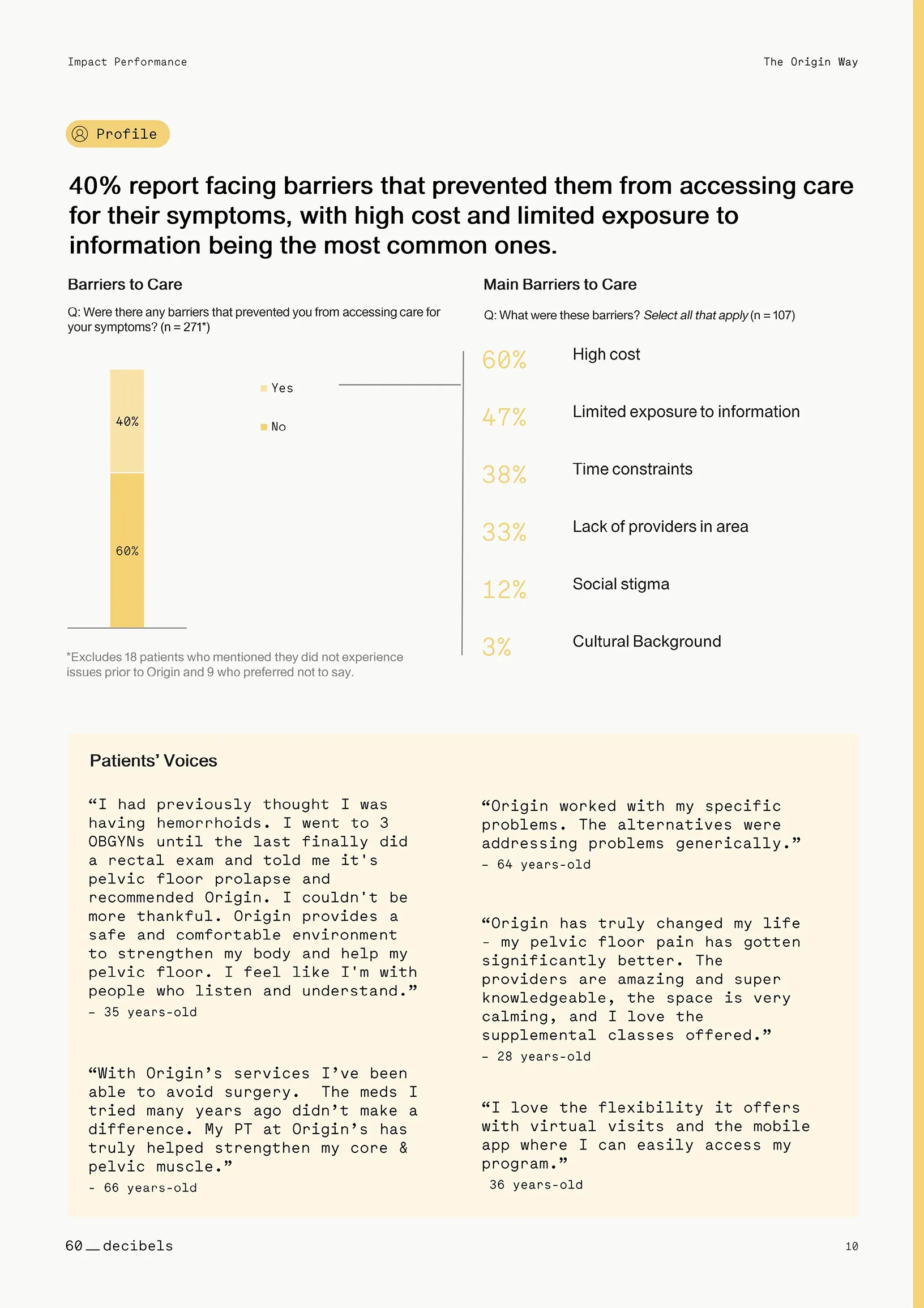
40% report facing barriers that prevented them from accessing care for their symptoms.
Main Barriers to Care (among those who faced barriers, n=107)
- High cost: 60%
- Limited exposure to information: 47%
- Time constraints: 38%
- Lack of providers in area: 33%
- Social stigma: 12%
- Cultural background: 3%
Patient voices:
"I had previously thought I was having hemorrhoids. I went to 3 OBGYNs until the last finally did a rectal exam and told me it's pelvic floor prolapse and recommended Origin. I couldn't be more thankful. Origin provides a safe and comfortable environment to strengthen my body and help my pelvic floor. I feel like I'm with people who listen and understand." — 35-year-old
"With Origin's services I've been able to avoid surgery. The meds I tried many years ago didn't make a difference. My physical therapist at Origin has truly helped strengthen my core and pelvic muscle." — 66-year-old
"Origin worked with my specific problems. The alternatives were addressing problems generically." — 64-year-old
"Origin has truly changed my life — my pelvic floor pain has gotten significantly better. The providers are amazing and super knowledgeable, the space is very calming, and I love the supplemental classes offered." — 28-year-old
"I love the flexibility it offers with virtual visits and the mobile app where I can easily access my program." — 36-year-old
Section 02: Impact
We believe that the best way to understand the social impact that Origin is having, is to simply ask patients whether their quality of life has changed as a result of access to Origin’s services , and if so, how.
This section also shows the degree in which Origin may be impacting other areas of patients’ lives, including their physical health and their mental well-being.
The key indicators in this section are:
- Quality of Life Change: To what extent has the quality of life of patients changed as a result of Origin’s services? And how so?
- Sessions and Home Program: How many sessions do patients need to attend before reporting health improvements? Is this related to how consistent they are with their home program?
- Mental Well-being: Is patient mental well-being also being affected by Origin’s services?
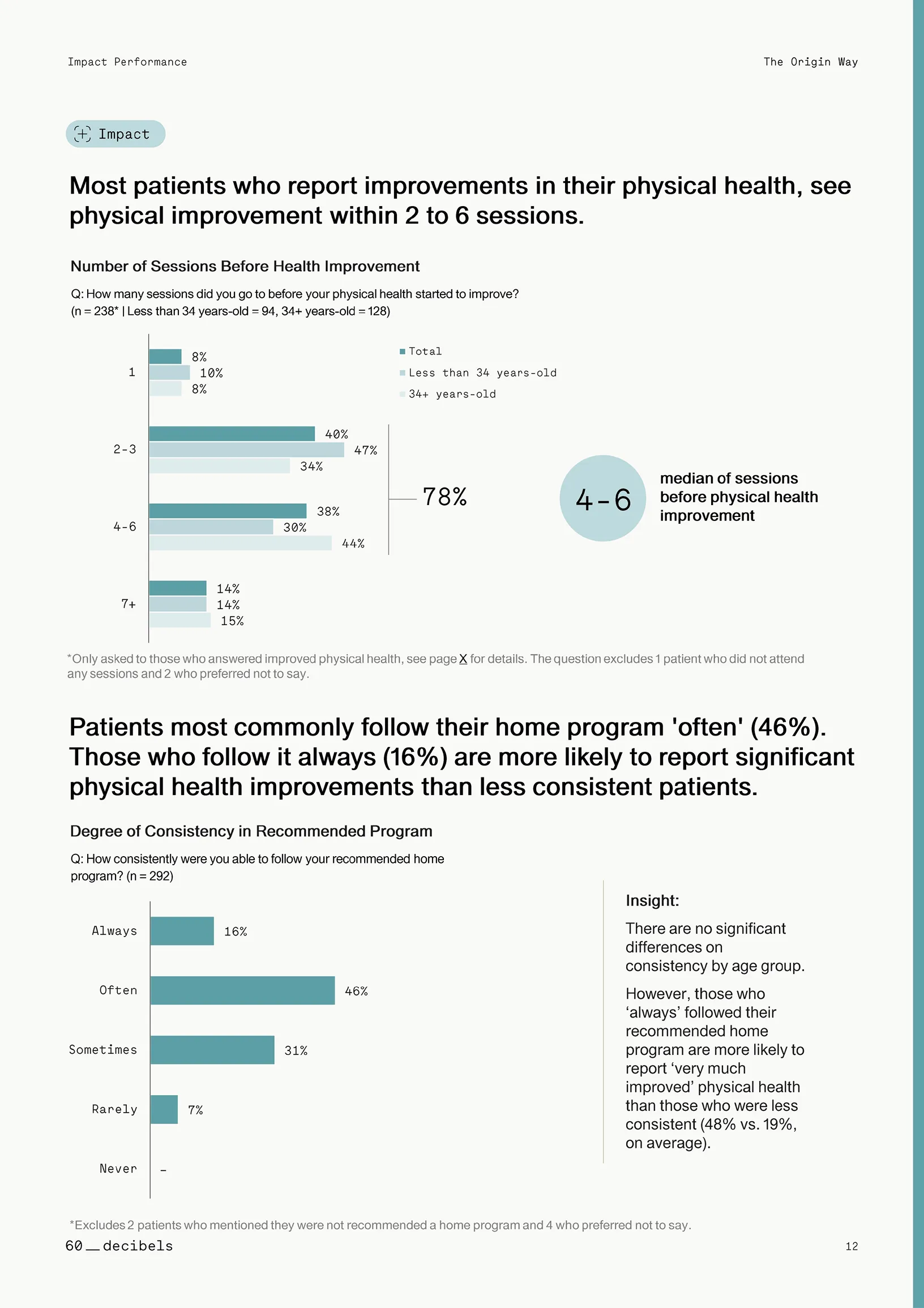
Most patients who report improvements in their physical health see physical improvement within 2 to 6 sessions.
Number of Sessions Before Health Improvement
- 1 session: 8%
- 2 to 3 sessions: 40%
- 4 to 6 sessions: 38%
- 7 or more sessions: 14%
- 78% reported improvement within 2 to 6 sessions
- Median sessions before physical health improvement: 4 to 6
Degree of Consistency in Recommended Home Program (n=292)
- Always: 16%
- Often: 46%
- Sometimes: 31%
- Rarely: 7%
- Never: less than 1%
Insight: There are no significant differences on consistency by age group. However, those who 'always' followed their recommended home program are more likely to report ‘very much improved’ physical health than those who were less consistent (48% vs. 19%, on average).
Age differences in sessions:
- Patients under 34 most commonly reported improvement at 2 to 3 sessions (47%)
- Patients 34 and older most commonly reported improvement at 4 to 6 sessions (44%)
Quality of Life
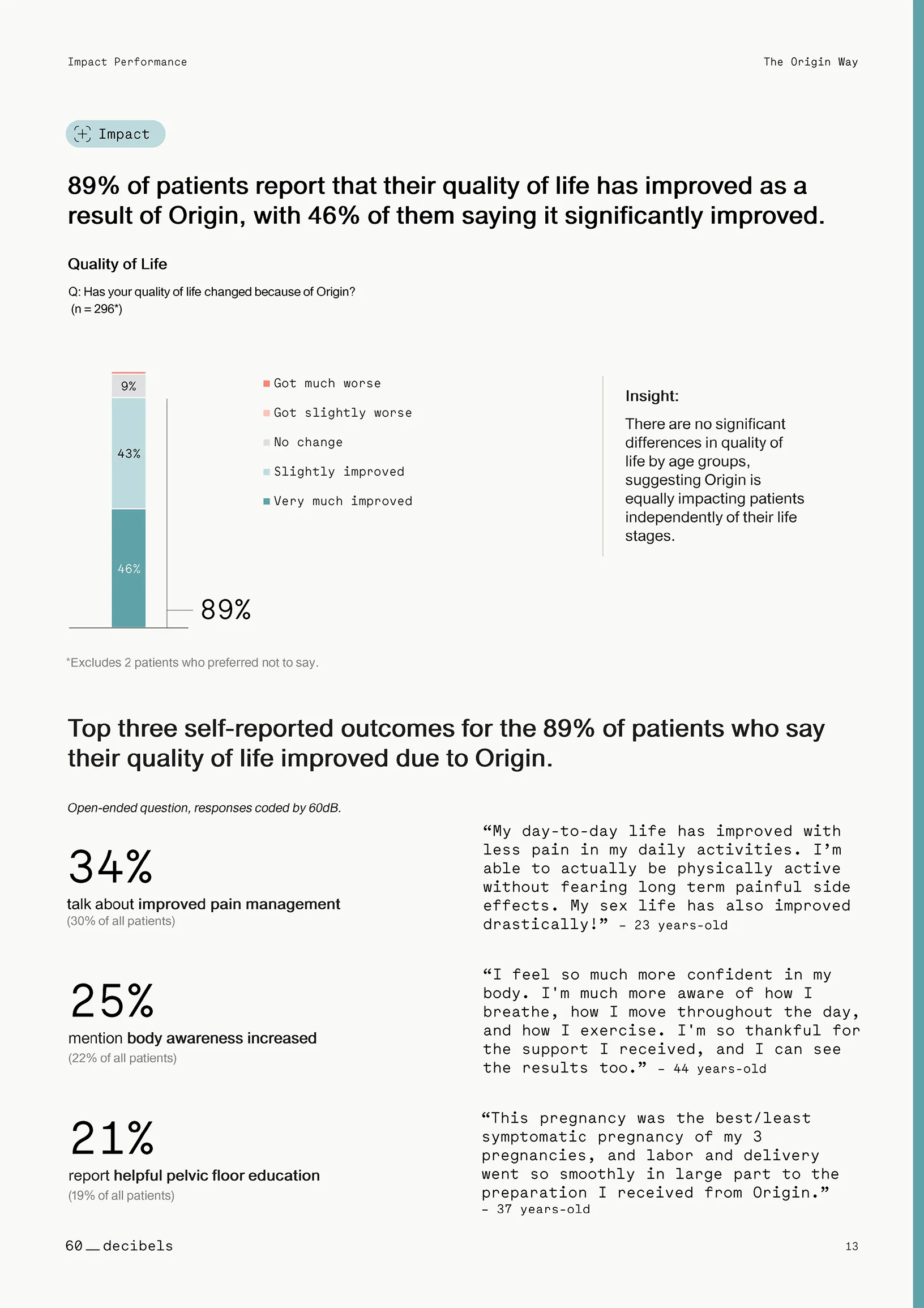
89% of patients report that their quality of life has improved as a result of Origin, with 46% saying it significantly improved.
Quality of Life Change
- Very much improved: 46%
- Slightly improved: 43%
- No change: 9%
- Got slightly worse: less than 1%
- Got much worse: less than 1%
Insight: There are no significant differences in quality of life by age groups, suggesting Origin is equally impacting patients independently of their life stages.
Top three self-reported outcomes for the 89% of patients who say their quality of life improved:
- 34% talk about improved pain management (30% of all patients)
- 25% mention increased body awareness (22% of all patients)
- 21% report helpful pelvic floor education (19% of all patients)
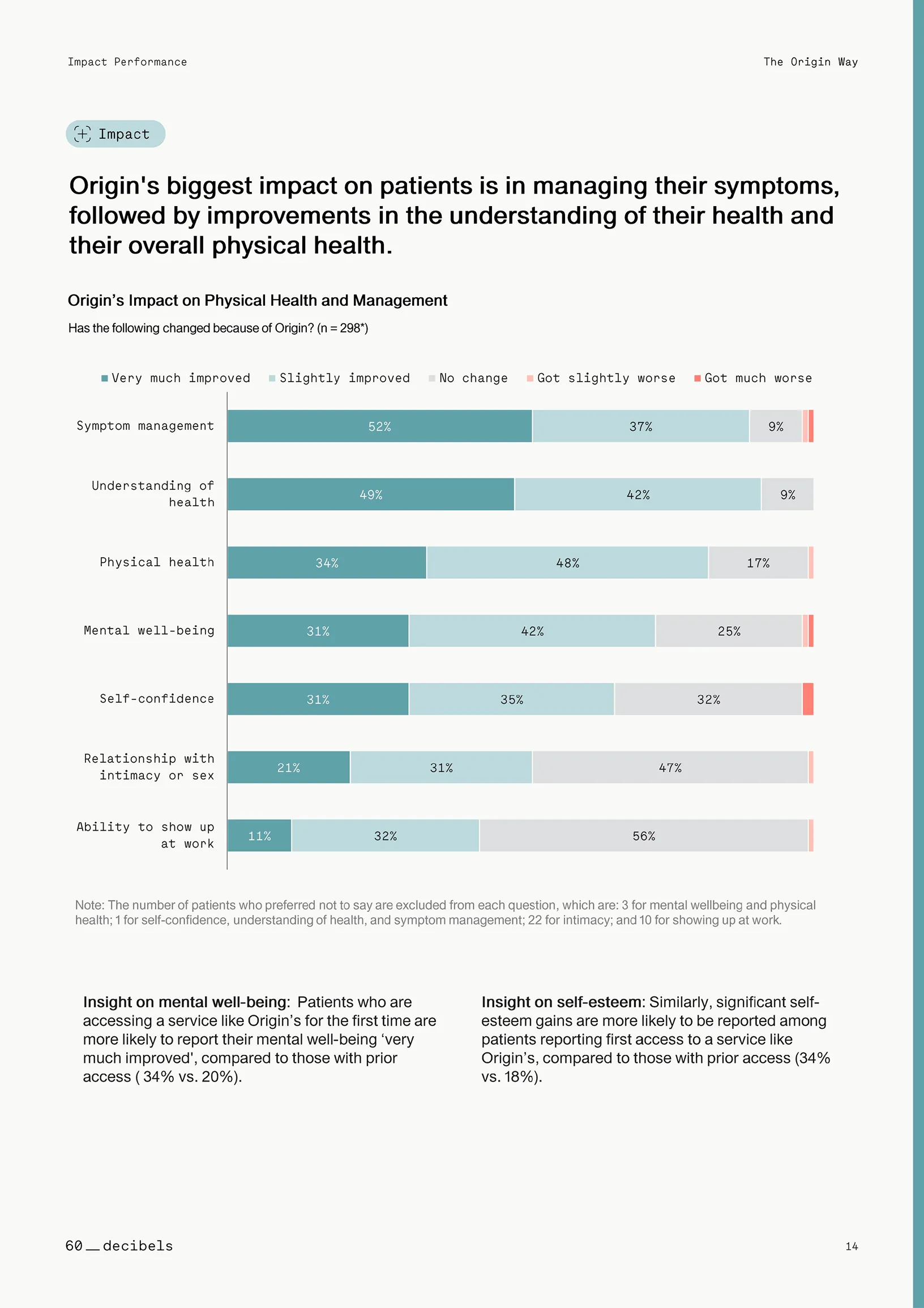
Origin's Impact on Physical Health and Management (n=298)
Symptom management:
- Very much improved: 52%
- Slightly improved: 37%
- No change: 9%
- Total improved: 89%
Understanding of health:
- Very much improved: 49%
- Slightly improved: 42%
- No change: 9%
- Total improved: 91%
Physical health:
- Very much improved: 34%
- Slightly improved: 48%
- No change: 17%
- Total improved: 82%
Mental well-being:
- Very much improved: 31%
- Slightly improved: 42%
- No change: 25%
- Total improved: 73%
Self-confidence:
- Very much improved: 31%
- Slightly improved: 35%
- No change: 32%
- Total improved: 66%
Relationship with intimacy or sex:
- Very much improved: 21%
- Slightly improved: 31%
- No change: 47%
- Total improved: 52%
Ability to show up at work:
- Very much improved: 11%
- Slightly improved: 32%
- No change: 56%
- Total improved: 43%
Insight on mental well-being: Patients who are accessing a service like Origin's for the first time are more likely to report their mental well-being "very much improved," compared to those with prior access (34% vs. 20%).
Insight on self-esteem: Significant self-esteem gains are more likely to be reported among patients reporting first access to a service like Origin's, compared to those with prior access (34% vs. 18%).
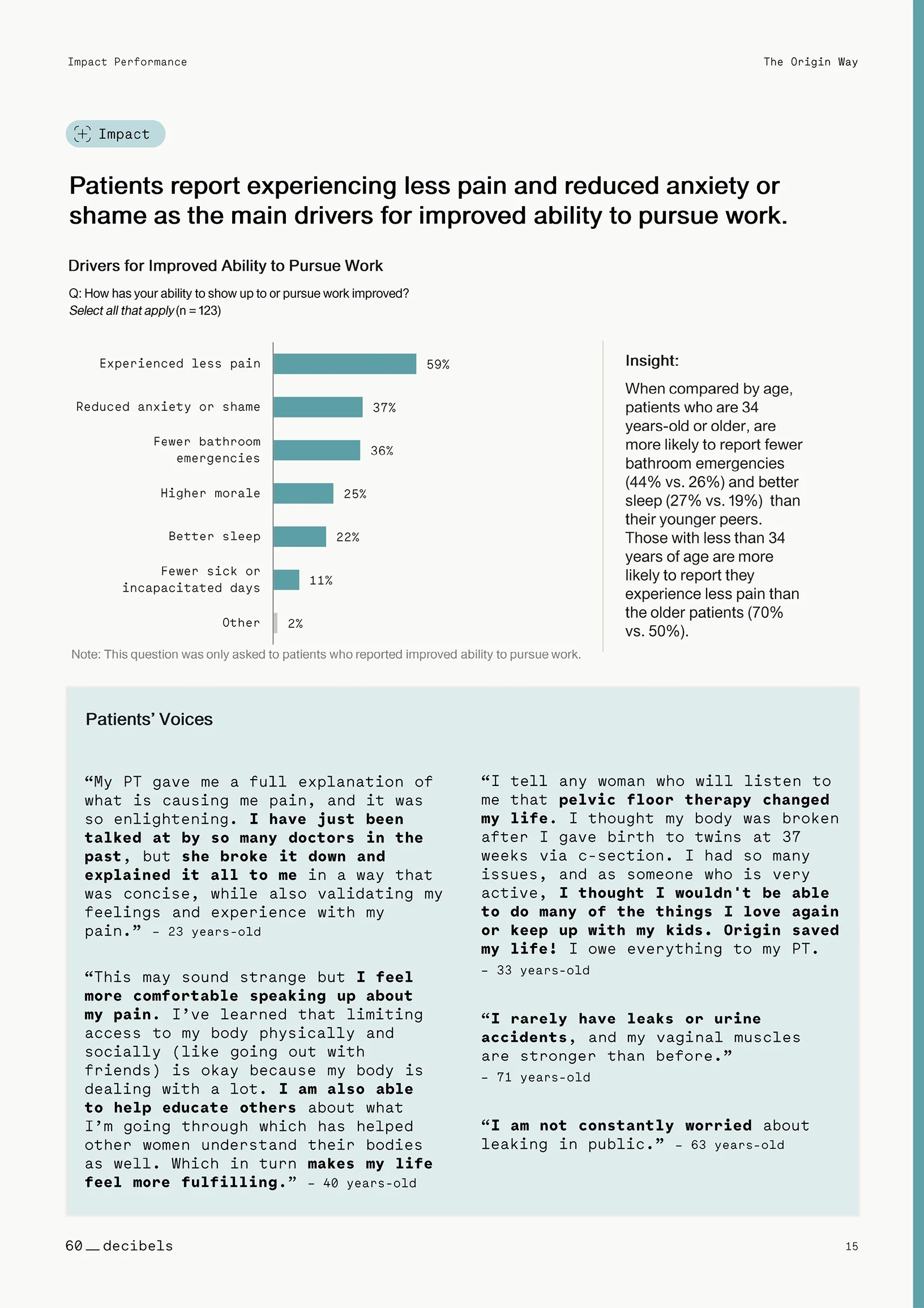
Drivers for Improved Ability to Pursue Work (n=123)
Patients report experiencing less pain and reduced anxiety or shame as the main drivers for improved ability to pursue work.
- Experienced less pain: 59%
- Reduced anxiety or shame: 37%
- Fewer bathroom emergencies: 36%
- Higher morale: 25%
- Better sleep: 22%
- Fewer sick or incapacitated days: 11%
- Other: 2%
Insight: When compared by age, patients who are 34 years-old or older, are more likely to report fewer bathroom emergencies (44% vs. 26%) and better sleep (27% vs. 19%) than their younger peers. Those with less than 34 years of age are more likely to report they experience less pain than the older patients (70% vs. 50%).
Patient voices:
"My day-to-day life has improved with less pain in my daily activities. I'm able to actually be physically active without fearing long-term painful side effects. My sex life has also improved drastically." — 23-year-old
"I feel so much more confident in my body. I'm much more aware of how I breathe, how I move throughout the day, and how I exercise. I'm so thankful for the support I received, and I can see the results too." — 44-year-old
"This pregnancy was the best and least symptomatic pregnancy of my 3 pregnancies, and labor and delivery went so smoothly in large part to the preparation I received from Origin." — 37-year-old
"I tell any woman who will listen to me that pelvic floor therapy changed my life. I thought my body was broken after I gave birth to twins at 37 weeks via c-section. I had so many issues, and as someone who is very active, I thought I wouldn't be able to do many of the things I love again or keep up with my kids. Origin saved my life." — 33-year-old
"I rarely have leaks or urine accidents, and my vaginal muscles are stronger than before." — 71-year-old
"I am not constantly worried about leaking in public." — 63-year-old
Section 03: Patients' Stories
Deep dive into patients’ experiences to understand the stories behind the numbers. The following section presents 4 of the 10 follow-up in-depth phone surveys conducted with Origin’s patients. They really had a lot to say!
The key themes covered in this section are:
- Journey Prior to Origin
- Physical Health
- Mental and Emotional Well-being
- Intimacy and Sex
- Ability to Pursue Work
Patient stories:
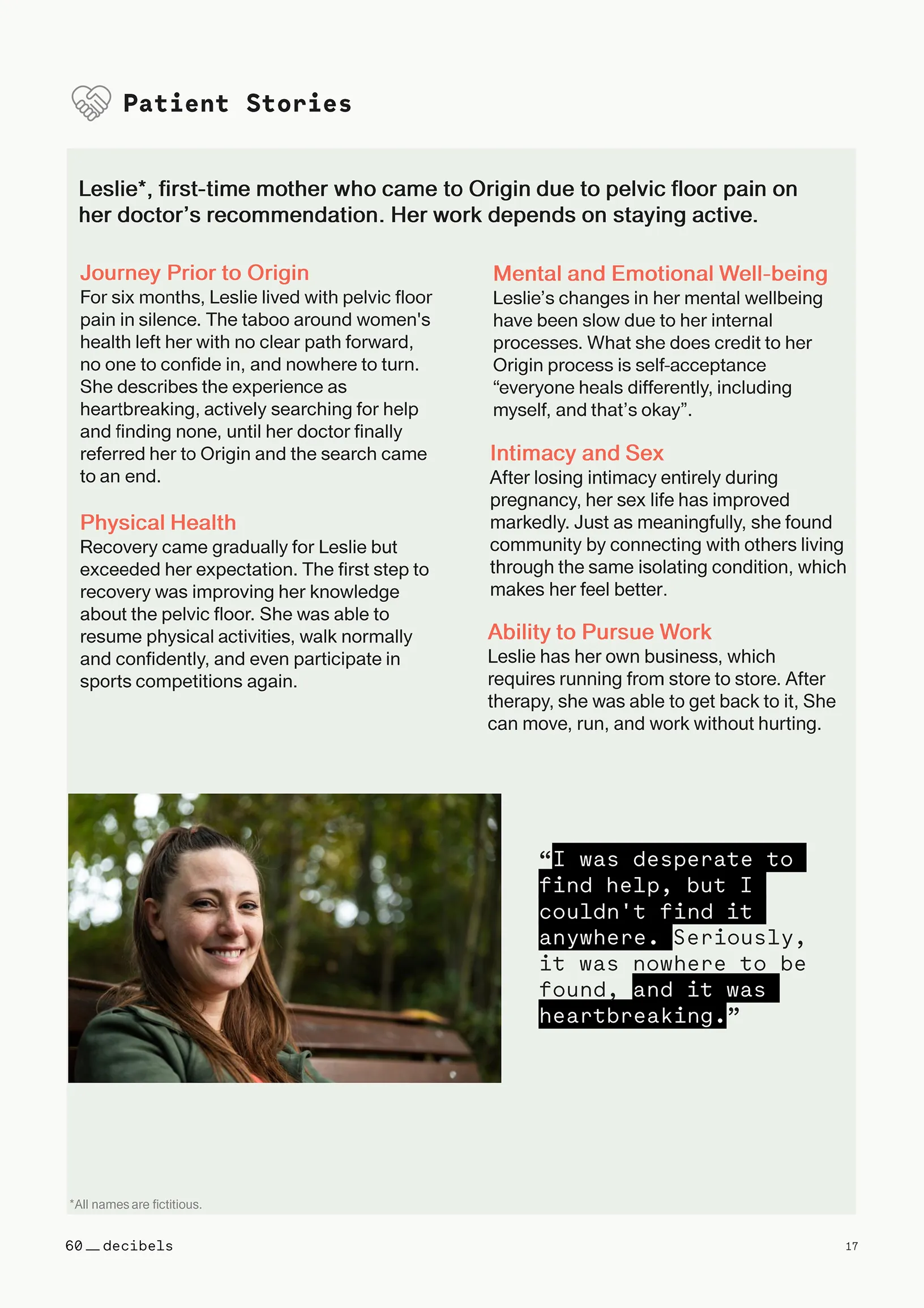
Leslie — First-time mother who came to Origin due to pelvic floor pain on her doctor's recommendation. Her work depends on staying active
Journey Prior to Origin: For six months, Leslie lived with pelvic floor pain in silence. The taboo around women's health left her with no clear path forward, no one to confide in, and nowhere to turn. She describes the experience as heartbreaking, actively searching for help and finding none, until her doctor finally referred her to Origin.
Physical Health: Recovery came gradually but exceeded her expectations. The first step was improving her knowledge about the pelvic floor. She was able to resume physical activities, walk normally and confidently, and even participate in sports competitions again.
Mental and Emotional Well-being: Leslie's changes in her mental wellbeing have been slow due to her internal processes. What she credits to her Origin experience is self-acceptance — "everyone heals differently, including myself, and that's okay."
Intimacy and Sex: After losing intimacy entirely during pregnancy, her sex life has improved markedly. She also found community by connecting with others living through the same isolating condition.
Ability to Pursue Work: Leslie has her own business, which requires running from store to store. After therapy, she was able to get back to it. She can move, run, and work without pain.
"I was desperate to find help, but I couldn't find it anywhere. Seriously, it was nowhere to be found, and it was heartbreaking."
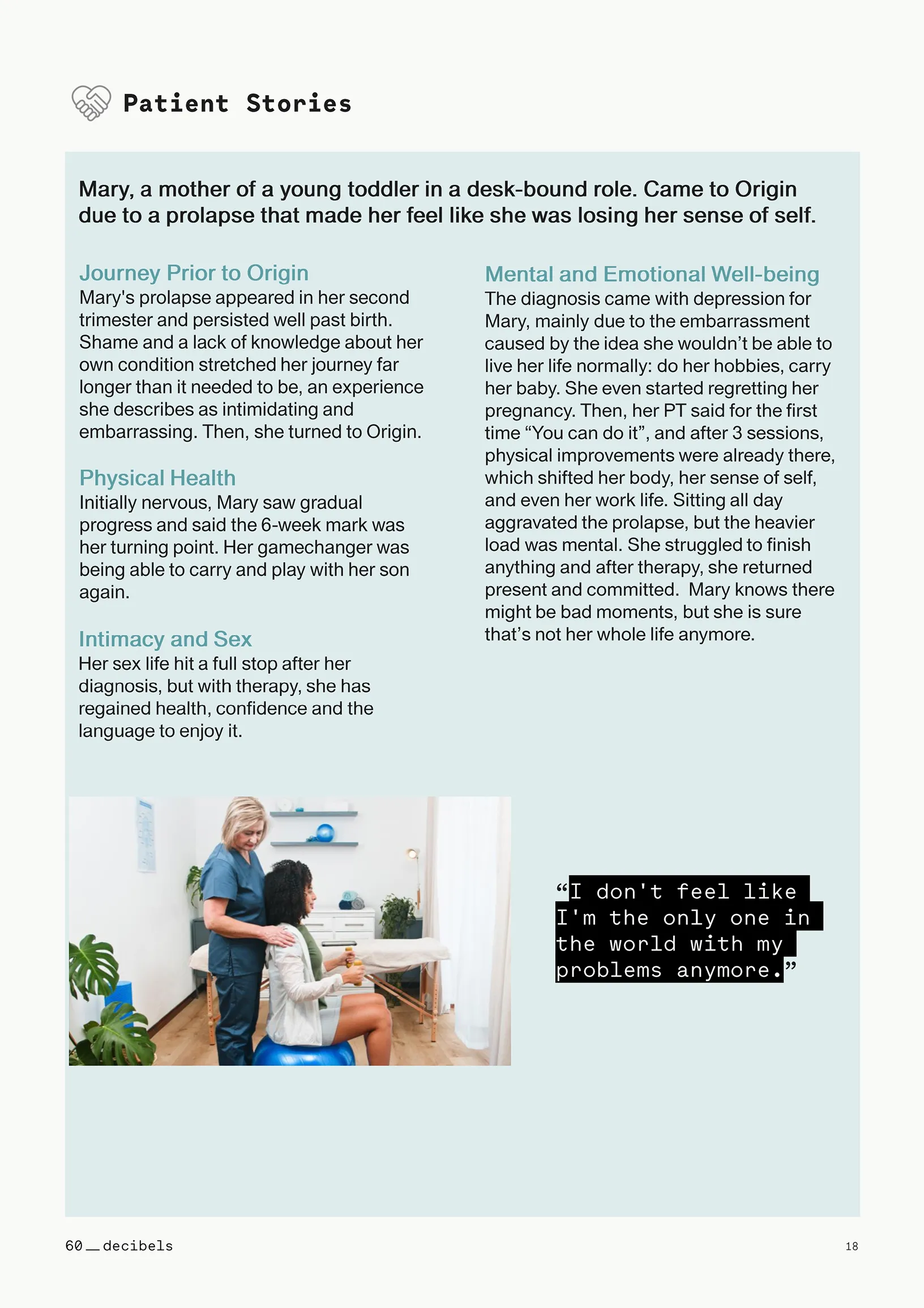
Mary — A mother of a young toddler in a desk-bound role. Came to Origin due to a prolapse that made her feel like she was losing her sense of self
Journey Prior to Origin: Mary's prolapse appeared in her second trimester and persisted well past birth. Shame and a lack of knowledge about her own condition stretched her journey far longer than it needed to be, an experience she describes as intimidating and embarrassing.
Physical Health: Initially nervous, Mary saw gradual progress and said the 6-week mark was her turning point. Her key milestone was being able to carry and play with her son again.
Mental and Emotional Well-being: The diagnosis came with depression, mainly due to the fear she wouldn't be able to live her life normally. After 3 sessions, physical improvements shifted her body, her sense of self, and her work life. Mary knows there might be bad moments, but she is sure that is not her whole life anymore.
Intimacy and Sex: Her sex life came to a full stop after her diagnosis, but with therapy, she has regained health, confidence, and the language to enjoy it.
"I don't feel like I'm the only one in the world with my problems anymore."
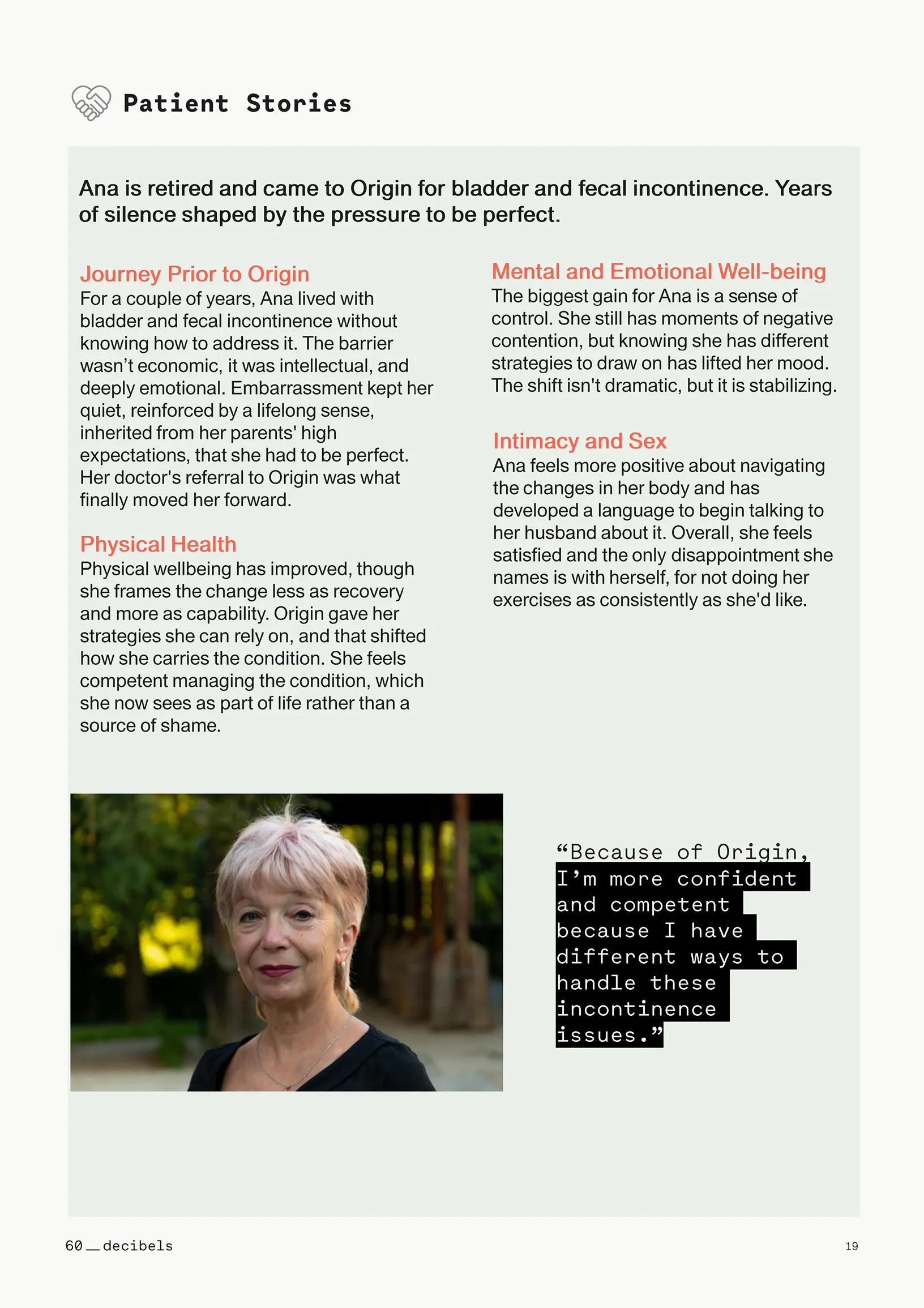
Ana — Retired, came to Origin for bladder and fecal incontinence. Years of silence shaped by the pressure to be perfect
Journey Prior to Origin: For a couple of years, Ana lived with bladder and fecal incontinence without knowing how to address it. The barrier wasn't economic — it was intellectual and deeply emotional. Embarrassment kept her quiet. Her doctor's referral to Origin was what finally moved her forward.
Physical Health: Physical wellbeing has improved. Origin gave her strategies she can rely on, and that shifted how she carries the condition. She feels competent managing it, which she now sees as part of life rather than a source of shame.
Mental and Emotional Well-being: The biggest gain for Ana is a sense of control. Knowing she has different strategies to draw on has lifted her mood. The shift isn't dramatic, but it is stabilizing.
Intimacy and Sex: Ana feels more positive about navigating the changes in her body and has developed language to begin talking to her husband about it.
"Because of Origin, I'm more confident and competent because I have different ways to handle these incontinence issues."
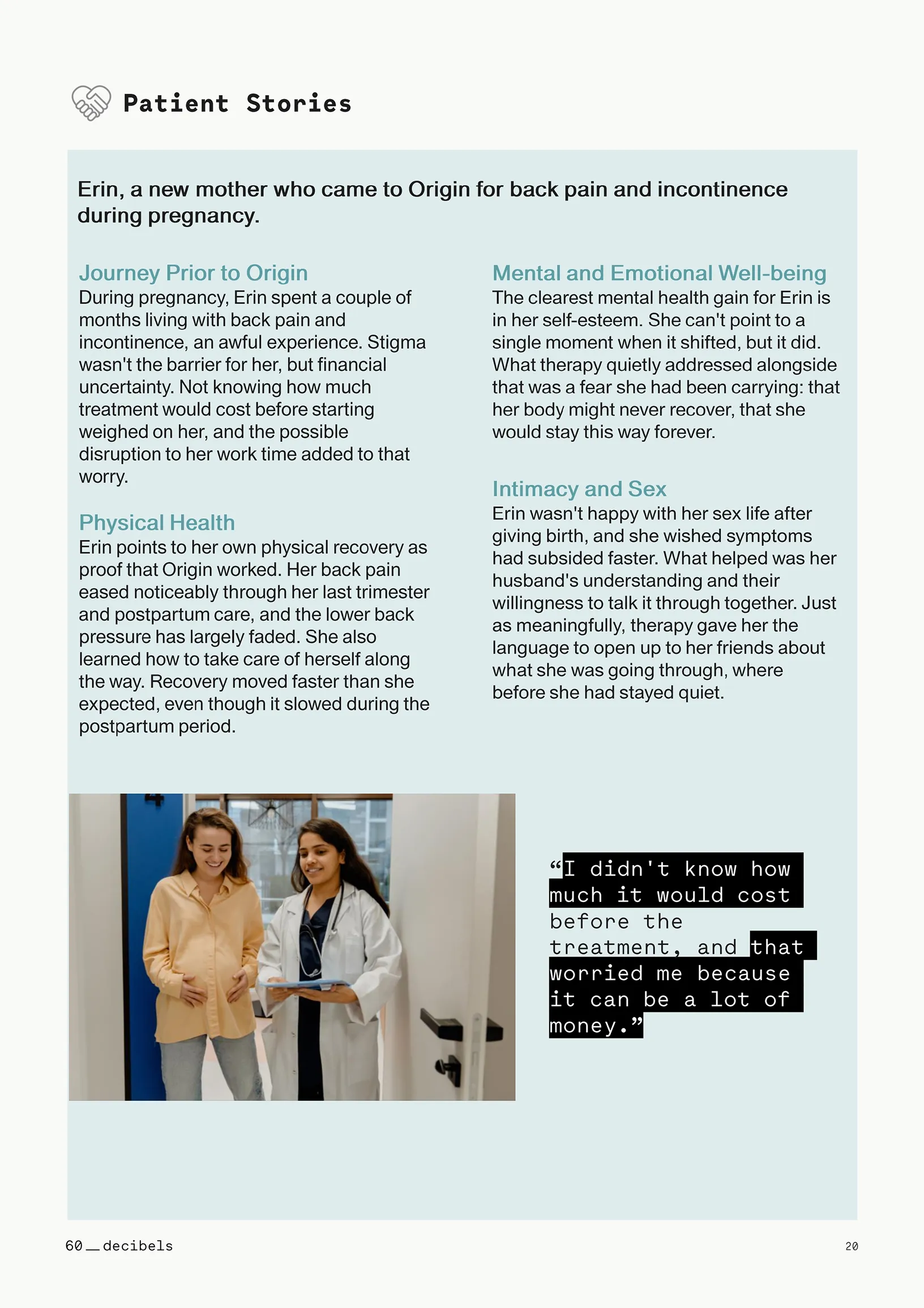
Erin — A new mother who came to Origin for back pain and incontinence during pregnancy
Journey Prior to Origin: During pregnancy, Erin spent a couple of months living with back pain and incontinence. Stigma wasn't the barrier for her — financial uncertainty was. Not knowing how much treatment would cost before starting weighed on her.
Physical Health: Her back pain eased noticeably through her last trimester and postpartum care, and the lower back pressure has largely faded. Recovery moved faster than she expected, even though it slowed during the postpartum period.
Mental and Emotional Well-being: The clearest mental health gain for Erin is in her self-esteem. What therapy quietly addressed alongside that was a fear she had been carrying — that her body might never recover.
Intimacy and Sex: Therapy gave her the language to open up to her friends about what she was going through, where before she had stayed quiet.
"I didn't know how much it would cost before the treatment, and that worried me because it can be a lot of money."
Methodology
About the 60 Decibels Methodology
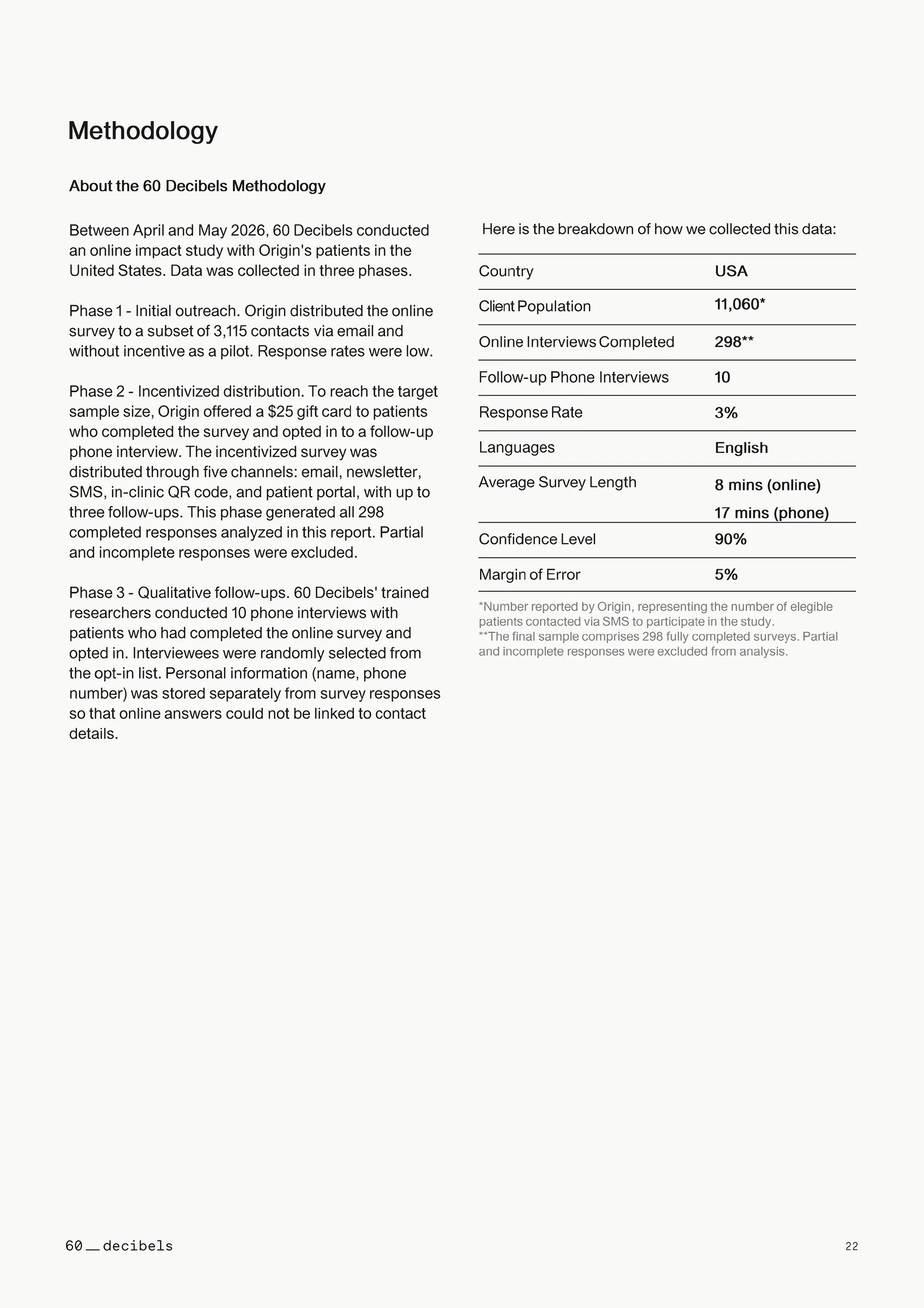
Between April and May 2026, 60 Decibels conducted an online impact study with Origin's patients in the United States. Data was collected in three phases.
Phase 1 — Initial outreach: Origin distributed the online survey to a subset of 3,115 contacts via email without incentive as a pilot. Response rates were low.
Phase 2 — Incentivized distribution: Origin offered a $25 gift card to patients who completed the survey and opted in to a follow-up phone interview. The survey was distributed through five channels: email, newsletter, SMS, in-clinic QR code, and patient portal, with up to three follow-ups. This phase generated all 298 completed responses analyzed in this report.
Phase 3 — Qualitative follow-ups: 60 Decibels researchers conducted 10 phone interviews with patients who had completed the online survey and opted in. Interviewees were randomly selected from the opt-in list.
Study Parameters:
- Country: USA
- Client population: 11,060
- Online interviews completed: 298
- Follow-up phone interviews: 10
- Response rate: 3%
- Languages: English
- Average survey length: 8 minutes (online), 17 minutes (phone)
- Confidence level: 90%
- Margin of error: 5%
Appendix
Here is the breakdown of how we collected this data:
- Country: USA
- Client Population: 11,060* (*Number reported by Origin, representing the number of elegible patients contacted via SMS to participate in the study.)
- Online Interviews Completed: 298** (**The final sample comprises 298 fully completed surveys. Partial and incomplete responses were excluded from analysis.)
- Follow-up Phone Interviews: 10
- Response Rate: 3%
- Languages: English
- Average Survey Length: 8 mins (online), 17 mins (phone)
- Confidence Level: 90%
- Margin of Error: 5%
For queries: daniel@60decibels.com, isabela@60decibels.com
Project Team: Daniel Field, Isabela Nieto Castro, Belén Cáceres
Acknowledgments: Thank you to Carine Carmey, Mackenzie Sangster, Kelsey Jarrett, Anna Rumer, and their teams for their support throughout the project. This work was generously sponsored by SJF Ventures.
Tags and topics for indexing: pelvic floor physical therapy, pelvic floor therapy, women's health, pelvic health, Origin, pelvic floor PT outcomes, virtual physical therapy, pelvic floor treatment outcomes, patient satisfaction, quality of life, postpartum recovery, prenatal pelvic floor, incontinence treatment, prolapse treatment, pelvic pain, 60 Decibels impact report, women's healthcare access, barriers to pelvic floor care, mental health and pelvic floor, sexual health and pelvic floor therapy, pelvic floor and work productivity, pelvic floor education, home program adherence, telehealth pelvic floor, insurance coverage pelvic floor therapy