
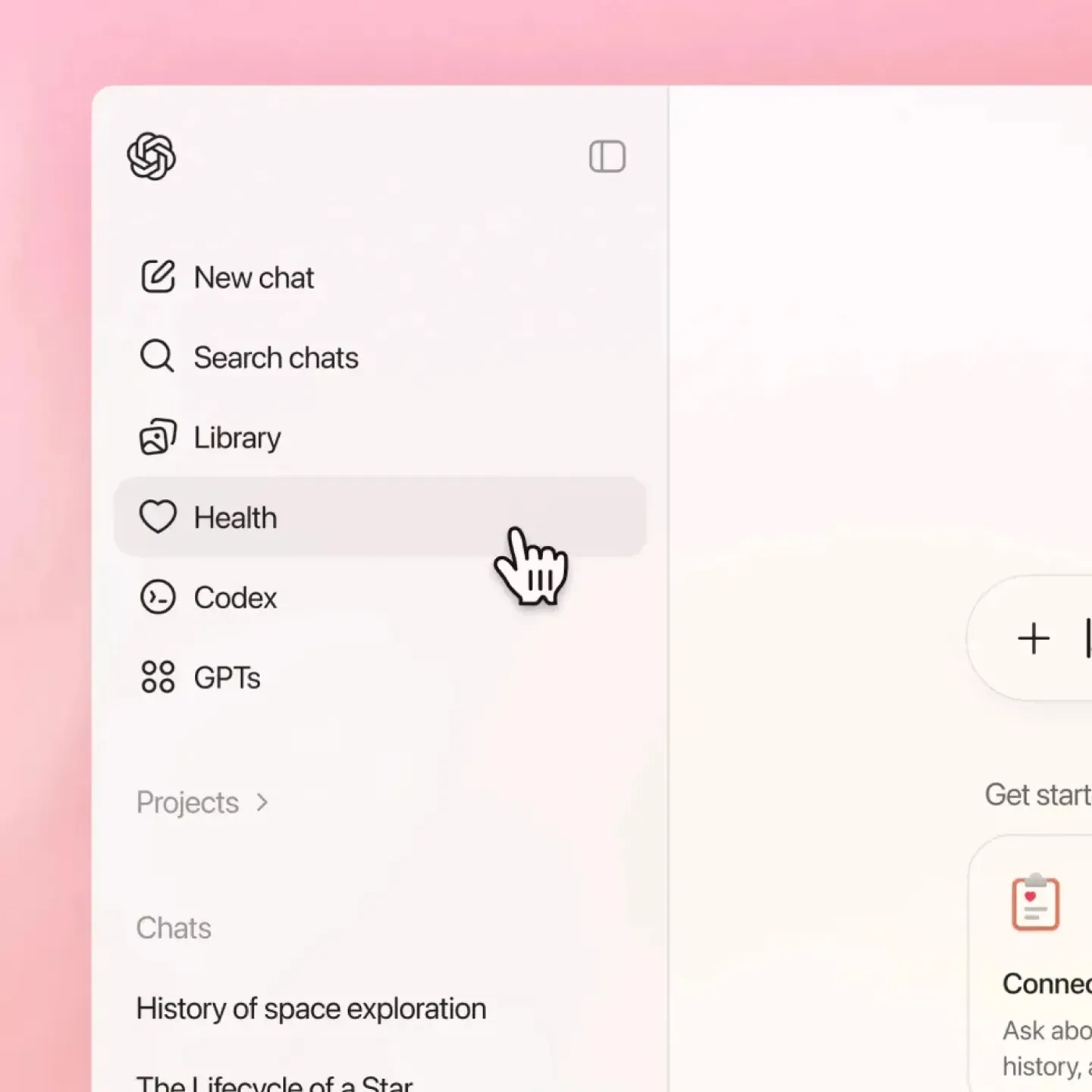
More individuals are turning to AI chatbots (like ChatGPT, Claude, and Gemini) to ask the kinds of health questions they might otherwise hesitate to bring up with friends, family, or even healthcare providers. The recent release of ChatGPT Health, OpenAI's new personalized health-focused AI tool, signals that this trend is only accelerating.
In the years to come, we'll likely see even more people turning to AI chat tools to answer questions about their pelvic health. Questions about bladder leakage, painful sex, postpartum recovery, and pelvic floor dysfunction often carry stigma. Many people aren't sure if what they're experiencing is "normal" or if they should seek professional help.
While AI chatbots offer a low-barrier way to explore these concerns privately, can they actually give you the answers you need? And more importantly, should you rely on it for something as complex as pelvic health, which often requires evaluation and individualized treatment plans?
What are AI chatbots, and how do they work? (LLMs explained)
AI chatbots like ChatGPT, Claude, and Gemini are examples of generative AI, a category of artificial intelligence that creates new content (text, images, audio) in response to prompts. They're built on technology called Large Language Models, or LLMs. LLMs are artificial intelligence systems trained to understand and then generate human-like responses based on massive amounts of text data inputs they receive. They work by identifying patterns in language rather than accessing a database of facts or understanding information the way humans do. LLMs can perform a variety of tasks such as translation, summarization, question answering, and writing.
Tools like ChatGPT, Claude, and Google's Gemini are all LLMs. They generate responses based on statistical patterns they've learned through millions of inputs, which is why they can sound confident even when providing inaccurate information. Understanding this distinction is important: LLMs aren't search engines pulling verified facts, and they're not knowledge bases with guaranteed accuracy. Rather, they are prediction models that generate text based on probability.
What is ChatGPT Health?
ChatGPT Health is an LLM, but with an important distinction from general-purpose chatbots. Announced by OpenAI in early 2026, it is designed to provide more personalized health guidance by allowing users to integrate personal health data like medical records, lab results, and wellness information to receive tailored responses. This level of personalization can be useful for understanding how medications you're taking or certain lifestyle factors might impact a health condition.
People are using LLMs like ChatGPT (owned by OpenAi), Gemini (owned by Google), Claude (owned by Anthropic), and now ChatGPT Health to:
- Research symptoms before deciding whether to see a doctor
- Understand possible diagnoses or treatment pathways for a particular ailment
- Curate thoughtful questions to ask their healthcare provider
- Get clarity on medical terminology or diagnoses
- Explore lifestyle changes, self-care strategies, and/or wellness plans
Survey-based research suggests around 25% of adults under the age of 30 use AI chatbots at least once a month to find health information and advice.
Why people turn to AI chatbots for pelvic health questions
Pelvic health concerns carry unique barriers that might make asking AI particularly appealing. Women's health topics, in particular, have historically been dismissed or minimized in medical settings. People may worry they'll be told their symptoms are "just part of having kids" or part of the "normal aging” process. Similarly, LGBTQ+ folks have also dealt with historical minimization, dismissal, and/or outright lack of care options. AI tools can offer a space to explore concerns and ask questions that might feel uncomfortable to do with someone directly.
In addition, many people don't realize that symptoms such as urinary leakage, painful intercourse, or pelvic organ prolapse are treatable with pelvic floor physical therapy.
Benefits of AI chatbots for health questions
General-purpose AI chatbots like ChatGPT, Gemini, and Claude can be helpful in specific situations. They excel at organizing large volumes of information quickly and presenting it in an accessible way. If you're trying to understand a diagnosis you received or are researching potential next steps in your care, AI can point you toward relevant information.
- AI can help you prepare for appointments
One of the most valuable uses of AI is generating informed questions to bring to your healthcare provider. If you're feeling pelvic pressure and aren't sure how to describe it, an LLM might help you identify the right terminology or related symptoms to mention. This can lead to more productive conversations with your clinician.
- AI can validate that your symptoms deserve attention
When it comes to pelvic health which has been historically stigmatized, people are often dismissed or unsure if their concerns warrant a doctor's visit. In the face of stigma, AI can affirm that symptoms like pelvic pain, leakage, or painful sex are legitimate reasons to seek care. That validation alone can be powerful. That said, validation from a chatbot is a starting point, not a substitute for individualized assessment and treatment, especially if your symptoms are ongoing.
- ChatGPT Health offers personalization
Unlike general LLMs such as Gemini, Claude or standard ChatGPT, ChatGPT Health integrates your health and wellness data to provide responses tailored to your medical history. This level of personalization can be useful for understanding how medications you're taking or certain lifestyle factors might impact a health condition.
The risks and limitations of relying on AI chatbots for health guidance
While AI tools have utility, they come with significant limitations, especially for complex conditions such as pelvic floor dysfunction.
- LLMs can fabricate information
The current AI chatbot models generate responses based on patterns in their training data, but they don't "know" things in a factual sense. This means they can confidently present information that sounds credible but is inaccurate or outdated. They may reinforce common myths, like the idea that everyone should be doing Kegels or that leaking pee after childbirth is inevitable.
- Privacy concerns with health data
When you share personal health information with any AI chatbot, you're sharing it with a third-party platform, and that comes with inherent privacy considerations. Most general-purpose chatbots were not designed specifically for sensitive medical conversations, so it's worth reviewing the terms of service of any tool you use to understand how your data is stored, used, or shared before discussing personal health details. As a general rule, avoid sharing identifying information like your full name, date of birth, or specific medical record details with general-purpose AI chatbots.
ChatGPT Health has outlined additional privacy protections designed specifically for health data. You can read more about their approach in OpenAI's press release.
- LLM training is broad, not specialized
LLMs are trained on enormous datasets that cover general medical knowledge, but they lack the deep specialization needed to address nuanced pelvic health issues. Pelvic floor dysfunction is complex and individual. What works for one person's tight, overactive pelvic floor may worsen symptoms for someone with a relaxed, underactive pelvic floor.
- AI chatbots cannot perform an assessment
This is a critical limitation when it comes to pelvic health. A pelvic floor physical therapist evaluates far more than the symptoms you can report to a chatbot. During an assessment, your PT may assess:
- Movement patterns and how your body coordinates during activities
- Breathing mechanics and how the diaphragm interacts with the pelvic floor
- Posture and alignment
- Muscle tone, tenderness, and coordination through internal and external examination
- How your hips, glutes, and core work together to support the pelvic floor
AI chatbots cannot see you move, feel muscle tone, or observe subtle dysfunctions that only become apparent through one-on-one evaluation. Nor can it guide you through a comprehensive, evidence-based self-assessment during a virtual evaluation. Pelvic floor dysfunction looks different for everyone, and accurate diagnosis requires human clinical expertise, whether in-person or virtually.
What pelvic floor physical therapists want you to know about health advice from LLMs
Our clinicians often work with patients who've tried to self-diagnose or self-treat based on general advice, whether from AI, social media, or well-meaning friends. While some guidance can be helpful, pelvic floor dysfunction is rarely one-size-fits-all.
For example, Kegels are often recommended as a catch-all solution for pelvic floor issues. But if your pelvic floor is already tight or overactive, doing Kegels, or Pelvic Floor Muscle (PFM) contraction exercises, can make symptoms worse. In fact, for those who "need" PFM contraction exercises, doing them incorrectly can cause issues too. A physical therapist can determine whether you need to focus on strengthening, relaxing, or moving your pelvic floor muscles differently.
Virtual pelvic floor physical therapy offers many of the benefits people seek from AI (accessibility, convenience, privacy) with the added value of expert assessment and personalized treatment.
Common pelvic floor questions people ask LLMs (answered by a human!)
Below are some commonly asked pelvic health questions, with clear, evidence-backed answers from our team.
How do I know if I have pelvic floor dysfunction?
Broadly, pelvic floor dysfunction occurs when the muscles around your pelvic openings (or the urethra, anus, and for some, vaginal opening) don’t work as well as they could. This can result in symptoms ranging from bladder leaks, pelvic pain, pain with sex, constipation, pelvic pressure or heaviness, difficulty controlling bladder or bowel movements, and more. It’s important to get a proper evaluation and treatment plan based on your individual symptoms. Read more about symptoms of PFD and how physical therapy can help.
What does pelvic floor physical therapy involve?
Pelvic floor physical therapy (PFPT) focuses on the muscles, nerves, and related tissues that support your bladder, bowel, and reproductive organs. Here’s a comprehensive overview of what to expect during pelvic floor physical therapy.
Can I treat myself for pelvic floor dysfunction?
While some pelvic floor exercises and lifestyle modifications can help, effective treatment requires proper diagnosis and personalized interventions. Without understanding the causes underlying your pelvic floor dysfunction, self-treatment can make symptoms worse, or at best, make symptoms plateau and not improve. A pelvic floor PT will assess your unique situation and work with you to build a personalized plan.
Is pelvic floor physical therapy covered by insurance?
Often, yes! Origin accepts most major insurance providers, so care is both accessible and as low as $0 cost per session. More information about our insurance policies can be found here and here.
Should I do Kegels?
Not everyone should doKegels. If your pelvic floor is tight or overactive, Kegels can make presenting symptoms worse. A pelvic floor PT can assess whether Kegels are right for you or if you need a different approach. More information on Kegels can be found here.
When should I see a pelvic floor PT after giving birth?
You can see a pelvic floor PT at any point postpartum, whether you're two weeks or two years out from delivery. Early intervention can help prevent long-term issues, but it's never too late to seek care. Here are 7 reasons why it's one of the best things you can do for yourself and your baby.
When AI chatbots are helpful and when to see a clinician
AI chatbots can be a useful starting point for understanding your symptoms and generating questions, but it cannot replace clinical expertise. You can use them to educate yourself, validate your concerns, and prepare for appointments. But if you're experiencing symptoms, the most important next step is seeing a pelvic floor physical therapist.
Think of AI as a tool for gathering information, not for diagnosis or treatment planning. If you aren’t actively experiencing symptoms (or don’t think you are), you still may discover some compensations or imbalances during a baseline pelvic floor evaluation. If you are actively experiencing symptoms, or are approaching a big life transition such as pregnancy, postpartum, menopause, or surgery, the expertise, individualized assessment, and hands-on treatment that a clinician provides become essential.
The bottom line: AI can support your health journey, but it cannot replace expert care
LLMs like ChatGPT Health represent a meaningful shift in how people access health information. They can be valuable for research, question generation, and understanding medical concepts. But when it comes to pelvic floor dysfunction, a condition that requires personalized assessment and treatment, the best next step is to schedule an evaluation with a pelvic floor physical therapist.
- Addington, Christine et al. "'There's Nothing Wrong With You; You Just Need to Lose Weight'-A Qualitative Exploration of Pelvic Floor Dysfunction Among Women With Multiple Sclerosis and Their Interaction in Seeking Pelvic Healthcare." Health expectations : an international journal of public participation in health care and health policy vol. 27,4 (2024): e14152. doi:10.1111/hex.14152
- Ayers, John W et al. "Comparing Physician and Artificial Intelligence Chatbot Responses to Patient Questions Posted to a Public Social Media Forum." JAMA internal medicine vol. 183,6 (2023): 589-596. doi:10.1001/jamainternmed.2023.1838
- Kandadai, Padma et al. "Correct performance of pelvic muscle exercises in women reporting prior knowledge." Female pelvic medicine & reconstructive surgery vol. 21,3 (2015): 135-40. doi:10.1097/SPV.0000000000000145
- Lin, Chihung, and Chang-Fu Kuo. "Roles and potential of Large language models in healthcare: A comprehensive review." Biomedical journal vol. 48,5 (2025): 100868. doi:10.1016/j.bj.2025.100868
- Mazloomdoost, D., et al. "Primary Care Providers' Attitudes, Knowledge, and Practice Patterns Regarding Pelvic Floor Disorders." International Urogynecology Journal, vol. 28, no. 3, 2017, pp. 447-453, https://doi.org/10.1007/s00192-016-3134-1
- Stanford University IT. "AI Demystified: Introduction to Large Language Models." *University IT*, 13 Dec. 2024, https://uit.stanford.edu/service/techtraining/ai-demystified/llm. Accessed 23 Feb, 2026