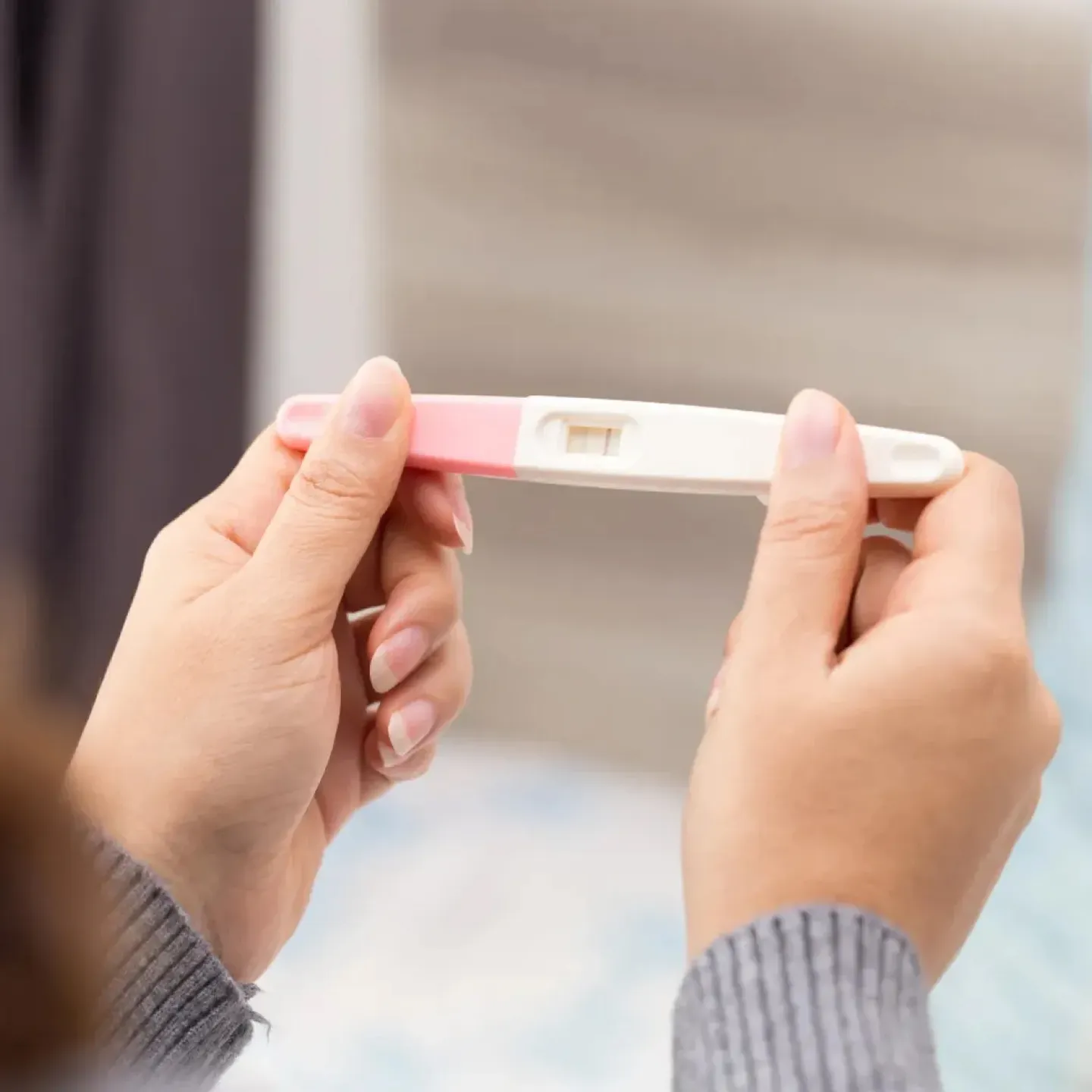
There’s no denying that pregnancy is a challenging process. The pregnant body experiences immense physical and biochemical demands: you’re building another human, after all!
If you experience pelvic pain or other conditions that impact your pelvic floor, you may worry that your pelvic floor isn’t up to the task. (Good news: help is here if you need it!)
For many, the process of trying to conceive (TTC) is no less difficult. Fertility challenges and difficulty conceiving can create a lot of mental and emotional anguish…and the mind definitely impacts the body. Mental stressors take a physical toll, and for some people, this can become a vicious cycle:
- Their stress levels increase
- Their physical health suffers because they’re experiencing excessive stress
- They start “meta-stressing”: stressing more about being too stressed
- Meta-stressing further exacerbates health issues
- And around and around we go
Good news! Even if this cycle sounds familiar, you can learn to interrupt it. No matter where you are in your journey to pregnancy, your physical, mental, and emotional health are crucial considerations. The team at Origin is here to help you prepare, body and mind.
Preparing Your Body and Mind for Conception and Pregnancy
Let’s consider some key mental and physical health considerations to help you prepare for pregnancy and beyond.
The mind-body connection: why mental health matters
If you’ve ever been so stressed that you developed a headache or back pain, you’ve felt firsthand how your mind affects your body. You probably already know that excessive stress and poor mental health are bad for your physical health (and vice versa), so it should make sense that mental health matters when you’re trying to conceive.
Prolonged stress takes a toll on the brain and body, leading to physiologic changes in the function of the nervous system and the HPA axis (the hormonal system responsible for how our body responds to stress). These changes essentially “hijack” the way your nerves and hormones send messages throughout your body. In this way, stress can impact many parts of your body.
If you experience pelvic pain and/or painful sex, managing your mental health is perhaps even more critical. Stress and anxiety can feed a vicious cycle: they can increase physical pain, and increased pain then elevates stress/anxiety levels. And around and around we go.
Because of this cycle, chronic stress and anxiety can make existing pelvic pain more persistent and harder to treat.
Understandably, you may feel less inclined to have sex if you experience pelvic pain…which can be a problem if that’s how you’re trying to conceive. If conceiving via intercourse is your goal, pelvic physical therapy can help you address pre-existing pelvic pain that could get in the way.
Fortunately, there are other conception methods available for those who can’t or prefer not to have intercourse with a male partner. For example, the Frida Mom At-Home Insemination Set is a helpful option for many: if you can insert a tampon or small dilator, you can use this kit!
Regardless of how you’re trying to conceive, though, it’s important to prioritize your mental health during this time.
Why you should consider your pre-pregnancy pelvic floor health
For many birthing people, the pelvic floor is terra incognita before pregnancy. After all, if your pelvic floor is working well, you’re probably not worrying about it. You can let it go about its business of managing your postural, bladder, bowel, and sexual function without much conscious input.
Pregnancy, however, creates a brand-new challenge for your pelvic floor. The weight of a growing fetus and uterus, and overall increasing body weight, increase downward pressure on your pelvic floor muscles and connective tissues.
The joints and ligaments of the pelvis also become more mobile during pregnancy, so your pelvic floor muscles tend to compensate, working harder to stabilize your pelvis while. As they’re already under more pressure and stretching force from above, your pelvic floor muscles are really working overtime!
In many ways, muscles are a lot like people: when they have to work harder than usual for an extended time, they tend to get grouchy. Overworked pelvic floor muscles can become weak, tight, and/or painful, and interfere with your day-to-day function.
Here’s the good news: addressing any pre-existing pelvic floor dysfunction pre-conception can help you prepare for a healthier pregnancy. Even if you don’t experience dysfunction, determining your baseline and getting a pelvic floor tune-up before pregnancy can help set you up for success from conception to the postpartum period.
Key Pelvic Floor Exercises to Do If You’re Trying to Conceive
Why pelvic floor health before pregnancy is more than kegels
It’s all well and good to know that you should care for your pelvic floor before pregnancy…but it’s another thing altogether to understand how to do so.
Like most other muscles in your body, your pelvic floor muscles will benefit from strengthening, endurance and agility training, and flexibility work. They must also coordinate well with other “partner” muscles, such as your abdominals and diaphragm (the breathing muscle).
A comprehensive pelvic floor program is more than the famous kegel exercise. Sometimes, kegels can be counterproductive.. If your pelvic floor is overly tight and tense, for example, repetitive contractions can actually aggravate symptoms. Our pelvic floors must be able to relax just as much as they can contract.
This is why pelvic floor training plans should be personalized for each individual (and that’s exactly what Origin’s physical therapists do every day!)
What if I have pelvic pain? Can I still prepare my pelvic floor for pregnancy?
An individualized physical therapy plan can be especially important for those with pelvic pain trying to conceive.
Excessive pelvic floor tightness is common in people with pelvic pain conditions and those who experience pain with penetrative sex. If this is you, the physical process of trying to conceive via intercourse may seem daunting.
This is when working with a pelvic health physical therapist can be a game changer. Your pelvic PT can help you determine what’s contributing to your pain symptoms and how to best address them.
Key pre-pregnancy pelvic floor exercises
If you don’t have pre-existing pelvic floor dysfunction, you can still benefit from pelvic floor exercises. Here are five go-to exercises to help you address the key aspects of pelvic floor function.
Diaphragmatic Breathing
Your breath is the foundation of any pelvic floor exercise routine: it’s critical for the coordination and relaxation of your pelvic floor muscles. Place one hand on your chest and the other on your upper belly, just below your ribs.
Inhale through your nose and notice where you feel movement in your body. Visualize inflating your belly with air so the hand below your ribs moves more than the one on your chest. With each inhale, imagine your pelvic floor lengthening like the bottom of a balloon as it inflates with air. You may notice the perineum, or muscle between your vagina and anus subtly moving away from your body. This is your pelvic floor lengthening as you inhale.
As you exhale, visualize your belly deflating like a balloon. Let the air leave your body naturally without forcing it. You’ll feel your belly and pelvic floor slowly return to where they started.
Repeat this pattern, allowing your inhales to expand your abdomen in all directions, like a balloon filling up in three dimensions.
Strengthening
Pelvic floor contractions, or “kegels”, are an effective strengthening strategy for many people…if you’re performing them correctly. To properly contract your pelvic floor, use your breath: inhale fully through your nose, then start a slow exhale.
As you breathe out, squeeze your deep pelvic muscles as if you’re simultaneously stopping the flow of pee and holding back gas. Alternatively, you can imagine using your vaginal muscles to pick up a blueberry: visualize those muscles lifting up and into your body.
On your next inhale, release the squeeze. Take a round of breath to relax your muscles, then repeat this pattern of exhaling and contracting. Avoid squeezing your glutes or belly: let your pelvic floor do the work here!
Important note: If you begin to notice any new-onset pain, constipation, or difficulty peeing, stop doing kegels and consult your pelvic physical therapist or other healthcare provider.
Lengthening
This is perhaps the most overlooked piece of the pelvic health puzzle. Just as your pelvic floor must be able to contract, it needs to relax fully between contractions, and it must stretch to accommodate increased pressure.
Try pairing your strengthening contraction with a lengthening exercise: as you exhale, squeeze your pelvic floor in and upwards like an elevator rising up into your body.
Then inhale and let those muscles relax fully, as though the “elevator” is descending to the ground floor. Keep inhaling and relaxing: visualize this elevator descending even further into the “basement” below ground.
This is lengthening: rather than pushing or straining, you’re allowing your muscles to release and stretch just past their usual resting position.
Endurance Holds
Once you’ve mastered strengthening and lengthening, you can begin practicing endurance holds. Start by performing a kegel contraction as described above, squeezing on your exhale. Then try to hold the contraction as you breathe in and out.
With practice, you’ll find that you can hold your pelvic floor contraction for more breaths before your muscles fatigue. This means you’re building endurance!
Quick Flicks
To respond to the changing pressures of everyday activities (particularly under the strain of a growing belly!), your pelvic floor must have good agility. Sometimes, it will need to contract and relax quickly and/or repeatedly.
To train pelvic floor agility, try 3-5 quick flicks: lightly contract your pelvic floor, then immediately relax. Repeat this sequence quickly, without pausing between reps.
Can you perform 5 reps in under 10 seconds? Can you increase to 7 reps in 10 seconds? Most importantly, can you keep breathing while you do so?
Over time, you’ll find you can perform more flicks before your muscles need a rest.
Bonus: Position Changes
It’s often easiest to learn pelvic floor exercises while lying down so your pelvic muscles don’t have to fight gravity. As you gain confidence and proficiency with the exercises, it’s time to challenge yourself by changing your body position.
Can you perform these same exercises in a sitting position? How about standing? These positions increase the difficulty by adding gravity back to the equation. They also require other muscles, such as your hips and deep abs, to come online and stabilize you.
These positions are also more applicable to real life, since most of us aren’t lying on our backs all day!
Struggling to get the hang of these pelvic floor exercises? Not sure if they’re right for you? No sweat: that’s where pelvic physical therapy comes in!
Origin’s pelvic health physical therapists are your go-to experts in pelvic floor relaxation techniques, strengthening programs, and much more. If you’re trying to conceive and want to prepare pelvic floor for pregnancy, schedule a visit today!
What about a “regular exercise” routine?
Optimal pelvic health goes far beyond the pelvic floor muscles. Despite what the name might lead you to believe, it’s a whole body pursuit. A consistent exercise routine, including cardio, full-body strength training, and mobility work, is an important part of your conception and pregnancy journey.
Hip strengthening can be especially important. A regular exercise routine that includes exercises targeting the hips, such as banded side steps or clamshells, can help strengthen your hip musculature and improve hip mobility.
Exercise programs that combine this type of hip strengthening with pelvic floor exercises can reduce urinary leakage, a common concern for pregnant and postpartum folks.
Maintaining healthy levels of physical activity is crucial for your wellbeing at all life stages, and particularly so in the time period surrounding pregnancy. Pregnancy increases physical stress throughout your body, so building strength and stability before conception can help you weather these challenges.
At Origin, our team of clinicians is here to support you through every aspect of your conception and pregnancy journey. Schedule your first visit today to start building your pregnancy support team with us!
- SourcesChen, Peifen, and Wenqiang Lin. “Dynamic Changes in Pubic Symphysis and Superior Pubic Ligament During Pregnancy: A Study Using Ultrasound Shear-Wave Elastography.” International journal of women's health vol. 17 2195-2204. 18 Jul. 2025, doi:10.2147/IJWH.S520999
- Faubion, Stephanie S et al. “Recognition and management of nonrelaxing pelvic floor dysfunction.” Mayo Clinic proceedings vol. 87,2 (2012): 187-93. doi:10.1016/j.mayocp.2011.09.004
- Harrison, Cheryce L et al. “The Role of Physical Activity in Preconception, Pregnancy and Postpartum Health.” Seminars in reproductive medicine vol. 34,2 (2016): e28-37. doi:10.1055/s-0036-1583530
- Marques, Simone A A et al. “Effect of Pelvic Floor and Hip Muscle Strengthening in the Treatment of Stress Urinary Incontinence: A Randomized Clinical Trial.” Journal of manipulative and physiological therapeutics vol. 43,3 (2020): 247-256. doi:10.1016/j.jmpt.2019.01.007
- Rátonyi, Dávid et al. “The impact of short-term pelvic floor muscle training on the biomechanical parameters of the pelvic floor among patients with stress urinary incontinence: A pilot study.” European journal of obstetrics, gynecology, and reproductive biology vol. 302 (2024): 283-287. doi:10.1016/j.ejogrb.2024.09.037
- Witzeman, Kathryn. “The Complex Intersection of Pelvic Pain and Mental Health in Women.” Practical Pain Management, vol. 21, no. 3, 2021, medcentral.com/gastroenterology/ab-pelvic/complex-intersection-pelvic-pain-mental-health-women. Accessed 8 Dec. 2025
- Worman, Rachel S et al. “Evidence for increased tone or overactivity of pelvic floor muscles in pelvic health conditions: a systematic review.” American journal of obstetrics and gynecology vol. 228,6 (2023): 657-674.e91. doi:10.1016/j.ajog.2022.10.027