Most of us are familiar with how our bodies feel after working out. Your hamstrings can feel tight after a run, your biceps can feel sore after lifting weights, and your abs can feel tired when laughing or sneezing after a Pilates class. However, intense exercise can also cause discomfort in a less familiar, less expected place: your pelvic area. This kind of pain can show up as a dull ache, a sense of heaviness you can’t quite explain, or discomfort that shows up hours after you’ve cooled down.
Pelvic pain and pelvic organ prolapse, or when pelvic organs such as the bladder descend lower in the pelvis, are common among those who exercise. These symptoms may be signs of pelvic floor dysfunction, and like any other injury, they’re not something to ignore! Read on as we discuss how pelvic floor problems can contribute to pelvic pain and how pelvic floor therapy can help you recover and get back to the activities you love.
What does pelvic floor pain feel like?
Pelvic floor pain can feel like a dull ache, a sharp cramp, or even a feeling of heaviness or pressure around your pelvic area. What pelvic pain feels like varies from person to person and can depend on the underlying cause of your discomfort: menstruation, pregnancy, menopause, anxiety, and, you guessed it, exercise can all contribute to pelvic pain.
Pelvic pain and prolapse: signs of pelvic floor dysfunction
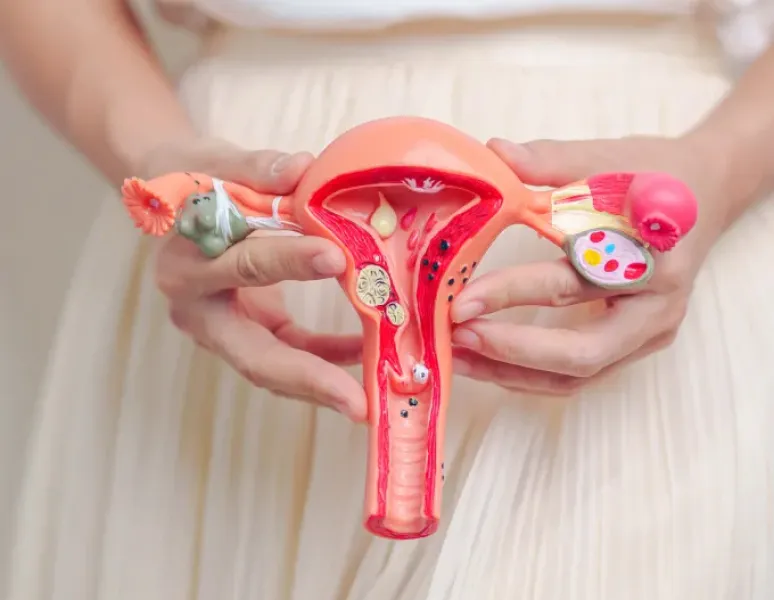
Your pelvic floor is made up of a deep and complex network of nerves, ligaments, blood vessels, and muscles. Just like any other muscle, the pelvic floor muscles can become tight from frequent and intense exercise. When these muscles stay tight and aren’t able to fully relax and stretch, you’re dealing with a hypertonic pelvic floor. The constant contraction and tension can lead to pain, especially during sex or after exercise.
Too much strain and pressure on the pelvic floor muscles can also lead to pelvic organ prolapse (POP): when an organ drops down and pushes against the walls of the vaginal canal or rectum. While prolapse sounds scary, nearly two-thirds of people born with ovaries may experience it in their lifetime (and might not even know it).
Pelvic floor pain can be hard to describe, but it’s even harder to ignore. You might notice:
- Pelvic pain symptoms: If you’re dealing with pelvic pain, you may feel discomfort or sensitivity, ranging from a dull ache to stabbing pain, in your lower belly, hips, lower back, or tailbone.
- Prolapse symptoms: Pelvic organ prolapse (POP) can cause pressure or a feeling of heaviness in pelvic area, like something is dragging or being pulled downward, or a sensation of fullness in your vagina or rectal area.
Why do I get pelvic pain after working out?
Exercise type, intensity, and how much pressure it puts on your pelvic floor may all contribute to pelvic pain and heaviness after working out. Generally speaking, the more pressure you put on your pelvic floor, the more likely you are to experience pain or prolapse symptoms…unless your body manages the pressure and your pelvic floor muscles are prepared!
What is intra-abdominal pressure?
Every time you jump, run, or lift something heavy, whether it’s a grocery bag or a barbell, your body creates intra-abdominal pressure (IAP). You can feel this pressure pushing down against your pelvic floor when you inhale, cough, or sneeze, and you can feel the release of pressure when you exhale naturally.

When everything is working together, your diaphragm, deep core muscles, and pelvic floor coordinate and distribute pressure evenly. Managing intra-abdominal pressure and keeping your pelvic floor muscles both strong, flexible, and coordinated are the keys to staying pelvic-symptom-free.
Managing intra-abdominal pressure
Some exercises create more IAP, especially squats and deadlifts with heavy weights. During these exercises, it’s common to either hold your breath or restrict your exhale, called the Valsalva maneuver. Restricting your breathing pushes the pressure down onto your pelvic floor, putting more strain and force on your pelvic floor muscles and increasing your risk of prolapse.
You can help protect your pelvic floor while exercising by:
- Maintaining your breathing: Breathing out during the most difficult part of a movement can help keep pressure from pushing down on your pelvic floor and causing pain.
- Working up slowly: You don’t need to avoid squats or deadlifts because they cause high IAP! However, it’s important to take it slow and work your way up to using heavier weights so you don’t overload your pelvic floor.
- Strengthening your pelvic floor muscles: Building up your pelvic floor muscle strength alongside your full-body strength helps promote pelvic floor function and can help reduce symptoms such as urinary incontinence.
- Working to strengthen your pelvic floor muscles is essential to keeping them functional, and is especially powerful when combined with weight lifting or other resistance training.
- Performing a tension self-check: While you’re exercising, scan over your body for unnecessary tension or squeezing. Gripping through your glutes or even clenching your jaw are signs that your pelvic floor may be contracting or staying on high alert.
- Paying attention to your symptoms: If you ever feel a pop or a tear while working out, it’s not something to ignore. Reach out to your GYN to understand your symptoms and what to do next.
How pelvic floor therapy can help you stay active
Pelvic floor physical therapy is an effective and non-invasive way to help treat and protect against pelvic pain after exercise. Prolapse and pain never happen in isolation, and our expert clinicians understand and treat your whole body as a system. This holistic approach to therapy helps keep you active and functional, so you can continue doing the activities you love. A pelvic floor therapist can help with:
- Pressure management: Holding your breath or clenching unnecessarily while exercising can put pressure on your pelvic floor, leading to pain. A pelvic floor therapist can show you how to use your breath and connect to your deep core muscles to manage intra-abdominal pressure, so your pelvic floor doesn’t take on more load than it needs to.
- Relaxation and coordination: Overactive pelvic floor muscles can struggle to work in sync with the rest of your body. Working to relax and stretch tight pelvic floor muscles can help ease pelvic floor pain and prolapse symptoms.
- Strength where it’s needed: Though it sounds counterintuitive, your pelvic floor muscles can be simultaneously overactive and weak. A pelvic floor therapist can assess what muscles need strengthening so they can support your body during workouts and daily movement.
- Movement retraining: Using proper form and movement patterns while exercising is essential to staying pain and injury-free. Your pelvic floor therapist can adjust how you lift, run, or train to help your body handle load more safely and efficiently.
- Confidence and understanding of your body: Going to the gym can be intimidating, especially if you’re worried about making your pelvic pain worse. Understanding how your body functions at a deeper level can help you feel confident in your movement and ability to exercise safely.
Taking care of your full-body health
Dealing with pelvic pain or prolapse can be frustrating, especially if they get in the way of your favorite workouts or daily activities. Though it’s tempting to ignore, taking care of your pelvic floor health is essential to your full-body health!
Pelvic floor physical therapy can help you understand your body’s unique needs, so you can improve (or prevent!) your symptoms. Get started with pelvic pain prevention or recovery by booking a visit with an Origin clinician today.
- Brown, Heidi E, et al. International Urogynecology Consultation Chapter 1 Committee 2: Epidemiology of Pelvic Organ Prolapse: Prevalence, Incidence, Natural History, and Service Needs. Vol. 33, no. 2, 3 Jan. 2022, pp. 173–187, https://doi.org/10.1007/s00192-021-05018-z
- Bø, Kari, et al. "Strenuous Physical Activity, Exercise, and Pelvic Organ Prolapse: A Narrative Scoping Review." International Urogynecology Journal, vol. 34, 24 Jan. 2023, pubmed.ncbi.nlm.nih.gov/36692525/, https://doi.org/10.1007/s00192-023-05450-3
- Blazek, Dusan, et al. "Systematic Review of Intra-Abdominal and Intrathoracic Pressures Initiated by the Valsalva Manoeuvre during High-Intensity Resistance Exercises." Biology of Sport, vol. 36, no. 4, 2019, pp. 373–386, https://doi.org/10.5114/biolsport.2019.88759
- Enaiane Cristina Menezes, et al. "Effect of Exercise on Female Pelvic Floor Morphology and Muscle Function: A Systematic Review." International Urogynecology Journal, vol. 34, no. 5, 7 Oct. 2022, pp. 963–977, https://doi.org/10.1007/s00192-022-05375-3
- Virtuoso, Janeisa Franck, et al. "Effect of Weight Training with Pelvic Floor Muscle Training in Elderly Women with Urinary Incontinence." Research Quarterly for Exercise and Sport, vol. 90, no. 2, 3 Apr. 2019, pp. 141–150, https://doi.org/10.1080/02701367.2019.1571674
- Brækken, Ingeborg Hoff, et al. "Can Pelvic Floor Muscle Training Reverse Pelvic Organ Prolapse and Reduce Prolapse Symptoms? An Assessor-Blinded, Randomized, Controlled Trial." American Journal of Obstetrics and Gynecology, vol. 203, no. 2, Aug. 2010, pp. 170.e1–170.e7, www.sciencedirect.com/science/article/pii/S0002937810002504, https://doi.org/10.1016/j.ajog.2010.02.037. Accessed 21 Sept, 2019