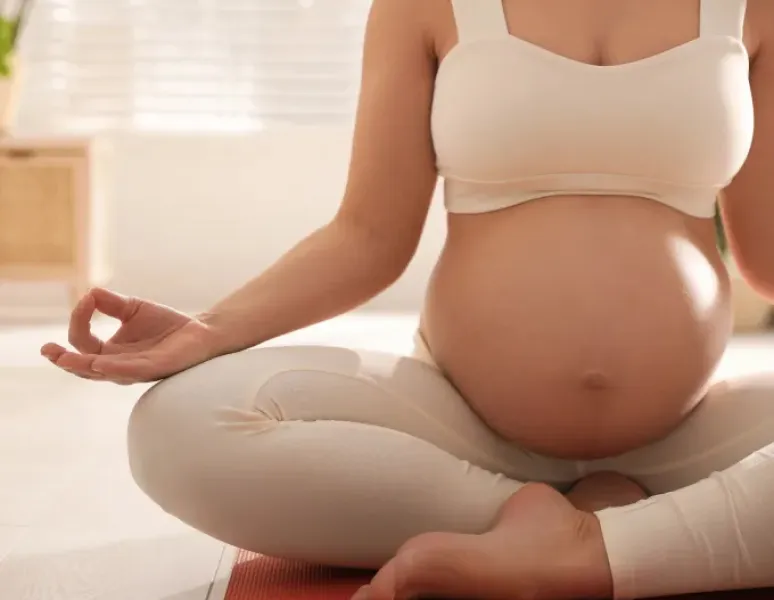
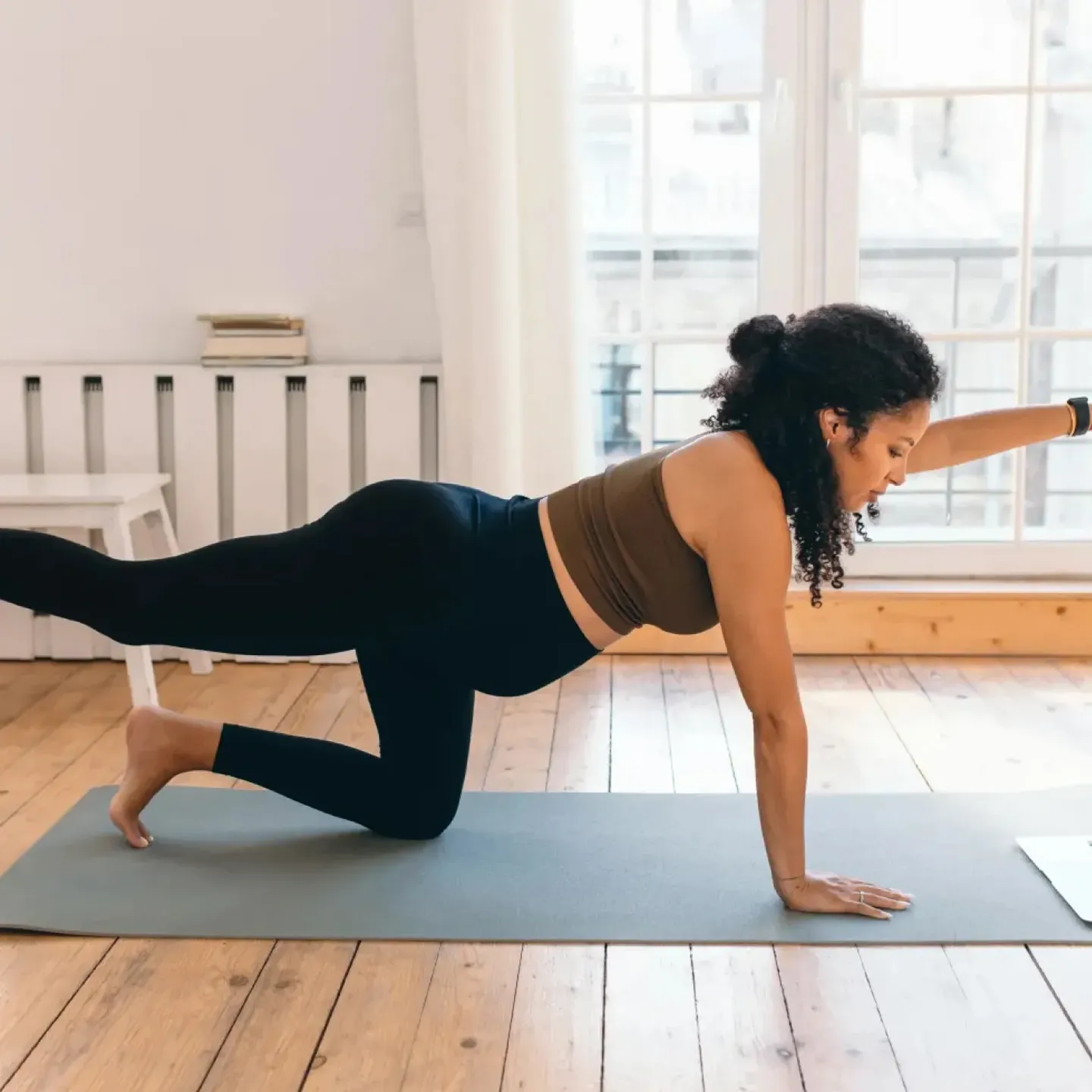
If you're pregnant and wondering how to exercise safely, you've probably encountered a lot of conflicting advice. Your great aunt says lifting anything too heavy could harm your baby…but your social media feeds show pregnant athletes crushing their intense workouts.
The Internet is telling you one thing, your friends and family are saying something else, and your doctor just told you to “listen to your body”. So what’s an active pregnant person to do?
Fortunately, current science on the topic overwhelmingly agrees: most exercise during pregnancy is safe and beneficial for both pregnant folks and their babies. Major medical organizations and global guidelines worldwide show remarkable consensus on this topic.
At Origin, our clinicians are used to fielding questions of all kinds about exercise in pregnancy. Let's break down the answers to common questions we hear from our pregnant patients so you can feel confident about your own prenatal fitness routine.
Can I lift weights during pregnancy?
You bet! Resistance training (think banded, body weight, or weighted strength exercises) is both safe and beneficial during pregnancy. Major medical organizations across the globe recommend muscle strengthening exercises as an important part of a healthy pregnancy workout routine.
In 2025, a group of researchers analyzed 50 unique research studies from 14 different countries. These studies included data from 47,619 participants. This huge data set revealed that resistance training during pregnancy reduces the risk of:
- Gestational hypertension (high blood pressure)
- Gestational diabetes
- Mood disorders such as depression during pregnancy
- Having a baby who is large for gestational age
But what about lifting really heavy? Thanks to the popularity of CrossFit and programs like it, more and more people are training with heavy weights and Olympic-style lifts…and they want to know if they can continue doing so while pregnant.
A 2023 study tracked 679 pregnant people who regularly weight trained with at least 80% of their one-rep max during pregnancy: that’s some really heavy lifting! These weren't even elite athletes, just regular people who enjoyed high-intensity weightlifting.
Old wives’ tales might have you believe that this was a dangerous choice, that lifting heavy during pregnancy might make pregnancy riskier or delivery harder for these women. Like a bad game of telephone, somewhere the “don’t lift more than 20lbs when pregnant” advice that you may hear emerged. This may have come from one occupational lifting study over 30 years ago that didn’t even directly state this. If you hear this from someone, it is no longer evidence-based. Fortunately, newer research proved those old wives wrong.
As a group, the participants all had typical pregnancy outcomes: they didn’t experience any more complications than the general pregnant population. In fact, those who continued training at their pre-pregnancy level until delivery actually had significantly fewer reproductive complications than those who stopped training before delivery. We’d call that a win for weightlifting!
Can weightlifting decrease blood flow to the baby?
The myth that resistance training dangerously reduces blood flow to the fetus is just that: a myth. In reality, it’s just the opposite. After a bout of resistance training, blood flow through the umbilical cord to the fetus actually increases.
Over time, this increase in blood flow supports growth of the placenta, increases how many blood vessels supply it, and reduces oxidative stress (an overabundance of cell-damaging chemicals). All of these changes promote your baby’s growth and wellbeing.
A recent review of a large body of research has disproven many other myths about resistance training in pregnancy:
- It does not increase the heart rate or blood pressure of the fetus or the pregnant person to dangerous levels.
- It does not dangerously increase the core temperature of the pregnant person.
- It does not increase your risk of musculoskeletal injuries. When performed properly, it can actually prevent them.
Practical tips for resistance training during pregnancy
If you’re planning to continue strength training during your pregnancy, a pelvic physical therapist will be your new best friend. Origin’s pelvic PTs can help you learn how to lift safely, to optimize your lifting for yourself, your baby, and of course, your pelvic floor.
A few quick tips to get you started:
1. Avoid breath holding
Some people learn to lift really heavy weights by holding their breath and squeezing their abs tightly. This technique, called the Valsalva maneuver, increases pressure inside the abdomen. While it may not be harmful for your baby, it can be hard on your pelvic floor (which is already working overtime during pregnancy!)
Rather than holding your breath as you lift, use it to help you. Breathe in through your nose as you prepare to lift, then…
2. Exhale on the effort
…breathe out as you lift! Exhaling will decrease intra-abdominal pressure and can make it feel easier to engage your deep core. This applies to all resistance exercises, even if you’re using body weight alone as your resistance.
3. Integrate pelvic floor exercises
Speaking of body weight exercises: these are excellent opportunities to practice pairing your pelvic floor with the rest of your muscles. Try this technique:
- Stand with your back to a stable chair. Reach your arms out in front of you for balance.
- Inhale (breathe in) as you squat down to tap your butt to the chair.
- At the bottom of the squat, exhale (breathe out) as you squeeze and lift your pelvic floor muscles.
- Continue exhaling as you press back up to standing. Try to hold the pelvic floor contraction until you’re standing upright.
Don’t worry if this feels challenging to do at first: it’s an advanced pelvic floor coordination exercise. Many people need to start with simpler movements and work up to more complex integrations.
Remember: Perfect is the enemy of good enough. Fear of “not doing it right” shouldn’t stop you from exercising while pregnant. Even if you are struggling with these tips, keep moving!
The suggestions above help you optimize your exercise. If you’re ready for expert advice on integrating pelvic floor floor training into your fitness program for pregnancy, we’ve got you.
Can I do high-intensity exercise during pregnancy?
Moderate- and high-intensity exercise both make the list of activities to do while pregnant. Gauging the intensity of exercise can be tricky. The “talk test” is a handy rule of thumb: if you’re exercising at moderate intensity, you should be able to speak a full sentence but not belt out your favorite song. During high-intensity workouts, you would struggle to say more than a couple of words at a time.
Universally, international pregnancy guidelines recommend at least 150 minutes per week of moderate-intensity aerobic exercise; many guidelines suggest up to 300 minutes each week. The current clinical guidelines are less specific about high-intensity exercise, but vigorous activity is equally beneficial and safe for both maternal and fetal health.
Many people think of running as a high-intensity exercise. For those who are accustomed to running, however, it can be more moderate than you’d think. Whether you’d like to keep running during pregnancy or you’re already thinking about returning to run postpartum, your Origin clinician can help you meet your goals.
How much exercise is too much during pregnancy?
Most of the research agrees that exercise sessions under 1 hour in length are safe for pregnant people. If you’re an endurance enthusiast and hoping to exercise for longer durations, talk with your healthcare providers about how to monitor your safety and your baby’s.
International guidelines generally recommend breaking up your weekly exercise into 3 to 4 sessions of 30-60 minutes. The American College of Obstetricians and Gynecologists (ACOG) states that daily exercise is safe for people with uncomplicated pregnancies.
While we have these general guidelines, the research still can’t tell us the exact, optimal parameters for exercise during pregnancy. We don’t know the absolute minimum amount of exercise that is beneficial, nor do we know when exercising more might lead to diminishing returns. We also need more studies to investigate how (and if) to best adjust exercise throughout the three trimesters.
Fortunately, pelvic physical therapists are experts at navigating uncertain waters. Your Origin PT can help you modify your prenatal fitness routine based on your unique physiology, symptoms, and needs.
Can I keep training my core during pregnancy?
You sure can! Contrary to popular belief, core training is safe during pregnancy, even if you have diastasis rectus abdominis (DRA).
DRA is the lengthening of the connective tissue between your abdominal muscles at the midline. It’s common and even expected during pregnancy as your belly grows with your baby. Depending where you look, you can find some scary-sounding, fear-mongering information about DRA that claims core exercises will worsen this separation.
It’s time for research to come to the rescue again!
Researchers in Norway tracked 96 pregnant women who already had DRA. Half the women completed 12 weeks of abdominal and pelvic floor strengthening exercises, including assisted sit-ups and bodyweight exercises in various positions. The other half continued exercise and activity as they liked, but didn’t specifically train their abdominal muscles.
After 12 weeks, the researchers measured each participant’s DRA using ultrasound, and it had not worsened in either group. Take that, diastasis alarmists!
Will being strong and athletic make birth harder for me?
Not necessarily! Some people worry that being strong and muscular will make labor and delivery more difficult. Perhaps someone has told you that your “hips aren’t open enough” or that you need to “get loose and limber for birth”...and now you’re worried that you’re “too tight” for delivery.
Good news: the research doesn’t support this old wives’ tale, either.
Remember that study of the recreational athletes who lifted heavy during pregnancy? Their pelvic floor outcomes (think: perineal tears, postpartum bladder leakage, etc.) were similar to the general pregnancy population. They didn’t experience more pelvic floor problems than their peers who weren’t lifting heavy.
Remember, your pelvic floor is a group of muscles like any other. To function well, your muscles must be able to contract and relax in equal measure. Some bodies are better at one of these than the other, and that’s okay. Origin clinicians specialize in assessing your pelvic floor and all the muscles related to it to figure out where you need to focus during birth prep.
What are the activities to avoid during pregnancy?
While exercise in pregnancy is broadly safe, there are a handful of activities that are off the menu until after birth.
Avoid activities with:
- High fall risk, such as downhill skiing, horseback riding, or gymnastics
- High collision risk, such as rugby and other contact sports
- Significant pressure changes - think scuba diving and skydiving
Even when your feet are firmly on the ground, traveling to high altitudes can expose you to big pressure changes. Exercise with caution above 6,000 feet elevation unless you're already acclimatized to that altitude. Mountain goats, take heed: talk with your provider to determine if that big backpacking trip you’ve planned is safe for you and your baby.
When is it unsafe to exercise in pregnancy?
Some pregnant people may have medical conditions or complications that will limit the type or intensity of exercise they can safely perform. Some examples include having high blood pressure during pregnancy, having a history of previous pregnancy losses, and being 28+ weeks pregnant with twins.
These are called “relative contraindications”: that term “relative” means that some exercise may be safe, but you’ll need to work closely with your healthcare team to determine your ideal pregnancy workout routine.
In rare cases, your OB-GYN or other pregnancy provider may instruct you not to exercise at all due to a medical complication you’re facing. Some examples of these absolute contraindications to exercise include signs of premature labor, persistent vaginal bleeding, or cervical insufficiency. As always, ask your provider directly if you’re unsure what’s safe for you.
Exercising safely and confidently throughout pregnancy
If you remember nothing else, remember this: exercise in pregnancy is safe and beneficial for most pregnant people. The research evidence shows us that many of the activities our grandmothers would never have done, from weight lifting and core strengthening to high-intensity interval training, are safe to continue throughout pregnancy.
Origin clinicians bring a unique perspective to prenatal fitness. Our providers understand how your pelvic floor integrates with total body movement. They’re here to help you build a routine that helps you exercise confidently, prepare your body for birth, and set yourself up for postpartum recovery.
You don't have to choose between staying active and having a healthy pregnancy. With the right guidance, you can do both. Ready to get started? Book your first visit with an Origin clinician today.
- Claiborne, Alex et al. "A narrative review of exercise dose during pregnancy." Birth defects research vol. 115,17 (2023): 1581-1597. doi:10.1002/bdr2.2249
- Duchette, Cathryn et al. "Benefits of Resistance Training During Pregnancy for Maternal and Fetal Health: A Brief Overview." International journal of women's health vol. 16 1137-1147. 19 Jun. 2024, doi:10.2147/IJWH.S462591
- Martens, Don Louise et al. "Pregnancy and Exercise: Physiological Changes and Effects on the Mother and Fetus." Strength and Conditioning Journal, vol. 28,1 (2006): 78-82. doi:10.2147/IJWH.S462591
- Prevett, Christina et al. "Impact of heavy resistance training on pregnancy and postpartum health outcomes." International urogynecology journal vol. 34,2 (2023): 405-411. doi:10.1007/s00192-022-05393-1
- Prevett, Christina et al. "Resistance training in pregnancy: systematic review and meta-analysis of pregnancy, delivery, fetal and pelvic floor outcomes and call to action." British journal of sports medicine vol. 59,16 1173-1182. 31 Jul. 2025, doi:10.1136/bjsports-2024-109123
- Hayman, Melanie et al. "Public health guidelines for physical activity during pregnancy from around the world: a scoping review." British journal of sports medicine vol. 57,14 (2023): 940-947. doi:10.1136/bjsports-2022-105777
- Ribeiro, Maria Margarida et al. "Physical exercise in pregnancy: benefits, risks and prescription." Journal of perinatal medicine vol. 50,1 4-17. 6 Sep. 2021, doi:10.1515/jpm-2021-0315
- Schoenfeld, Brad. "Resistance Training During Pregnancy: Safe and Effective Program Design. Strength & Conditioning Journal." vol 33 (2011): 67-75. doi:10.1519/SSC.0b013e31822ec2d8
- Theodorsen, Nina-Margrethe et al. "Pregnant women may exercise both abdominal and pelvic floor muscles during pregnancy without increasing the diastasis recti abdominis: a randomised trial." Journal of physiotherapy vol. 70,2 (2024): 142-148. doi:10.1016/j.jphys.2024.02.002
- Worska, Aneta et al. "Contradictions and convergences in recommendations on physical activity in pregnancy in different countries after the publication of the WHO guidelines in 2020-a scoping review." Frontiers in public health vol. 13 1540355. 28 Apr. 2025, doi:10.3389/fpubh.2025.1540355