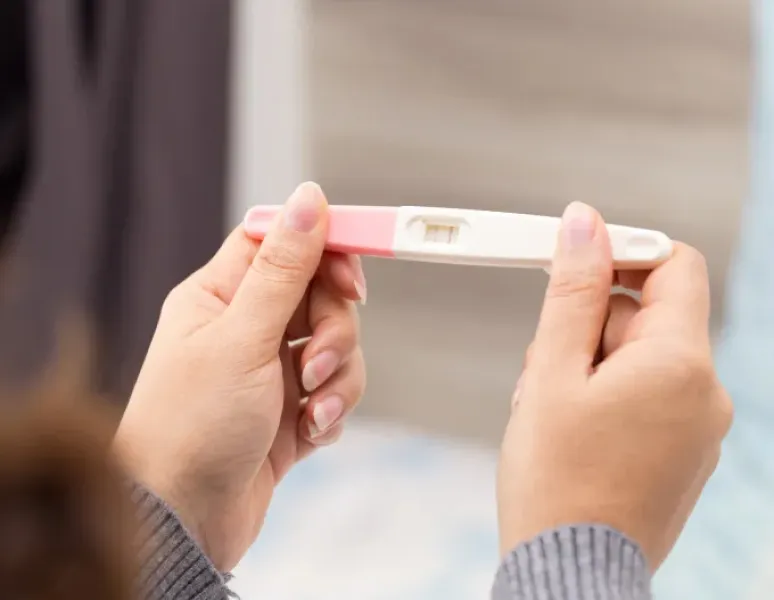

You’ve probably seen the viral headlines: women who struggled with infertility for years are suddenly, and often unexpectedly, falling pregnant while taking GLP-1 agonists like Ozempic, Wegovy or Mounjaro. This "Ozempic baby" phenomenon as some call it is more than just a social media trend, it represents a massive shift in how we understand the connection between metabolic health and reproductive outcomes.
If you are currently taking a GLP-1 or considering starting one, you might be wondering: Is this medication a "fertility drug" in disguise? How does it interact with my PCOS or endo symptoms? And most importantly, if I am planning to conceive, how do I do it safely?
While they are powerful tools for addressing the hormonal imbalances that hinder conception, they aren't a magic pill. Navigating this path requires a plan that prioritizes your safety and your long-term physical health.
In this post, we’ll dive into the science of how these medications impact fertility, timeline best practices to keep in mind, and why pelvic floor physical therapy is the missing link in preparing your body for a healthy pregnancy.
How do GLP-1s affect your fertility?
While the "Ozempic baby" headlines might make it sound like these drugs have a direct, magical effect on the ovaries, the reality is rooted in metabolic science. GLP-1 agonists (glucagon-like peptide-1 receptor agonists) work by mimicking a hormone your body naturally produces to manage blood sugar and digestion. For those struggling to conceive, this metabolic "reset" can have a profound ripple effect on reproductive health.
How do insulin and other hormones impact your fertility?
For many individuals with PCOS, the primary barrier to pregnancy is insulin resistance. Some people only think of diabetes when they hear insulin. But we all need insulin, as it is an important hormone to regulate the levels of glucose (also known as blood sugar) in your bloodstream. Glucose is a breakdown product of most foods we eat, even those that aren't 'sugary,' serving as your body's primary energy source.
Think of insulin as the key that unlocks the cells so glucose in your bloodstream can enter them. When your body doesn't use insulin effectively, your pancreas pumps out more of it, potentially resulting in insulin sensitivity. Insulin sensitivity describes how effectively your cells respond to insulin to take up glucose. If you experience low insulin sensitivity, high insulin levels can signal the ovaries to produce excess androgens (such as testosterone), which stops ovulation in its tracks.
By improving insulin sensitivity and overall metabolic status, GLP‑1 receptor agonists can normalize reproductive hormone signaling in insulin‑resistant women (such as those with PCOS), which may help restore more regular ovulation.
It’s important to understand that GLP-1 medications (such as Ozempic and Wegovy) slow down how quickly your stomach empties. Because of this, healthcare providers worried they might interfere with how the body absorbs birth control pills. However, studies show that for most of these drugs (including semaglutide, the active ingredient in Ozempic and Wegovy), birth control still works normally. The only one that has shown a clear interference with birth control pill absorption so far is tirzepatide (Mounjaro/Zepbound).
While GLP-1s are not a direct 'ovulation trigger' acting on the ovaries, they can support fertility indirectly. For many individuals, the weight loss associated with these medications can help restore more regular ovulation patterns. However, it is important to remember that weight loss is not a universal cure for infertility, as many other factors beyond ovulation contribute to reproductive health.
What happens if you get pregnant while taking GLP-1s like Ozempic?
While GLP-1s can be a wonderful tool for supporting fertility and metabolic health, they are generally paused once you begin your pregnancy journey. Because these medications are designed to stay in your system for several weeks to provide consistent support, doctors typically recommend a "washout" period, a brief window of time to let the medication naturally leave your body before conception.
Since long-term studies on GLP-1s during pregnancy are still being developed, being intentional with your timeline is the best way to ensure a smooth transition.
While some data suggests waiting 4 weeks might be okay, many doctors still recommend waiting 2 to 3 months to be extra safe, especially for long-acting drugs like semaglutide. This pause gives your body a clean slate as you move into this exciting next chapter.
If you’ve just discovered you’re pregnant while still taking a GLP-1, take a deep breath, you’re not alone, and there’s a clear path forward. While data on first-trimester exposure is still being gathered, the most helpful first step is simply to reach out to your healthcare team. They can help you navigate your next steps with confidence and ensure you have the support you need for a healthy start to your pregnancy.
Why is pelvic floor physical therapy your secret TTC weapon?
GLP-1s manage your internal chemistry, but your pelvic floor is the "hardware" that must support a pregnancy. Physical therapy ensures your body is physically strong enough for the journey.
Preparing for a baby is about more than just a positive ovulation or pregnancy test; it’s about the environment where that baby will grow. You want to make sure this is the best environment possible.
How pelvic floor PT supports your fertility journey
Pelvic floor physical therapy supports fertility by addressing muscle tension, pelvic blood flow, and conditions like endometriosis that can affect conception.
- Prepare your muscles: The stress of the TTC journey can lead to a "guarded" or tight pelvic floor. PT can help you release this tension, which can reduce pain during intercourse and improve overall pelvic comfort.
- Improve pelvic blood flow: You might also hear about specialized manual therapies, sometimes called visceral or osteopathic techniques, that involve gentle, hands-on work around the abdomen. The goal of these sessions is to help improve natural blood flow to the pelvic area and uterus, creating a more supportive environment for conception. While we are still waiting on large-scale clinical studies to officially "prove" exactly how much these techniques increase blood flow, some hypothesize that this type of bodywork is incredibly helpful and relaxing throughout their fertility journey.
- Ditch the "just do Kegels" mentality: Not every woman should do Kegel exercises. In fact, doing more Kegels can actually make things worse if you have a "guarded" or hypertonic pelvic floor. This tension is common with conditions like endometriosis or the chronic stress of infertility. These repetitive contractions can increase your overall levels of tension and pain. A pelvic floor PT can help you learn to relax and lengthen these muscles instead.
- Manage “endo belly” and inflammation: If you have endometriosis, you’re likely familiar with "endo belly," that uncomfortable, often painful abdominal bloating that can show up seemingly out of nowhere. GLP-1s can lead to rapid weight loss, which changes how muscles functions and pressure is distributed in your core. A pelvic floor PT can help you teach your muscles to adapt to these new demands, preventing issues such as pelvic organ prolapse or incontinence before they start.
Supporting PCOS and endometriosis symptoms alongside GLP-1 use
PCOS:
Although Ozempic is not currently FDA-approved for PCOS, preliminary studies suggest it can be effective in managing weight, improving insulin sensitivity, and regulating menstrual cycles.
However, a comprehensive approach to PCOS often requires more than just medication. Incorporating pelvic health physical therapy can provide essential support by strengthening your core and pelvic floor, mitigating potential side effects from GLP-1s, and helping you maintain the physical activity necessary for a successful treatment journey.
Endometriosis:
Early research suggests that GLP‑1 medications appear to have anti‑inflammatory and anti‑fibrotic properties that could help the reproductive system. For those living with endometriosis this is an exciting development.
While we are still waiting for large-scale clinical trials to confirm these effects, these early findings offer a promising new way to help calm the inflammatory environment in the body. Complementary to this, supervised pelvic floor muscle exercises have been shown to reduce chronic pelvic pain in women with endometriosis and are clinically used to address abdominal distension or ‘endo belly’ by improving tissue mobility, breathing mechanics, and nervous system sensitization.
What should you consider before starting GLP-1s for pregnancy?
Success on this journey is often about a whole-body approach that looks beyond just blood sugar. Creating a comprehensive care plan can help you feel supported every step of the way:
- Timeline planning: To give your body a smooth transition, consider counting back at least two months from your target "start" date for TTC. This helps you identify the best time for your final dose of GLP-1 medication.
- Muscle preservation: Because GLP-1s can affect muscle mass, focusing on high-protein, nutrient-dense nutrition is a great way to ensure your body feels strong and ready to support a growing pregnancy.
- Build a trusted care team: You don't have to navigate this alone. Having your endocrinologist, OBGYN, and pelvic floor PT in sync ensures that everyone is working together toward your goals.
How can you integrate GLP-1s with pelvic floor physical therapy to build a stronger foundation?
Medications like GLP-1s are powerful tools for metabolic health, but they work best when supported by a strong physical foundation. As you prepare for this next chapter, remember that you don't have to navigate the transition alone.
By pairing medical support with pelvic floor physical therapy, you can proactively manage inflammation, improve pelvic blood flow, and help your body adapt to physical changes. Integrating these internal and external supports ensures you aren't just meeting your goals—you’re building a resilient foundation for your future pregnancy.
Ready to start your journey? Book your pelvic health evaluation today.
- Ceasovschih, Alexandr, et al. "Glucagon-like Peptide-1 Receptor Agonists and Muscle Mass Effects." Pharmacological Research, vol. 220, 24 Aug. 2025, p. 107927, www.sciencedirect.com/science/article/pii/S1043661825003524, https://doi.org/10.1016/j.phrs.2025.107927
- Gabrielsen, Rakel, et al. "Supervised Exercise and Pelvic Floor Muscle Training Eases Current Pelvic and Genital Pain but Not Worst Pelvic and Genital Pain in Women with Endometriosis: A Randomised Trial." Journal of Physiotherapy, vol. 71, no. 4, Oct. 2025, pp. 246–253, https://doi.org/10.1016/j.jphys.2025.09.012
- Legro, Richard S., et al. "Benefit of Delayed Fertility Therapy with Preconception Weight Loss over Immediate Therapy in Obese Women with PCOS." The Journal of Clinical Endocrinology & Metabolism, vol. 101, no. 7, 1 July 2016, pp. 2658–2666, academic.oup.com/jcem/article/101/7/2658/2810119, https://doi.org/10.1210/jc.2016-1659
- Minis, Evelyn, et al. "Glucagon-like Peptide-1 Receptor Agonists and Safety in the Preconception Period." Current Opinion in Endocrinology Diabetes and Obesity, vol. 30, no. 6, 5 Sept. 2023, pp. 273–279, journals.lww.com/co-endocrinology/fulltext/2023/12000/glucagon_like_peptide_1_receptor_agonists_and.2.aspx, https://doi.org/10.1097/med.0000000000000835
- Purwar, Ananya, and Shailesh Nagpure. "Insulin Resistance in Polycystic Ovarian Syndrome." Cureus, vol. 14, no. 10, 16 Oct. 2022, www.ncbi.nlm.nih.gov/pmc/articles/PMC9665922/, https://doi.org/10.7759/cureus.30351
- Skelley, Jessica W, et al. "The Impact of Tirzepatide and Glucagon-like Peptide 1 Receptor Agonists on Oral Hormonal Contraception." Journal of the American Pharmacists Association, vol. 64, no. 1, 1 Nov. 2023, https://doi.org/10.1016/j.japh.2023.10.037
- Sola‐Leyva, Alberto, et al. "The Hidden Impact of GLP‐1 Receptor Agonists on Endometrial Receptivity and Implantation." Acta Obstetricia et Gynecologica Scandinavica, vol. 104, no. 2, 18 Dec. 2024, pp. 258–266, https://doi.org/10.1111/aogs.15010. Accessed 2 Feb, 2025
- Wójcik, Małgorzata, et al. "The Effect of Osteopathic Visceral Manipulation on Quality of Life and Postural Stability in Women with Endometriosis and Women with Pelvic Organ Prolapse: A Non-Controlled Before-after Clinical Study." Journal of Clinical Medicine, vol. 14, no. 3, Winter 2025, p. 767, pubmed.ncbi.nlm.nih.gov/39941438/, https://doi.org/10.3390/jcm14030767