The piriformis is a small muscle, but it can have a big impact on the body, especially when it comes to the hip, butt, and even pelvic floor. Most people don’t think much about the piriformis until it starts to cause pain, discomfort, or other issues. But this deep hip muscle helps stabilize, rotate, and support your pelvis during daily activities. And when it gets irritated or fatigued, it can compress nearby nerves, altering movement patterns and directly influencing pelvic floor tension. This is exactly why pelvic floor physical therapy is so well positioned to help.
A tight or irritated piriformis can lead to localized pain, or it can cause issues farther away. Because of its location, issues with this muscle are not always isolated to it. Because the piriformis shares the same space and attachment points as some of the pelvic floor muscles, these tissues can affect one another. For example, a tight piriformis may contribute to a cycle of guarding and discomfort that can radiate or contribute to other types of pelvic floor dysfunction. Whether you’re dealing with this from training, pregnancy-related posture shifts, or postpartum recovery, we want you to know that we’re here for you.
In this article, we’ll break down what the piriformis does, how it connects to your pelvic floor, common symptoms to watch out for, and provide practical steps towards relief.
What is the piriformis muscle and why does it matter?
The piriformis is a small, pear-shaped muscle that sits deep in the buttock, underneath the more well-known glute muscles. It runs from the front of the sacrum (the triangular bone at the base of the spine) to the top of the thigh bone (or femur), and you actually have two – one on the right side and one on the left side of your pelvis. This muscle helps rotate the hip outward and stabilize the pelvis when walking, running, or standing on one leg. When it gets tight, overworked, or irritated, it can cause focused pain right in the butt area, but it can also contribute to hip pain, or radiating pain down the leg that can feel a lot like sciatica.
Because the piriformis works hard every time you walk, run, climb stairs, or change direction, runners and active individuals are especially vulnerable to piriformis issues. Pregnant people are also at higher risk, since changes in weight and posture, as well as increased load on the pelvis can make this muscle grip and guard. Over time, that “gripping” or tension pattern can contribute to pelvic floor tension and pain.
What is piriformis syndrome?
Piriformis syndrome happens when the piriformis muscle irritates or compresses the sciatic nerve as it passes nearby. The result is a mix of deep buttock pain and nerve-type symptoms, such as burning, zinging, or numbness that may travel down the back of the leg. It’s common for people with piriformis syndrome to feel a deep, hard-to-reach ache near the sit bone (ischial tuberosity) that doesn’t respond well to quick stretches or basic foam rolling.
Symptoms often get worse with prolonged sitting, going up stairs, or activities that require a lot of hip rotation, like running, hiking on uneven terrain, or certain fitness classes. You may also notice that symptoms ease with movement and worsen when sitting on firm surfaces, driving, or crossing one leg over the other.
Because these symptoms overlap with other conditions, it is easy for piriformis syndrome to be missed or mislabeled.
How is piriformis syndrome different from sciatica?
We get this question a lot. The truth is, piriformis syndrome and sciatica can feel very similar, but they have different sources. The term “sciatica” is often overused to describe any pain in the backs of the legs, but its accurate medical definition is more specific.
Classic “sciatica” usually comes from nerve compression in the lower back, such as a disc herniation or spinal stenosis, whereas piriformis syndrome often involves irritation of the sciatic nerve further down, where it runs under or through the piriformis in the buttock. That said, it’s important to mention that compression doesn’t always mean “damage” and being diagnosed with a disc herniation, for example, doesn’t necessarily mean “you have a bad back” or “you will experience pain.” But if you do have symptoms, here are a few patterns that can help distinguish between the two:
- Piriformis pain is often most intense in the buttock, sometimes with a tender “hot spot” over the muscle.
- Back pain may be minimal or absent with piriformis syndrome, whereas true spinal sciatica frequently (but not always!) includes low back pain.
- Positions that tighten or compress the piriformis (like sitting with legs crossed, or certain hip stretches) tend to flare up piriformis symptoms more than isolated core exercises or spinal movements that don’t involve a lot of movement at the hip.
The only way to know for sure is a thorough evaluation. Our physical therapists, who are trained in both orthopedic and pelvic health, can look at the whole picture, including the spine, hips, pelvis, and pelvic floor, to help identify what’s really driving the pain.
How does the piriformis connect to the pelvic floor?
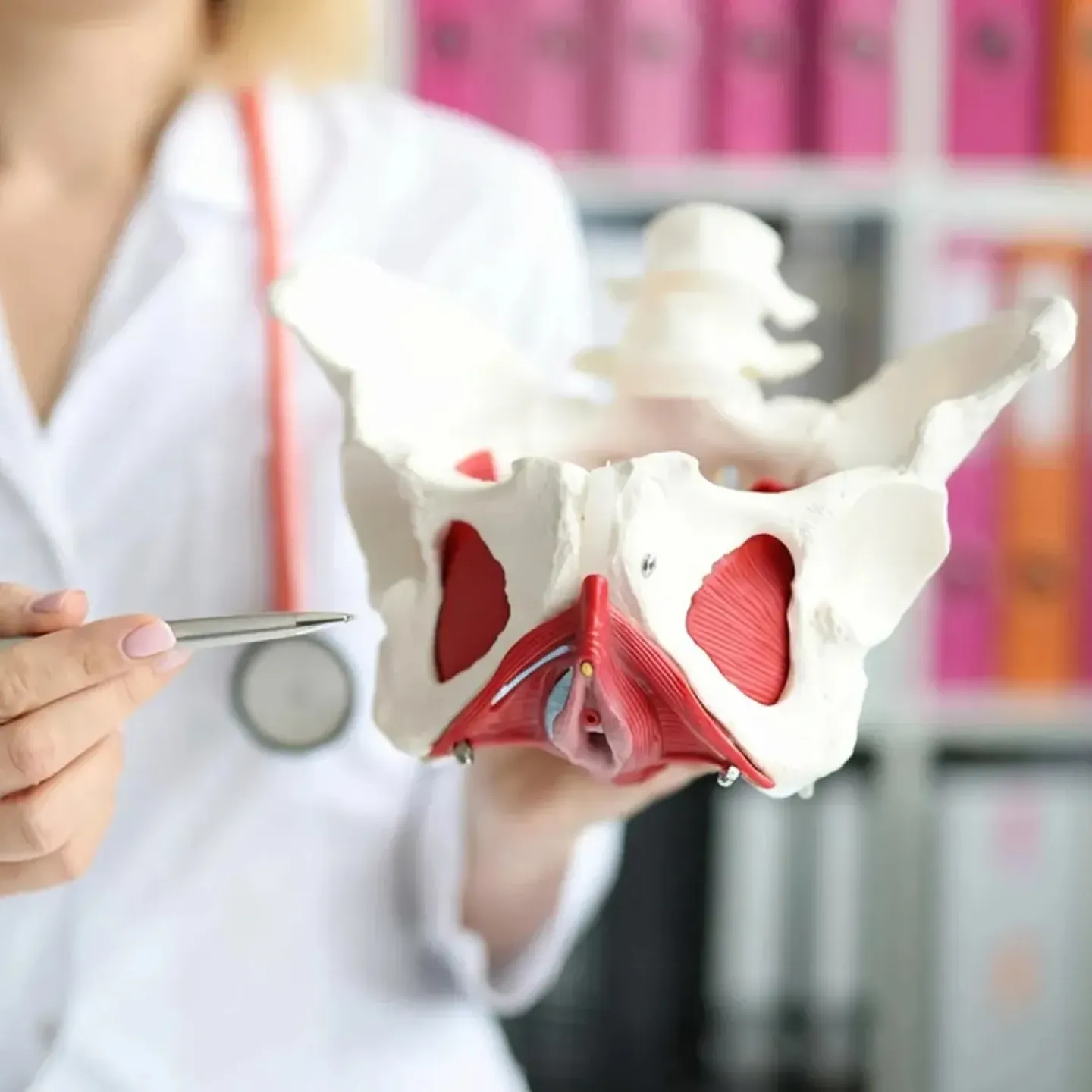
The piriformis and pelvic floor muscles are close neighbors that share space, fascial connections, and workload. Both attach to the sacrum and pelvis and help control rotation, stability, and load transfer between the spine, hips, and pelvic organs. When the piriformis is tight or overactive, it can change how the pelvis moves, which is often what leads the pelvic floor muscles to over-recruit to “help out.”
This connection can show up in a few ways:
- A tight piriformis can contribute to pelvic floor tension, making it harder for the pelvic floor to relax.
- Persistent pelvic floor guarding (for example, from pain with intercourse, tailbone pain, or constipation) can cause the piriformis to stay tight, too.
- Nerve irritation around the piriformis region may overlap with nerves that supply the pelvic floor, adding to pain, burning, or pressure in the pelvic region.
For many people, especially those with both butt/hip pain and pelvic symptoms (like painful sex, pelvic pressure, or rectal pain), treating the piriformis and pelvic floor together is what finally changes the pattern.
What are common piriformis syndrome symptoms?
Symptoms can vary from person to person, but some common symptoms of piriformis syndrome include:
- Aching or burning sensation deep in one buttock, often worse after sitting.
- Pain that may radiate down the back of the thigh, sometimes to the calf or foot.
- Pain with sitting on hard surfaces, driving, or crossing one leg over the other.
- Tenderness when pressing on a specific spot deep in the buttock.
- Discomfort with certain hip stretches or positions that rotate the leg outward.
Pregnant people, in particular, may notice:
- New or worsening buttock pain as the pregnancy progresses.
- Pain that increases with walking, standing on one leg to put on pants, or rolling in bed.
- A sense that the hip or pelvis feels “unstable,” leading muscles like the piriformis and pelvic floor to grip in response.
Any time hip or butt pain is persistent, keeps returning, or begins to affect sleep, walking, or daily activities, it is worth getting it evaluated by a pelvic floor specialist. This is especially important if you are also experiencing pelvic symptoms such as pelvic pressure, tailbone pain, or pain with intercourse.
How is piriformis syndrome diagnosed?
There is no single test that definitively “proves” piriformis syndrome. Instead, diagnosis comes from a combination of your personal and medical history, a physical exam, and movement assessment. Our pelvic floor physical therapists will typically:
- Ask detailed questions about your symptoms, such as their onset and aggravating factors, and your medical history.
- Assess posture, gait, and movement patterns, including how the hips, lumbar spine, and pelvis move.
- Palpate (gently press) the piriformis and surrounding muscles to identify tenderness, trigger points, or guarding.
- Perform specific movement and positional tests that load or stretch the piriformis and sciatic nerve.
- When appropriate and with your consent, perform an internal pelvic floor exam to assess pelvic floor muscle tone, strength, coordination, and tenderness.
Imaging (like MRI) is not always necessary, but your medical provider may recommend it if your symptoms are severe, atypical, or not improving with treatment. However, what sets pelvic floor physical therapy apart is the ability to look at how hip and buttock findings may connect with pelvic floor function, rather than treating them as separate issues.
What does piriformis syndrome treatment look like?
In most cases, piriformis syndrome is treatable with conservative care, and many people improve significantly with targeted physical therapy. Treatment at Origin often includes:
- Manual therapy: Hands-on techniques to release tension in the piriformis, gluteals, low back, and pelvic floor muscles.
- Specific piriformis stretches and mobility work: Tailored to the individual rather than a one-size-fits-all stretch; readers can explore a more detailed exercise overview in Origin’s piriformis syndrome exercises article.
- Strengthening and stability training: For the hips, core, and pelvis to reduce overload on the piriformis and pelvic floor.
- Nerve mobility (“flossing”) exercises: When appropriate, to help calm sciatic nerve irritation.
- Pelvic floor retraining: Learning how to fully relax, lengthen, and then coordinate pelvic floor contractions with breath and movement.
- Education and activity modification: Adjusting sitting strategies, running volume, workout programming, and posture to support healing rather than repeatedly re-irritating the area.
For those who may not have the time or resources to schedule an in-person visit, we also offer virtual care, which can be helpful for education, guided exercise progression, ergonomic and activity coaching, and real-time support. Some people may want to start with telehealth to understand what’s going on and get an initial plan, then add in-person visits for hands-on work when needed. That’s ok, too!
How long does piriformis syndrome last, and is it treatable?
Piriformis syndrome is usually treatable, but timelines vary. Some people feel noticeable relief within a few weeks of focused PT, especially if their symptoms are relatively new and daily habits are adjusted early. Others with long-standing pain, multiple pregnancies, or overlapping pelvic floor conditions may need a longer course of care.
It’s important to mention the goal is not just short-term pain relief; it’s making sure you can get back to doing the things you love comfortably, and helping prevent the possibility of future issues.
Why is a pelvic floor PT the right specialist?
Origin clinicians are trained in orthopedic physical therapy before specializing in pelvic floor, which means they are uniquely equipped to evaluate the spine, hips, piriformis, and pelvic floor as one connected system. This whole-person approach can help uncover how factors such as foot mechanics, hip strength, breathing, stress, pregnancy history and more can interact with piriformis tension and pelvic floor function. By being able to differentiate piriformis syndrome from other pain sources, addressing tension with manual therapy, and building an integrated treatment plan, a pelvic floor PT can support you in so many ways.
If you’re experiencing discomfort you think might be coming from your piriformis muscles, working with a pelvic floor physical therapist who understands both piriformis and pelvic floor dynamics can be a powerful next step. When you’re ready to get personalized care, book an in-person or virtual visit here.
- Chang C, Jeno SH, Varacallo MA. Anatomy, Bony Pelvis and Lower Limb: Piriformis Muscle. [Updated 2023 Nov 13]. In: StatPearls [Internet]. Treasure Island (FL): StatPearls Publishing; 2026 Jan-. Available from: https://www.ncbi.nlm.nih.gov/books/NBK519497
- Probst D, Stout A, Hunt D. Piriformis Syndrome: A Narrative Review of the Anatomy, Diagnosis, and Treatment. PM R. 2019;11 Suppl 1:S54-S63. https://pubmed.ncbi.nlm.nih.gov/31102324
- Vij N, Kiernan H, Bisht R, et al. Surgical and Non-surgical Treatment Options for Piriformis Syndrome: A Literature Review. Anesth Pain Med. 2021;11(1):e112825. Published 2021 Feb 2. https://pmc.ncbi.nlm.nih.gov/articles/PMC8241586