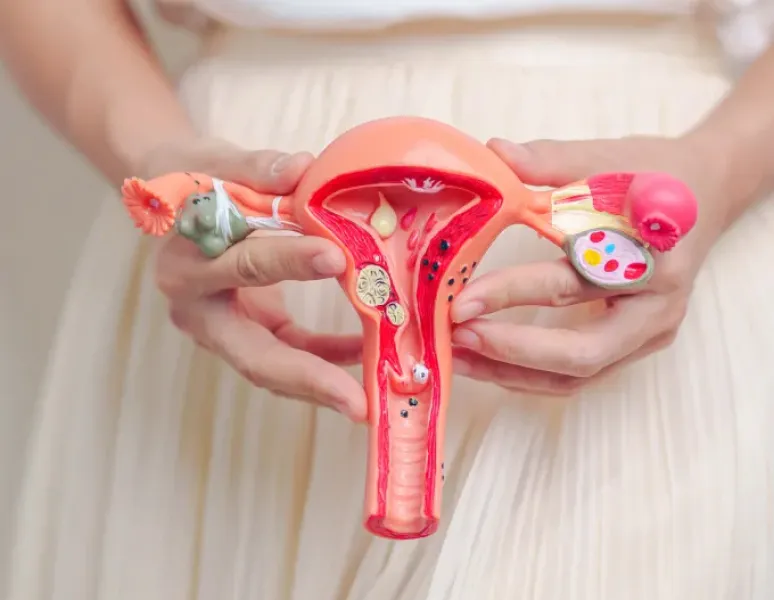

There’s a lot that can be said about both the progress made and persistent challenges faced in women’s health. But one big step forward has been the growing attention of uterine fibroids in mainstream media and public conversation.
For example, high-profile personal stories (with celebrities like Linsey Davis and Lupita Nyong’o), health reporting on things like fibroids and cardiovascular risks, public-broadcast segments on awareness gaps, and awareness campaigns, have given fibroids some well-deserved attention.
And for the millions of people living with fibroids, this attention really matters. When fibroids get more attention, it usually means there’s a greater chance you’ll get an earlier diagnosis, better access to diagnostic tools, and more options for care.
What are uterine fibroids?
Uterine fibroids, also known as leiomyomata or myoma, are noncancerous growths that grow in or on the uterus. They are very common, affecting about 3 out of every 4 people born with a uterus by the time they reach menopause. Fibroids tend to show up in the reproductive years and are most common in your 40s and 50s.
Fibroids are closely tied to hormones like estrogen and progesterone. These hormones help fibroids grow, which is why fibroids usually show up during the reproductive years, may grow during pregnancy, and can shrink after menopause when hormone levels drop.
Uterine fibroids can vary a lot in size, number, and location. So, you may have a single fibroid that’s as small as a seed, or multiple big fibroids that grow big enough to change the shape and function of your uterus.
And while not everyone with fibroids has symptoms, they’re the leading reason that hysterectomies are done. And they can cause a wide range of pelvic, menstrual, and reproductive symptoms.
Types of uterine fibroids
Fibroids are classified based on where they grow in your uterus. The types of uterine fibroids include:
- Intramural fibroids: These are fibroids that grow and stay within the muscular walls of the uterus. These are the most common type.
- Submucosal fibroids: These are fibroids that develop in the muscular lining and then grow into the uterine cavity, underneath the inner lining.
- Subserosal fibroids: These are fibroids that grow from the outer wall of the uterus into the pelvic cavity. Subserosal fibroids can become very large.
- Pedunculated fibroids: These are subserosal or submucosal fibroids that are attached to the uterus by a stalk.
What are uterine fibroid symptoms?
The symptoms of uterine fibroids can be very different from person to person. You may not have symptoms at all, or you may have symptoms that are serious enough for treatment, which is the case for about 30% of people with fibroids.
How fibroids affect you can depend on things like how many you have, how large they are, and where they’re located. And symptoms can worsen over time as fibroids grow, or improve as fibroids change in menopause.
Common symptoms of fibroids include:
- Heavy or irregular periods or bleeding in between periods
- Pelvic pain or pressure, painful periods (dysmenorrhea), or pain during sex (dyspareunia)
- Frequent urination or difficulty fully emptying your bladder
- Constipation, bloating, or a constant feeling of pelvic fullness
- Lower back or hip pain
- Fatigue or low energy
Fibroid location and symptoms
Where your fibroids are located can also make a difference in your symptoms:
- Fibroids inside your uterine cavity (submucosal) are often linked to heavy bleeding, even when they’re small.
- Fibroids within your uterine wall (intramural) or on the outside of your uterus (subserosal) are more likely to cause pressure symptoms, abdominal bloating, or a “fibroid belly.”
- Fibroids growing near the front of your uterus may press on your bladder, while those toward the back can lead to constipation or lower back pain.
Fibroids can also affect your fertility and pregnancy, especially if they change the shape of your uterus or interfere with fertilization or implantation.
Do fibroids cause bleeding?
Yes. Uterine fibroids can cause irregular bleeding, heavy bleeding (menorrhagia), and bleeding in between periods.
Why do fibroids cause heavy bleeding?
Research shows that heaving bleeding is a symptom in about 30% of people with uterine fibroids. Researchers don’t fully understand how fibroids cause heavy bleeding. But they have some theories:
- Fibroids may increase the surface area of the uterine lining, leading to heavier shedding during menstruation.
- They can disrupt normal uterine muscle contractions and impact your uterus’s ability to control bleeding.
- Fibroids may alter local blood vessel formation, which can increase blood flow to your uterus.
- Inflammatory and hormonal signaling changes linked with fibroids may contribute to bleeding abnormalities.
Are fibroid tumors cancerous?
Uterine fibroids are tumors, but despite the term “tumor,” fibroids are almost always noncancerous (benign). And research shows that the chance that a fibroid is cancer is well under 1%.
A rare cancer called uterine leiomyosarcoma can happen, but it usually develops on its own, not from a typical fibroid.
But some research does point to a slightly higher risk of cancer in certain people, especially those who are postmenopausal, older, or have specific risk factors like history of pelvic radiation, use of tamoxifen, or certain rare genetic conditions. Because of this, healthcare providers are more cautious when fibroids develop or change after menopause. Only tissue testing can confirm cancer.
Ultimately, more research is needed to fully understand the relationship between uterine fibroids and cancer risk.
Risk factors and uterine fibroid prevention
Uterine fibroids are very common, but your risk of developing them may depend on a mix of genetic, hormonal, lifestyle, and environmental factors.
Some people are more likely to develop fibroids than others. The strongest risk factor is race, with African American women being affected more often. Other possible risk factors include:
- Being older or pre-menopausal
- Never having given birth
- Family history of fibroids
- High blood pressure or obesity
- Vitamin D deficiency or too much vitamin E
- Exposure to certain chemicals, such as those in plastics or pesticides
- Dietary factors, like frequent soybean milk consumption
- Early-life environmental exposures
- Smoking or heavy alcohol use
But there’s still a lot researchers don’t know about why fibroids develop. Aside from limiting certain environmental and lifestyle risks, currently there isn’t much research on ways to prevent fibroids.
What are noninvasive and nonsurgical fibroid treatment options?
Not everyone with fibroids needs treatment, especially if you don’t have symptoms. Fibroid removal surgery (like myomectomy or hysterectomy) is a common treatment option, but many people can manage fibroids without an operation.
Here are some nonsurgical treatments for fibroids that research shows may help manage symptoms, preserve fertility, and reduce bleeding or pain without surgery.
Hormonal therapies:
- Birth control pills or progestin-only options may help with heavy menstrual bleeding
- Gonadotrophin-releasing Hormone (GnRH) agonists/antagonists may help lower estrogen and progesterone to shrink fibroids
- Selective progesterone receptor modulators (SPRM) medications may help reduce fibroid size and bleeding
Medication:
- NSAIDs and tranexamic acid help reduce heavy periods
- Hormone-releasing IUDs may thin your uterine lining and decrease bleeding
Image-guided procedures:
- Uterine artery embolization (UAE) can block fibroid blood flow to shrink them
- Radiofrequency ablation (RFA) and focused ultrasound (HIFU/MRgFUS) may be used to destroy fibroid tissue with heat or sound waves
Lifestyle and supplements:
- Vitamin D3 may help prevent fibroids from returning
- Exercise may help reduce your risk of uterine fibroids and help with symptom management
For added support with pelvic discomfort, bladder or bowel issues, and core strength, pelvic floor physical therapy can be a helpful next step.
Where does pelvic floor physical therapy fit in?
Pelvic floor physical therapy (PFPT) can be a really helpful (but often overlooked) part of your fibroid care plan.
Fibroids can press on your bladder, rectum, and pelvic floor muscles, leading to muscle tension, posture changes, bowel and bladder issues, and chronic pelvic pain, even after medical or surgical treatments.
While PFPT doesn’t treat fibroids directly, it can help:
- Reduce pelvic pain and pressure
- Improve bladder and bowel function
- Support recovery after fibroid removal surgery
- Reconnect with your body and regain function
If you have uterine fibroids, PFPT can significantly help improve how you feel in the day-to-day, especially when used alongside other medical and surgical treatment options.
We’re here to help! Schedule a visit with one of our expert PTs today to get personalized support for your pelvic floor and fibroid-related symptoms.
- Barjon, K., J. Kahn, and M. Singh. Uterine Leiomyomata. StatPearls Publishing, 2025. https://www.ncbi.nlm.nih.gov/books/NBK546680
- Benaglia, L., et al. "The Rapid Growth of Fibroids during Early Pregnancy." PLoS One, vol. 9, no. 1, 2014, e85933. https://doi.org/10.1371/journal.pone.0085933
- Birolim, M. M., et al. "The Association Between Physical Activity and Uterine Leiomyoma and Its Symptoms: A Systematic Review and Meta-Analysis." Health Science Reports, vol. 8, no. 2, 2025, e70487. https://doi.org/10.1002/hsr2.70487
- Chen, I., et al. "Clinical Characteristics Differentiating Uterine Sarcoma and Fibroids." JSLS: Journal of the Society of Laparoendoscopic Surgeons, vol. 22, no. 1, 2018, e2017.00066. https://doi.org/10.4293/JSLS.2017.00066
- Giuliani, E., S. As-Sanie, and E. E. Marsh. "Epidemiology and Management of Uterine Fibroids." International Journal of Gynaecology and Obstetrics, vol. 149, no. 1, 2020, pp. 3–9. https://doi.org/10.1002/ijgo.13102
- Hunsche, E., et al. "The Burden of Uterine Fibroids from the Perspective of US Women Participating in Open-Ended Interviews." Women's Health Reports, vol. 3, no. 1, 2022, pp. 286–296. https://doi.org/10.1089/whr.2021.0086
- Lakabi, R., et al. "Diagnosis and Classification of Uterine Fibroids." International Journal of Gynaecology and Obstetrics, vol. 171, no. 2, 2025, pp. 566–573. https://doi.org/10.1002/ijgo.70538
- Michel, R., et al. "The Fibroid Crisis in Black Women: More Work to Be Done!" American Journal of Obstetrics & Gynecology, vol. 231, no. 3, 2024, pp. 287–288
- Munro, M. G., S. N. Tchaikovski, and A. Murji. "The Epidemiology and Pathogenesis of Uterine Fibroids." International Journal of Gynaecology and Obstetrics, vol. 171, 2025, pp. 1029–1045. https://doi.org/10.1002/ijgo.70527
- "Management of Symptomatic Uterine Leiomyomas: ACOG Practice Bulletin Summary, Number 228." Obstetrics & Gynecology, vol. 137, no. 6, 2021, pp. 1131–1133. https://doi.org/10.1097/AOG.0000000000004403
- "Uterine Fibroids." NHS, 2025. https://www.nhs.uk/conditions/fibroids
- "Uterine Fibroids." Office on Women's Health, U.S. Department of Health and Human Services, 2025. https://womenshealth.gov/a-z-topics/uterine-fibroids#:~:text=About%2020%20percent,woman%20look%20pregnant
- Uimari, O., K. S. Subramaniam, B. Vollenhoven, and T. T. Tapmeier. "Uterine Fibroids (Leiomyomata) and Heavy Menstrual Bleeding." Frontiers in Reproductive Health, vol. 4, 2022, 818243. https://doi.org/10.3389/frph.2022.818243
- Ulin, M., et al. "Uterine Fibroids in Menopause and Perimenopause." Menopause (New York, N.Y.), vol. 27, no. 2, 2020, pp. 238–242. https://doi.org/10.1097/GME.0000000000001438
- Yang, Q., et al. "Comprehensive Review of Uterine Fibroids: Developmental Origin, Pathogenesis, and Treatment." Endocrine Reviews, vol. 43, no. 4, 2022, pp. 678–719. https://doi.org/10.1210/endrev/bnab039
- "What Doctors Wish Patients Knew About Uterine Fibroids." American Medical Association, 2025. https://www.ama-assn.org/public-health/population-health/what-doctors-wish-patients-knew-about-uterine-fibroids