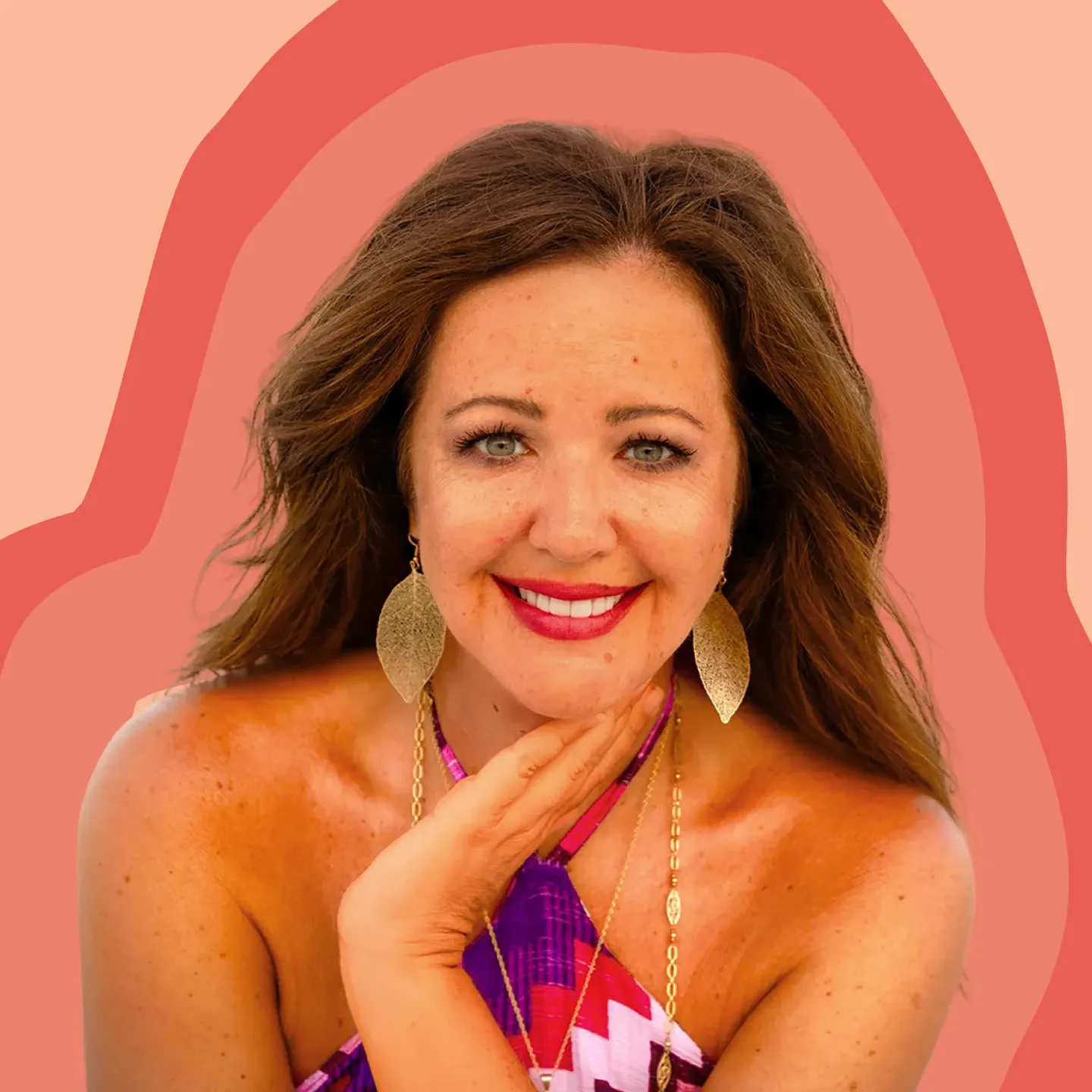
If you've ever found yourself putting everyone else's needs before your own, you're not alone, and according to Sara Hirsh Bordo, your body may have been keeping score. In her new book Autoimmunity and the Good Girls, Sara draws on more than a decade of storytelling, personal health experience, and original research to explore the connection between chronic people-pleasing and the epidemic of autoimmune disease in women. We asked Sara to talk about what the science says, what the stories reveal, and what it actually looks like to start putting yourself first.
1. You spent over a decade making films about women's stories before turning the lens on your own health. What made you sit down and write this book?
Having knowledge is one thing; being able to put it into action is another. For 15 years I was telling other women’s stories of their lived experiences; now, for the first time, I’ve decided to come out of my introverted backstage comfort to tell my own in the hopes of supporting other autoimmune-diagnosed women like me. For most of my life I put others first to my own detriment, physically and emotionally; at home, at work I was always “the good girl,” the “people pleaser.” But the more I abandoned myself, the more my body followed suit and I needed to understand why. This book is my multi-year research journey towards healing through awareness of identity and immunity, and a road map for so many other women who find themselves sick from over-compromising themselves for others. But this book isn’t my story alone, it’s also the voices of generations of good girls, and the time has come for us to rewrite our narratives for a healthier, more empowered life.
2. For anyone just picking this up for the first time, what's the thesis at the heart of the book, and what do you hope readers take away from it?
We are in the midst of what I call “the climate crisis of women’s health.” There are an estimated 140 types of incurable autoimmune diseases affecting 20 percent of the world’s population; 80 percent of those diagnosed are women and there isn’t a cure for a single one. Autoimmunity and the Good Girls sets out to tell through science and story, through research and personal interviews, how for generations women have compromised themselves to the point of illness, and how putting ourselves first has the power to restore and heal as it did for me. How radical health changes occur when authenticity, environment, and self-permission align.
3. You came to this topic as a filmmaker and storyteller, not through academia. How did that shape the way you approached the research and wrote the book?
The idea of writing a book was deeply intimidating. Like everyone, I have a few intimate stories to tell that get reactions when I tell them or help others feel less alone, but weaving my personal health experiences with research was a huge responsibility. So I approached it how I approach writing and directing a documentary. It needed to have a heroine’s journey—which, gulp, in this case, was me, an introverted empath who doesn’t like attention. It also needed other voices, like interviews with more than a dozen experts across a wide spectrum of specialties. It also needed the support and substantiation of research or evidence both in interview and study. And like all of my work, it needed space for a little magic to enter- which was leaning on the stories of female heroes across time and myth and how their journeys of transformation could be seen as medicine for our own.
4. More than 6 in 10 women with autoimmune conditions were raised as the oldest or only daughter. For someone who sees herself in that statistic, what do you want her to do with it?
First of all, I want to say, hello sister. Many of us raised as the eldest or the only daughters or the caretakers, felt we were loved more when we were “good” and more valuable when we were in service of others. But those patterns have stayed with us, and now that self-abandoning identity is at odds with who we need to be: real.
We cannot keep being more afraid of disappointing others than doing what is needed for our own care.
Changing my relationship to this construct changed everything for me. We are worthy of having wants and needs. We are worthy of bringing them out into the world through our voices, and we deserve to have them addressed and fulfilled. Most of us were never told or taught this, but we can re-parent ourselves one step at a time. I am living proof that it can be done.
I invite women to:
- Believe that it is never too late to prioritize yourself.
- Acknowledge your body is your partner delivering messages and not your enemy.
- Befriend your inner girl whose turn it never was, until now, to take her turn, and to mother her in the way you know you need now.
- Get comfortable speaking new phrases, such as “No, thank you.” “That’s not what I need right now, but what would be helpful is _____.” And “ I’m hurting. And here is what would be really comforting_____.”
5. What's happening in the immune system when we chronically override our own needs?
An autoimmune disease is when the immune system begins to attack itself because it can no longer recognize its healthy cells from its unhealthy ones. In essence, it’s in identity crisis. I was a lifelong people pleaser who became more and more sick, with more and more diagnoses, every time I was in heightened phases of over giving. When I started thinking of my body not just speaking science, but speaking story…I began to see that my immune system is my protector, not my enemy. But you would never know that, because all I did was blame it for disappointing me and making me less productive.
When I reframed my immune system as my partner, and began to make choices that were in balance for what I gave and what I received, my immune system began to come back into balance.
In the book I speak at length about understanding the contributing factor to immunity, epigenetics. How the environments we live in and how we shape those environments affect the genes that turn on and off within our DNA. Like I said, our bodies speak science and story.
6. Our very own Kimberlee Sullivan is one of the experts you interviewed. What did that conversation open up for you about how the body holds these patterns physically? Why was it important to you to include that dimension of women's physical health in a book about identity and immunity?
I am a sexual assault survivor both from girlhood and from womanhood. And trauma, little t and big T trauma, is an essential piece of what our body holds. I wanted to speak to Kimberlee about her experiences with her own Good Girl conditioning from childhood and how she sees that present across her practice. I especially wanted to focus on women being able to receive care, as in my 1000 American woman research study, that women who were raised to be good or the girlhood caretaker in their family, really struggle to receive kindness or care of any kind. To me, understanding how to not only present encouragement, but deeper than that, permission, to receive care from the outside, is critical. No one approaches patient care with more grace or empathy or loveliness, than Dr. Kimberlee and she has been a steadfastly generous champion for the last many years of this work.
7. What's the hardest thing to unlearn for a recovering "good girl"? Is there a specific practice or reframe from the book that you find yourself coming back to?
I think that “hardest” is truly subjective, depending upon what stories you have held onto from your girlhood, affect everything in womanhood. I believe that many of us raised to be good were raised on a foundation of quicksand, identity controlled by the outside instead of sovereign stone you’ve assembled and claimed for yourself. I interviewed several youngest daughters for the book, and they have a layer of autonomy and birthright that is unapologetic and incredibly powerful. They know how to self-originate from what feels right to them. They have a natural strength of taking up space, speaking up for themselves, and unapologetic claim to their needs and wants. By giving myself the permission to be human enough to have needs, safety enough to ask the tough questions about who I really was beneath the self-compromising character of Sara that kept me liked by the outside, and the freedom enough to go back and start at the beginning of my Self. What I abandoned in my illness, I reclaimed in my wellness. And I hope so much that my book can hold women’s hands as they begin the same journey.
Sara's book Autoimmunity and the Good Girls is available now, and you can hear more from her and Origin’s Dr. Kimberlee Sullivan in our recent podcast episode.