If you've spent any time around runners, athletes, or physical therapists, you've probably heard someone mention "the world's greatest stretch." It sounds like hyperbole, but this single movement actually lives up to its name. It combines a deep hip flexor lunge, thoracic rotation, and a hamstring stretch into one efficient sequence that targets mobility across multiple planes of movement.
What’s often overlooked is how powerful “the world’s greatest stretch” is for pelvic floor health. For people dealing with pelvic tension, pain, or dysfunction, this stretch can offer an accessible, equipment-free entry point into pelvic floor care.
What is the world's greatest stretch?
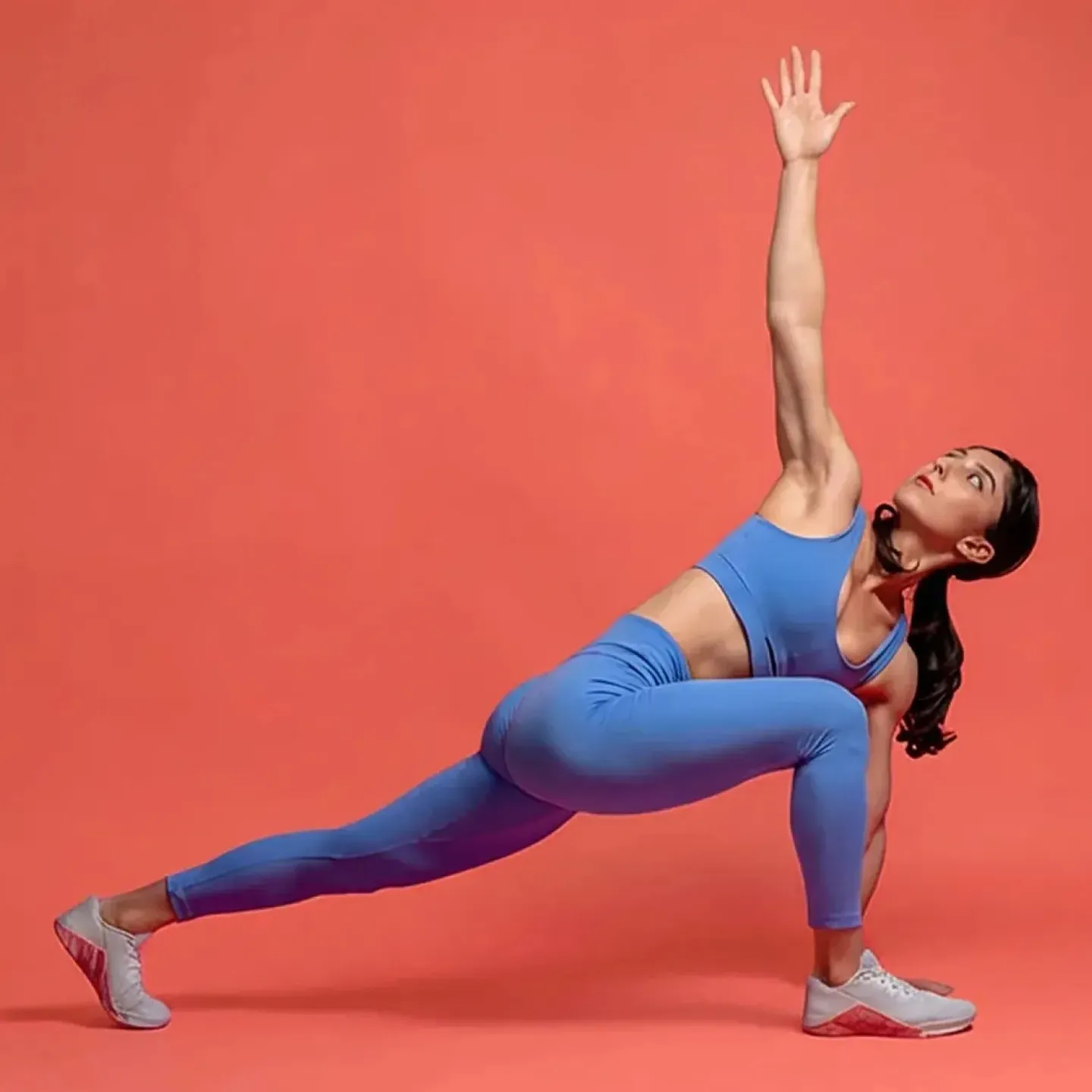
The world's greatest stretch is a dynamic mobility movement that starts in a lunge position and progresses through a series of positions that open up the hips, stretch the thoracic spine, and lengthen muscles throughout the body.
The stretch typically includes these components:
- A deep lunge position to target the hip flexors of the back leg and the glute and hamstrings of the front leg
- Reaching the elbow toward the inside of the front foot to deepen the hip stretch in the front leg
- Rotating the torso and reaching one arm toward the ceiling to engage thoracic rotation
- And returning to the starting position to reset before repeating on the other side
What makes this stretch particularly effective is that it addresses multiple movement restrictions in a single sequence. Rather than isolating one muscle group at a time, it combines hip mobility, spinal rotation, and hamstring flexibility while also challenging your balance and coordination.
Why is it called the world's greatest stretch?
This stretch earned its bold name because it checks nearly every box when it comes to functional mobility. It targets the hip flexors, hamstrings, glutes, thoracic spine, and shoulders all at once. These are the exact areas that tend to get tight from repetitive movement patterns or prolonged sitting.
The efficiency is part of what makes it "the greatest." In less than a minute, you can work through mobility restrictions that would otherwise require multiple separate stretches. It also mimics real-world movement patterns, making it more functional than static stretching alone.
Physical therapists often use variations of this stretch as both an assessment tool and a warm-up movement because it quickly reveals where someone might be compensating or lacking mobility.
What does this stretch do for your pelvic floor?
The pelvic floor doesn't exist in isolation. It works in coordination with the hips, core, diaphragm, and spine. When the muscles surrounding the pelvic floor are tight or restricted, the pelvic floor itself often becomes tense or dysfunctional.
Hip flexor tension and pelvic floor connection
The hip flexors, particularly the psoas and iliacus muscles, have a direct anatomical relationship with the pelvic floor. One of the primary hip flexor muscles, the psoas originates from the lumbar spine (in the lower back region) and runs through the pelvis before attaching to the femur (the thigh bone). When certain hip flexors, including the psoas, are chronically tight (which happens frequently from prolonged sitting), they can pull the pelvis into an anterior tilt.
Research shows that hip flexor stretching can reduce anterior pelvic tilt and improve pelvic alignment and a 2025 study suggests the world's greatest stretch may be one of the best ways to do it. Researchers found that a daily lunge-and-reach program improved hip flexor length and gluteal function in participants with hip flexor tightness, two things that directly influence how well your pelvic floor can function. When the hip flexors lengthen and the glutes start pulling their weight, the pelvis can settle into better alignment, giving the pelvic floor what it needs to relax, coordinate, and function properly.
Thoracic rotation and pelvic floor coordination
The thoracic spine component of this stretch is equally important for pelvic health. Your thoracic region (specifically, the diaphragm) connects your upper body to your pelvic floor via connective tissue, making thoracic mobility essential for pelvic floor function.
When the thoracic spine is stiff or restricted in rotation (common in people who sit at desks or have poor posture), the entire core system has to compensate. Limited thoracic mobility reduces respiratory function, which directly impacts the pelvic floor because breathing and pelvic floor coordination are intimately linked.
The rotational component of the world's greatest stretch helps restore or maintain thoracic mobility, which allows the diaphragm and pelvic floor to work together more effectively. Better breathing mechanics mean better pelvic floor coordination.
Glute and hamstring lengthening
The glutes and hamstrings also play a supporting role in pelvic floor function. When these muscles are tight, they can alter pelvic positioning and create tension that radiates into the pelvic floor. The lunge position and forward fold aspects of the world's greatest stretch help lengthen both muscle groups of the front leg, reducing overall tension in the pelvic region.
What does it mean to have a tight pelvic floor?
It's important to understand that pelvic floor dysfunction isn't always about weakness in and around the pelvis. A tight pelvic floor (sometimes called a hypertonic or overactive pelvic floor) is a condition where the pelvic floor muscles remain in a state of nearly-constant contraction and can't fully relax.
Unlike pelvic floor weakness, which gets a lot of attention in postpartum conversations, a tight pelvic floor requires a completely different approach to treatment.
Find out whether your pelvic floor is tight, weak, or both!
Signs of a tight pelvic floor
Common symptoms include pelvic pain in the pelvic area, painful sex, difficulty or pain with urination or bowel movements, feeling like you can't fully empty your bladder or bowels, constipation, and urinary urgency or frequency.
If you've been doing Kegels religiously and your symptoms aren’t getting any better or even getting worse, or if pelvic floor exercises make you feel more tense rather than stronger, you might be dealing with tightness rather than weakness.
Here are 10 signs you might have a tight pelvic floor.
Why stretching matters for a tight pelvic floor
For people with a tight pelvic floor, strengthening exercises like Kegels alone can make symptoms worse. What these muscles need is the ability to relax, lengthen, and coordinate properly with the rest of the core.
This is where full-body stretches like the world's greatest stretch become valuable. By releasing tension in the hip flexors, glutes, and thoracic spine, you're addressing the muscular restrictions that may be contributing to pelvic floor tightness. Pelvic floor physical therapy, which includes stretching and manual techniques, is the first-line treatment for tight pelvic floor dysfunction.
How to do the world's greatest stretch
Here's a step-by-step guide to performing this stretch with proper form. Remember, the goal is mobility and control, not stretching so far that you feel pain.
Step 1: Get into a lunge position
There are many ways to get into the world’s greatest stretch: down dog, plank, or from a standing position (this is the easiest starting point for folks with limited mobility, but does require some balance)! For the purpose of this demo, we recommend standing.
Step your right foot forward into a deep lunge. Your right knee should be bent at roughly 90 degrees with your knee tracking over your ankle. Your left leg extends behind you with the ball of your left foot on the ground. Place both hands on the floor inside your right foot. Keep your spine as long and neutral as possible.
This starting position already creates a stretch through the left hip flexor and right hamstring and gluteus maximus (the largest glute muscle).
Step 2: Rotate and reach toward the ceiling
Rotate your torso to the right. Lift your right arm toward the ceiling, opening your chest and following your hand with your eyes. You should feel this rotation through your mid-back (thoracic spine). Keep your pelvis squared to the floor so your left hip doesn’t twist, and keep your neck long and core engaged.
Keep reaching through your back leg to maintain the hip flexor stretch while you rotate.
Step 4: Return to the starting position and repeat
Lower your right hand back to the floor and return to the lunge position. You can perform several reps of rotation until you feel your muscles releasing or loosening. Then, switch legs and repeat the entire sequence on the opposite side.
Modifications for different levels
- If you can't reach the floor with your hands comfortably, place your hands on yoga blocks or a low step.
- If the lunge position is too intense, drop your back knee to the ground for a modified kneeling version.
- If you have difficulty balancing, perform this stretch next to a wall where you can use one hand for support.
- For less thoracic rotation, simply reach your arm at a lower angle rather than straight up toward the ceiling.
Is stretching enough for your pelvic floor?
While the world’s greatest stretch is an accessible and effective exercise, it's important to understand that it's a tool, not a cure. If you're experiencing pelvic floor symptoms such as pain, pressure, leakage, or painful sex, stretching alone is unlikely to resolve the issue completely.
Pelvic floor dysfunction is complex and individual. What works for one person's tight pelvic floor might not work for another's. A pelvic floor physical therapist can assess your specific movement patterns, muscle tone, and symptoms to create a personalized treatment plan.
At Origin, our clinicians specialize in pelvic floor therapy and they understand the connection between hip mobility, core function, and pelvic health. If you're dealing with symptoms or aren't sure whether your pelvic floor is tight or weak, an evaluation can provide clarity and direction.
Not sure if you need pelvic floor therapy?
Origin’s pelvic floor physical therapists can help assess whether tightness, weakness, or coordination issues are driving your symptoms. Book a visit to get started with your personalized plan.
- Bordoni, Bruno, Kavin Sugumar, and Stephen W. Leslie. "Anatomy, Abdomen and Pelvis, Pelvic Floor." StatPearls, StatPearls Publishing, 17 Jul. 2023, www.ncbi.nlm.nih.gov/books/NBK482200
- Brennan, A. Lenore, et al. "A Treatment Algorithm for High-Tone Pelvic Floor Dysfunction." Obstetrics & Gynecology, vol. 143, no. 4, 2024, pp. 574-585, https://pubmed.ncbi.nlm.nih.gov/38387036
- Brennan, Kerrie, et al. "Improved Hip Flexibility and Gluteal Function Following a Daily Lunge-and-Reach Stretching Intervention." International Journal of Sports Physical Therapy, vol. 20, no. 5, 2025, https://pmc.ncbi.nlm.nih.gov/articles/PMC12129636
- Hyunjae Woo, Narumi Numano, Ryota Fujisawa, Masaaki Kobayashi, Kenta Kawamura, Kazuhide Tomita, Influence of upright exercise with external thoracic and pelvic compression on thoracic expansion and respiratory function in healthy young adults: A pilot study, Journal of Bodywork and Movement Therapies, Volume 36, 2023, Pages 357-363, ISSN 1360-8592, https://doi.org/10.1016/j.jbmt.2023.07.013
- Orlando Orthopaedic Center: "Obsessed with Fixing 'Anterior Pelvic Tilt'? Why TikTok's Favorite Diagnosis Might Not Be the Real Problem." Orlando Orthopaedic Center, 11 Dec. 2025, https://www.orlandoortho.com/fixing-anterior-pelvic-tilt. Accessed 23 Feb, 2026
- Physio-pedia (Hip Flexors): "Hip Flexors." Physiopedia, https://www.physio-pedia.com/Hip_Flexors. Accessed 23 Feb, 2026