Pregnancy
Dec 20, 2024
Dr. Ashley Rawlins, PT, DPT
7 min

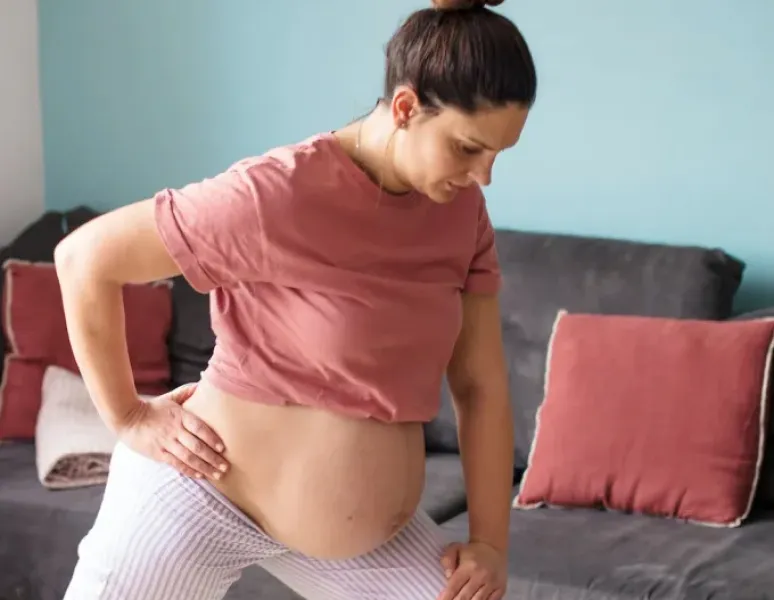
Pain is common in pregnancy, but you don’t have to push through it. More than half of pregnant people have pain somewhere in their body, especially in the lower back or pelvis, and physical therapy can help ease it as your body changes. Our pelvic health physical therapists work with you virtually, in-clinic, or through a mix of both, and every visit is a 45-minute, 1:1 session that moves at your pace. Origin’s Maternity Program guides your care from 20 weeks pregnant through recovery after birth, with visits timed to how your body changes.
Pregnancy-related pain can strike in a variety of places, and often in body regions that might surprise you. Consider the following common locations of pregnancy pain and why they happen:
During pregnancy, the structure of your body shifts, from the curve of your spine to the width of your pelvis. Over 50% of pregnant women experience pain. Pelvic girdle pain usually begins around 18 weeks and is most intense between 24 and 36 weeks. Pain is common in pregnancy, but common does not mean normal.
Physical therapy can help prevent and treat pregnancy pains. Your pelvic health physical therapist builds a plan around where and when you hurt, which may include:
Origin’s Maternity Program supports you through pregnancy and postpartum. It includes six recommended core visits with a pelvic health physical therapist, timed to how your body changes from 20 weeks pregnant through 12 weeks postpartum. We recommend starting around 20-24 weeks because research supports starting early, but it’s never too late. We’ll pick up wherever you are.
After birth, the Maternity Program continues with visits at 1-2 weeks, 6 weeks, and 8-12 weeks postpartum to support your recovery. Most patients add additional visits, for extra support or as symptoms show up. You and your clinician decide the right pace together. Every visit is virtual, in-clinic, or a mix of both.
Your maternity care visits can also help with pelvic pressure or heaviness, bladder leaks, and getting your body ready for labor and birth. See everything we help with in pregnancy.
“I started going to Origin for physical therapy for back pain. I’m now pregnant and learning so much to help me prepare for labor and being a new mom. This is a safe place where I feel empowered to discuss any subject with my physical therapist.”
“I had nearly debilitating pubic bone pain during the beginning of my pregnancy, and she’s been able to tailor my PT exercises to exactly what I need. I love the convenience of a virtual session and being able to access my program within the app.”
“Many of the aches and pains I was told were inevitable could be treated by pelvic floor therapy.”
Many patients complete some or all of their care during pregnancy virtually. No commute, no waiting room, and 1:1 visits with a physical therapist licensed in your state.
Yes. Back and hip pain in pregnancy are often related to the major mechanical shifts happening throughout your body. Your clinician watches how you move during your virtual visit, guides you through techniques you can do yourself, and adjusts your plan as your pregnancy changes.
Your first visit is an evaluation. Your physical therapist reviews your health history and symptoms, sees how your whole body moves, and builds you a custom treatment plan. From there, sessions are 1:1, 45 minutes, over a secure Zoom with a physical therapist licensed in your state. Learn more about what to expect in a virtual visit.
If you’re near a clinic, you can see us in-clinic, virtually, or through a hybrid mix of both. Your care team works together to seamlessly support you along the way.
In our 2026 white paper, virtual care showed comparable symptom relief compared to in-person care, across more than 4,600 patients. Learn how virtual pelvic floor therapy works.
As soon as pain shows up. We recommend starting around 20-24 weeks pregnant because the research supports starting early, but it’s never too late. We’ll pick up wherever you are, and many patients add additional visits as symptoms flare.
Physical therapy during pregnancy is focused on supporting the pregnant person’s body. Trained physical therapists understand how each phase of pregnancy impacts the body; they are prepared to offer guidance, exercises and strategies to help reduce your pain, maintain your level of function and exercise, and prepare you and your body for labor and birth.
While lower back pain has multiple possible causes, changes in your body mechanics play a big role in pregnancy-related low back pain. The weight of a growing belly and breasts pull the abdomen forward, causing a larger curve in the low back. This shift forces the muscles of the core and back to work harder to maintain balance and posture. If the core is weakened, then muscles in the back can over-activate or spasm, causing pain.
Physical therapists are experts of the musculoskeletal system. They are able to treat your back pain comprehensively with manual therapy techniques (some of which they can teach you or a partner to perform at home), a personalized exercise program, and guidance for improved movement strategies. In some cases, they may recommend the use of a belt or brace for additional support, particularly as your belly continues to grow during pregnancy.
Yes, very common. During pregnancy, the pelvic joints typically become looser and wider as your baby grows and your body prepares for labor. The surrounding muscles often become overworked trying to compensate for these shifts. It is common for this change in shape, reduced stability and tight muscles to lead to pelvic pain.
Hip pain typically occurs when certain movements or positions put too much strain or pressure on the muscles, joints or ligaments of the hip. As pregnancy changes the shape of the pelvis, the muscles that attach to the hip are moved, stretched, and asked to support increasingly more weight as your baby grows. This is a common source of pain.
During pregnancy, all your pelvic joints loosen to prepare for childbirth, including the joint between your sacrum and tailbone (the coccyx). Increased body weight during pregnancy puts more load through the tailbone, especially when you’re sitting, and the muscles that attach to the coccyx can tense up. The combination of these factors can lead to tailbone pain.
In pregnancy, the ribs flare upward and outward to make space for a growing baby. Depending on the size of a pregnant person’s torso and the size or position of their baby, this change in rib position may become even more exaggerated and lead to pain. Often, the pain is on just one side of the body and may get worse with coughing or deep breaths.
During pregnancy, the breasts grow larger and heavier. This forces the muscles of the neck, shoulders, and upper back to work harder to maintain proper posture and keep good head and neck alignment. As muscles fatigue, this can lead to slouching. Postural changes and overworked muscles often lead to neck and shoulder pain.
Physical therapy can help you address these imbalances through a blend of strengthening, mobility, and postural awareness techniques.
In pregnancy, as your center of gravity shifts and your breasts grow, the upper back must work hard to maintain proper head and neck alignment. A physical therapist can provide manual therapy and exercise protocols to help relieve this kind of pain. They can also give guidance for sitting, sleeping, driving, working, lifting, and carrying strategies to prevent pain from coming back.
A growing baby will place increased stress on a pregnant person’s body. This can lead to changes in joint stability, muscle function, and postural awareness; pain is a common complaint in pregnancy for these reasons. But common does not mean normal. Working with a trained physical therapist can help reduce pain as pregnancy progresses and prepare your body for birth.
Katonis P, et al. Pregnancy-related low back pain. Hippokratia. 2011.
Skarica, B. Effectiveness of Manual Treatment on Pregnancy Symptoms. Med Arch. 2018.
Leon-Larios F, et al. Influence of a pelvic floor training program to prevent perineal trauma. Midwifery. 2017.
Sobhgol SS, et al. The effect of antenatal pelvic floor muscle exercises on labour and birth outcomes: a systematic review and meta-analysis. Int Urogynecol J. 2020.
Gutke A, Boissonnault J, Brook G, Stuge B. The severity and impact of pelvic girdle pain and low-back pain in pregnancy: a multinational study. J Womens Health (Larchmt). 2018;27(4):510-517.
Bergström C, Persson M, Mogren I. Pregnancy-related low back pain and pelvic girdle pain approximately 14 months after pregnancy – pain status, self-rated health and family situation. BMC Pregnancy Childbirth. 2014;14:48. doi:10.1186/1471-2393-14-48
Taking care of yourself shouldn’t break the bank. Origin is in-network with many major carriers.