
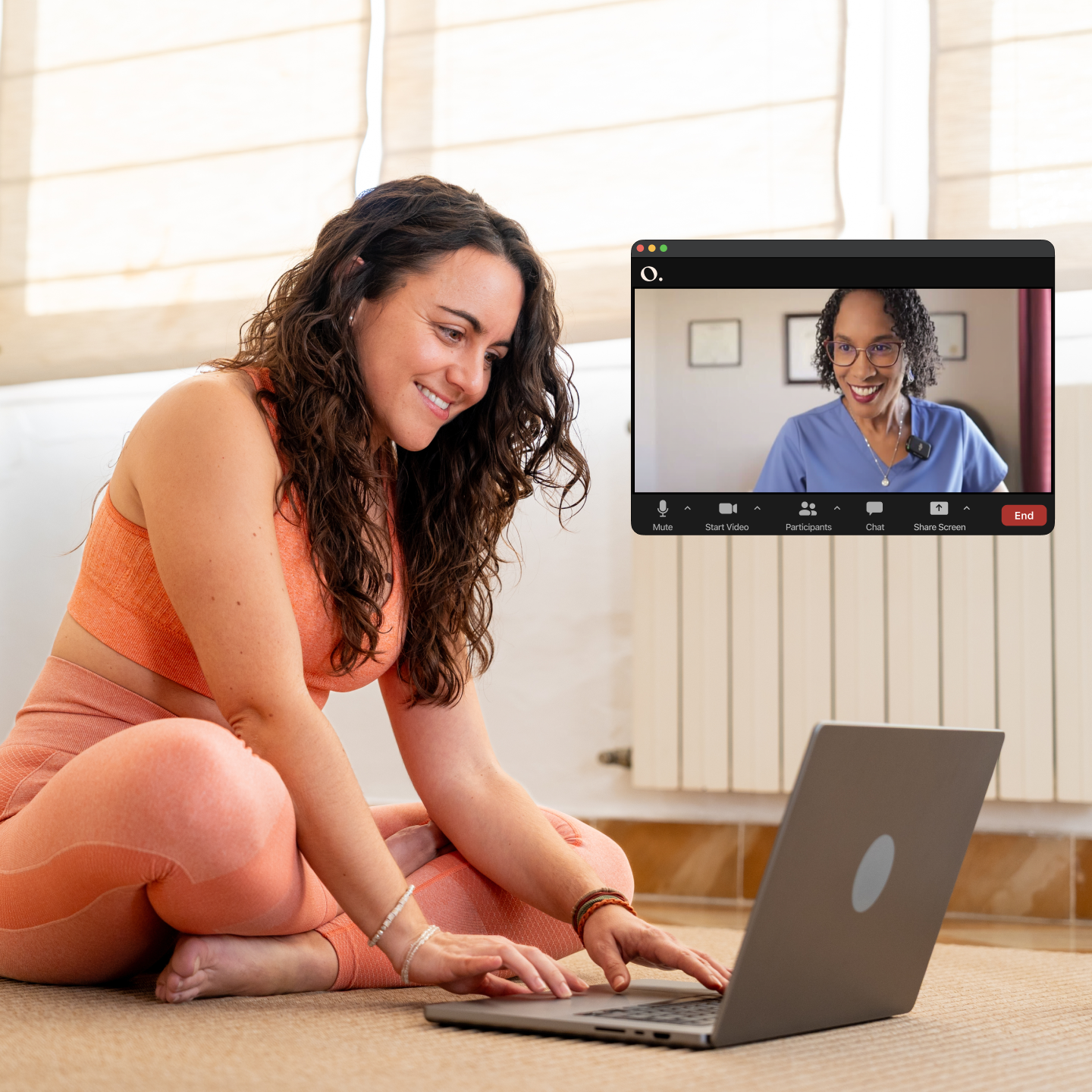
If you're wondering whether virtual pelvic floor therapy can actually help, the research shows it's a meaningful alternative to in-person visits. You'll meet one-on-one with a licensed pelvic floor physical therapist via secure video, get a personalized treatment plan, and work through exercises at home between sessions.
When most people think of pelvic floor physical therapy, they usually believe it's only effective if you're physically in a treatment room. However, pelvic floor physical therapy done virtually is a meaningful and widely accessible form of treatment. Plus, accessing care virtually can be faster than waiting for an in-person appointment, allowing you to see real results faster, without the commute.
If you're considering virtual care but have questions about how it actually works, what happens during sessions, and whether you'll actually improve, you're in the right place.
What is virtual physical therapy?
Virtual physical therapy, also called telehealth physical therapy or online physical therapy, is one-on-one treatment delivered via secure video.
With Origin's virtual care model, you meet one-on-one with a licensed physical therapist in your state via live Zoom sessions. Unlike other app-based or pre-recorded treatment plan programs, you have a real person evaluating you, assessing how your body moves, and building a customized treatment plan based on your needs, lifestyle, and goals.
Does virtual pelvic floor physical therapy actually work?
For the majority of patients, yes. Virtual care is a great first-line treatment option for most pelvic floor concerns, and the research shows outcomes comparable to in-person care.
Pelvic floor physical therapy via telehealth works for all kinds of pelvic health-related concerns, including urinary incontinence, pelvic organ prolapse, pain with sex, postpartum recovery, and more. Here's what the research shows:
- Research on telehealth for pelvic floor disorders shows that over 50% of study participants reported moderate or significant improvements in their pelvic floor symptoms.
- A study of 282 people with pelvic floor disorders compared telehealth to in-person pelvic floor physical therapy and found no difference in meeting discharge goals. Patients achieved the same results whether they participated mostly in virtual visits or mostly in-person visits.
- Research on telehealth for urinary incontinence shows that pelvic floor muscle training done virtually is effective.
- A research trial of 30 postpartum women with stress urinary incontinence found that a 4-week telehealth pelvic floor therapy program is feasible, acceptable, and produces symptom improvement comparable to in-person treatment.
Additionally, our 2026 white paper looked at data from over 4,500 patients and found comparable symptom improvement for patients in virtual, hybrid, and in-person care
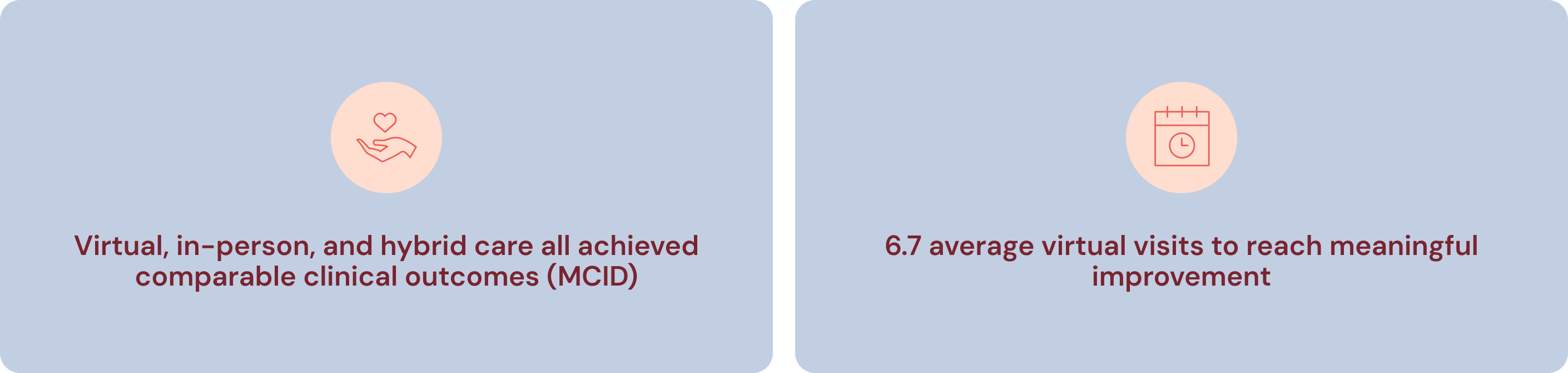
Like in-person physical therapy, the key to success is your commitment to the exercises and techniques your clinician teaches you. The more consistently you stick with them between sessions, the quicker and greater improvement tends to be. Many patients actually prefer telehealth or a hybrid format (a mix of telehealth and in-person visits) because it's more convenient.
How does virtual physical therapy work?
At Origin, virtual pelvic floor physical therapy happens in structured sessions via a secure, HIPAA-compliant Zoom meeting. You'll meet with a licensed pelvic health physical therapist for 45-minute, one-on-one sessions. Many patients have weekly or biweekly visits, with additional support from On-Track membership between sessions and after care ends.
How can virtual physical therapy work without hands-on treatment?
Your clinician guides you to do the hands-on work yourself. In a virtual visit, your physical therapist does not provide hands-on treatment, so they teach you how to do it. They assess how you move on camera, explain what's happening in your pelvic floor and the rest of your body, coach you through exercises in real time, and show you self-techniques you can use at home. You do the physical work, and your clinician provides guidance, accountability, and support, adjusting your plan each visit based on how you respond.
Many pelvic floor concerns respond well to this approach because progress depends largely on what you practice between sessions, not only on what happens during the visit.
What happens during a virtual session?
Depending on your needs, your clinician may guide you through:
- Breathing and relaxation techniques
- Pelvic floor exercises (strengthening, releasing, agility, endurance, or some combination of all of these, depending on what you need)
- Movement patterns and activity modifications that address your specific symptoms
- Education about your pelvic floor and how it connects to your symptoms and other parts of your body
- Discussion of your progress, challenges, and any questions that come up
Within the session, your clinician can see you and hear you clearly. If they need to assess your posture or movement patterns, they might ask you to position your camera a certain way so they have a good view. Some assessments are done with the camera off (see below), based on your comfort and your clinician's recommendations.
What do you do between sessions?
Your clinician will provide you with a home exercise program to do between sessions. This includes written instructions and videos created by the Origin team so you know exactly what to do. Programs are designed with busy schedules in mind and should take between 5 and 20 minutes per day. This is where real progress often takes place. While your clinician is the guide, you're doing the work that helps you progress.
If you have questions between sessions, you can message your clinician through Origin's app to ask about technique, report progress, or get answers between appointments.
What should you expect at your first virtual visit?
Your first visit sets the foundation for your treatment. Like every Origin virtual visit, it's a 45-minute, one-on-one video session, so plan accordingly and minimize distractions.
Before your session starts, you'll complete intake paperwork including your medical history, current symptoms, and what brought you to pelvic floor physical therapy. This gives your clinician context before you connect on video.
During the first visit, your clinician will listen, ask follow-up questions, and assess your symptoms. They'll then walk you through a comprehensive movement screen, pelvic floor self-check, and tailored exercises. For the pelvic floor self-check, you can do this on your own time and report back to us, or we ask you to turn off your camera so we can guide you through it. You always have a say in what you participate in during physical therapy, and our clinicians will go at your pace.
After the first visit, you'll leave with a clear plan and next steps, including which exercises and techniques to do, how often to do them, and plans for your next session.
When might in-person care be more suitable for you?
The vast majority of pelvic floor issues can be treated through virtual care. Virtual physical therapy gets you in faster and removes travel time.
In-person care might benefit you if you have a complex presentation with multiple pelvic floor symptoms that are difficult to assess virtually. It's also worth considering if you're not progressing with virtual care and need more hands-on treatment. Even then, Origin's virtual care team can help you with the first steps: they can evaluate you, identify whether in-person treatment might help, and refer you to one of our in-person clinics or another provider in your area.
The bottom line
Most people with pelvic floor dysfunction and other pelvic floor symptoms can improve significantly through virtual care. But if you're unsure whether virtual therapy is right for your situation, reach out to our care team. Your pelvic floor therapist can assess your needs, answer your questions, and guide you toward the best treatment approach, whether that's virtual, in-person, or a combination of both. When in doubt, book a visit!
- Coad, Brady, et al. "Effectiveness of Telehealth Physical Therapy for Patients With Pelvic Floor Disorders in a Community Hospital Setting." Archives of Gynecology and Obstetrics, vol. 308, no. 2, 2023, pp. 661-665. https://doi.org/10.1007/s00404-023-07078-6.
- Karhu, Erika, et al. "Telehealth Is Effective for Pelvic Health Physical Therapy." Neurogastroenterology & Motility, vol. 36, no. 8, 2024, e14844. https://doi.org/10.1111/nmo.14844.
- Kinder, Jennifer, et al. "Feasibility and Acceptability of a Protocol-Based Telehealth Treatment for Stress Urinary Incontinence in Postpartum Women: A Pilot Randomized Trial." Journal of Women's & Pelvic Health Physical Therapy, vol. 49, no. 2, 2025, pp. 72-82.
- Novara, Giacomo, et al. "Telehealth in Urology: A Systematic Review of the Literature. How Much Can Telemedicine Be Useful During and After the COVID-19 Pandemic?" European Urology, vol. 78, no. 6, 2020, pp. 786-811. doi:10.1016/j.eururo.2020.06.025.
- Oliveira Lima, Talita Vasco, et al. "Pelvic Floor Muscle Training by Telehealth to Treat Female Stress Urinary Incontinence: A Randomized Clinical Trial." International Urogynecology Journal, vol. 37, no. 4, 2026, pp. 935-944. doi:10.1007/s00192-025-06336-2.
- Seron, Pamela, et al. "Effectiveness of Telerehabilitation in Physical Therapy: A Rapid Overview." Physical Therapy, vol. 101, no. 6, 2021, pzab053. doi:10.1093/ptj/pzab053.
- Zou, Peng, et al. "The Relative Efficacy of Different Types of Telerehabilitation for Managing Chronic Musculoskeletal Pain: A Systematic Review With Network Meta-Analysis." Journal of Orthopaedic & Sports Physical Therapy, vol. 56, no. 1, 2025. https://doi.org/10.2519/jospt.2025.13366.