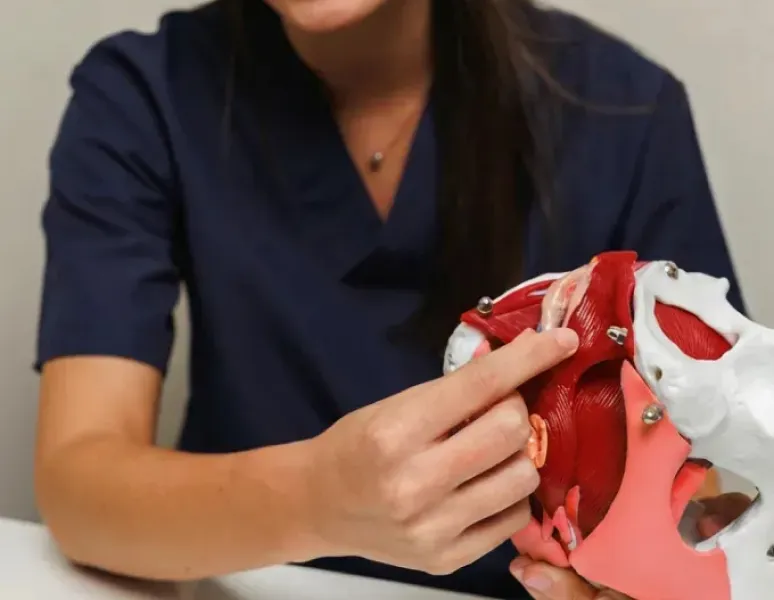

Men have pelvic floors, too, and they play a key role in male bladder, bowel, and sexual health. Pelvic floor dysfunction in men can show up as pain, urinary symptoms, sexual difficulties, and more. Symptoms are often triggered by injuries, surgeries such as prostatectomy, or repetitive habits like long-distance cycling. Pelvic floor therapy for men offers an effective, whole-person approach to treatment for everyone with a pelvic floor.
Pelvic health is really having a moment right now. For women and people with vaginal anatomy, it’s all over social media and news stories. It probably even comes up at happy hours with friends.
If you’re a man or have a penis, though, you might not be quite so aware of your pelvic floor. (Yep, you have one!) It’s high time you joined the pelvic floor party, so let’s dive in and demystify the basics of the male pelvic floor and pelvic floor dysfunction in men.
A note on language: Throughout this article, we’ll use the term “men” to refer to anyone assigned male at birth (AMAB) who retains penile anatomy. We understand that not all men have penises, and some AMAB people with penises don’t identify as men. However, the information here pertains widely to most people born with a penis. If you’re curious about gender-affirming care for trans folks and how it affects pelvic health, check out our resources here and here.
Do men have a pelvic floor? What does the male pelvic floor do?
Why yes, men definitely do have pelvic floors! Every person with a pelvis, regardless of their sex, has a pelvic floor. This is why understanding the pelvic floor is so valuable: it affects all of us.
The male pelvic floor is quite similar to its female counterpart in structure and function. In all sexes, the pelvic floor includes muscles, connective tissues (fascia, tendons, etc.), bone/joints, nerves, and blood vessels.
As in the female pelvic floor, male pelvic floor muscles are arranged in three layers from superficial (outermost) to deep. These muscle layers work together to achieve the functions of the pelvic floor.
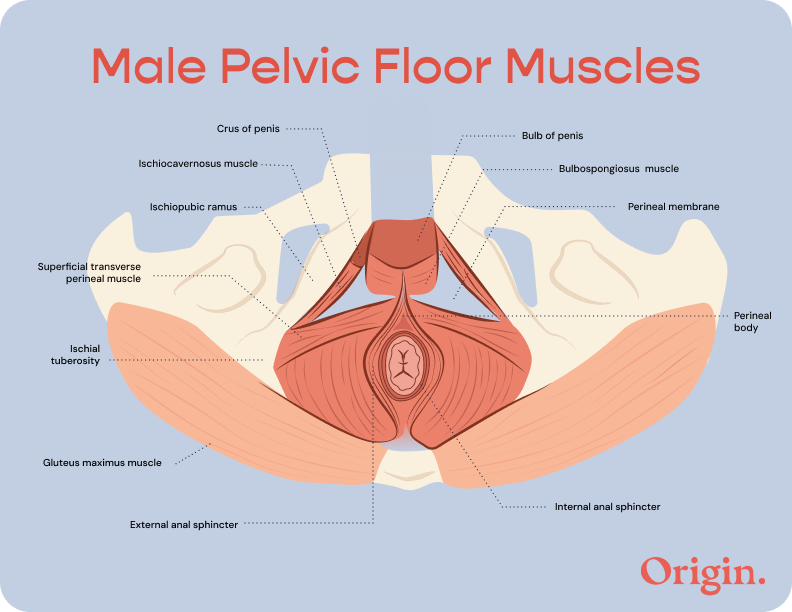
Regardless of your sex, your pelvic floor serves five key functions:
- Stability - muscular and connective tissue support of the pelvic joints and your entire core
- Support - a muscular “hammock” that supports your internal organs from below
- Sphincteric - closure of the urethral and rectal openings so you don’t pee or poop when you don’t intend to
- Sexual - regulation of muscular contraction and blood flow to the genitals during arousal and orgasm. In males, the pelvic floor is critical for establishing and maintaining erection and achieving ejaculation
- Sump Pump - circulation of blood and lymph fluid through the pelvis and abdomen. This is important for immune and circulatory health
What are the signs of pelvic floor dysfunction in men?
There are some signs and symptoms of pelvic floor dysfunction in men that also occur in women and nonbinary people. These include but aren’t limited to:
- Urinary problems: leaking pee, urgency to pee, pain when peeing, struggling to fully empty the bladder, etc.
- Bowel problems: loss of bowel control (fecal incontinence), urgency to poop, pain with pooping, chronic constipation, etc.
- Sexual dysfunction: pain during or after sex, decreased arousal (particularly the physical elements of arousal such as erection)
- Pelvic pain with daily activities such as sitting, standing, and more.
While symptoms like these are common to all sexes, some present differently in people with penile anatomy. For example, pelvic floor-related sexual dysfunction in men often shows up as erectile dysfunction (difficulty getting or keeping an erection). It can also appear as premature ejaculation or pain with ejaculation.
Among men with pelvic floor dysfunction, urinary symptoms and pelvic pain seem to be more common than sexual health concerns. It’s unclear if this is because men tend to underreport sexual problems or if it is simply less common. We definitely need more research to better understand this pattern.
What causes pelvic floor problems in men?
In all genders, including men, pelvic floor problems may arise from a variety of triggers. These triggers fall into three broad categories:
- Trauma or injury to the pelvic floor and related structures
- Habitual patterns that gradually stress the pelvic floor
- Health conditions that cause pelvic floor dysfunction
Trauma and injury
Think of this category as the triggers of most sudden (acute-onset) pelvic floor problems. If you fall and injure your tailbone, for example, you’ll likely experience immediate pain in that part of your pelvis. While your tailbone is healing, the pelvic floor muscles that attach to it can become shortened, overstretched, or resistant to stretch. This can lead to symptoms that last long after you’ve healed from the initial impact.
Surgery is also a form of trauma, albeit a controlled one. Any surgery to your pelvis, abdomen, lower spine, or hips can affect the muscles and nerves of your pelvic floor. Prostatectomy, a common surgery for people with prostate cancer or an enlarged prostate, is a major cause of pelvic floor disorders in men. More on that to come.
Habitual patterns
If traumatic injuries are the “quick” triggers of pelvic floor symptoms, daily habits and routines are the slow-burn causes. Certain activities, habits, and movement patterns are hard on your pelvic floor. While they may not present a problem if you only do them occasionally, consistent repetition can add up to cause pelvic floor dysfunction in men. Here are few examples.
Endurance cycling
Long-distance cycling is a good example. The pressure of a bike saddle against your perineum (the space between your genitals and anus) can compress the nerves that run through that area. Pelvic nerve compression can lead to pain, numbness, difficulty controlling the bladder, erectile dysfunction, and more. Calluses and tissue thickening around the sitting bones can cause gradual-onset pelvic pain.
That said, we need a lot more research to explore the relationship between cycling and pelvic floor problems. For example, we don’t have a clear understanding of the amount or intensity of cycling that causes these dysfunctions. Additionally, strategies such as saddle adjustments and medical bike fitting may help prevent nerve compression. Cycling can be a positive activity in many people’s lives: for most, it does more good than harm!
High-intensity exercise
Other types of high-intensity exercise may contribute to pelvic floor symptoms. Compared to their less active peers, men who regularly perform high-intensity exercise are more likely to experience lower urinary tract symptoms. These include symptoms ranging from bladder leaks and strong urges to pee to incomplete bladder emptying and a slow urine stream.
However, the benefits of exercise may offset these possible symptoms. For example, high-intensity exercisers were slightly less likely to experience erectile dysfunction and chronic prostatitis/pelvic pain than their more sedentary peers. Exercise can be an important part of your life for many reasons. Pelvic floor problems (or the fear of them) don't have to stop you.
Long story short: none of this means you need to give up your favorite sport or workout routine! You may simply need to look out for signs of irritation or pain, and dial back your training to let your pelvic floor recover.
Modifications to your exercise routine and treatment with a pelvic physical therapist can go a long way towards preventing and stopping pelvic floor spasms in men. Male pelvic floor physical therapy can help you address activity-related pelvic floor problems.
Prolonged sitting and bathroom habits
Other activities such as prolonged sitting (especially with poor posture) can create strain and imbalance in the pelvic floor. Over months or years, this can develop into pelvic pain and other problems.
Some learned habits may seem innocent at first, but they can lead to pelvic floor problems down the line. For example, if you go straight to the bathroom to pee every time you get home, you may inadvertently teach your body that opening your front door means it’s time to pee… right now, before you can get to the toilet.
These examples might make you think that everything you do is messing up your pelvic health, but don’t panic just yet. These types of pelvic floor disorders in men are preventable and treatable. In general, they respond quite well to pelvic floor therapy for men.
Health conditions
Certain medical conditions such as diabetes, Parkinson’s disease, and obesity increase the risk of pelvic floor dysfunction in men, particularly urinary incontinence. Additionally, erectile dysfunction may be an early indicator of cardiovascular disease in some men. While you may not be able to change or reverse all of these conditions, you don’t have to “just live with” pelvic floor symptoms as a consequence.
Ready to learn how pelvic floor physical therapy can help address the symptoms of a weak or tight pelvic floor in male individuals? Book a visit here to find out today: our expert clinicians can help you in person, virtually, or through a hybrid approach.
How does pelvic floor physical therapy work for men?
Pelvic floor therapy for men is quite similar to the approach for people with vaginal anatomy. The first visit usually involves a lot of talking: your physical therapist will ask you questions about your medical history; your bladder, bowel, and sexual health concerns; and your daily life.
This information helps your provider form a hypothesis for which tests and treatments are most likely to help. In Origin’s virtual care setting, a thorough discussion is particularly critical to guide next steps in your treatment.
Your clinician may then suggest assessments of your overall movement system. They may observe how you breathe, sit, stand, walk, and more. They might also closely assess your abdomen, spine, and hips, as these regions connect directly to your pelvis. If your physical therapist identifies restrictions, weakness, or other concerns in these areas, they’ll likely suggest treatments to address those issues.
Despite the name, pelvic floor physical therapy is a full-body approach to care. Pelvic physical therapists consider all the contributing factors that could affect your pelvic health. In some cases, this includes examining the pelvic floor tissues directly.
There are several ways to assess and treat the pelvic floor in people with penises. Some physical therapists use biofeedback devices that monitor pelvic floor muscle activity with sensors or ultrasound images of the muscles. These tools can help both the therapist and the patient see exactly how the muscles are functioning.
For some people, internal, intrarectal examination and treatment of the pelvic floor tissues are helpful. If your therapist thinks these could help you, they’ll explain what they plan to do and request your consent for the whole process. You’re in charge at all times, and you always have the right to approve or decline any treatments.
Can men do kegels?
Absolutely! Men can perform kegels (pelvic floor muscle contractions) to address a variety of pelvic floor symptoms, from urinary incontinence to erectile dysfunction. Kegels are most helpful when performed correctly without compensations. However, they aren’t the only way to engage your pelvic floor.
Note that kegel exercises for men aren’t a magic cure-all for all pelvic floor-related symptoms. In some situations, you may need to focus on relaxing and lengthening the pelvic floor muscles before you start engaging them with kegels. This is particularly common in people with pain conditions such as chronic pelvic pain syndrome, or CPPS (sometimes called “chronic prostatitis”).
A physical therapist specialized in men’s pelvic health can help you learn which approach is best for you. If indicated, they can teach you how to perform kegels for men properly.
What is prostatectomy? How does pelvic floor physical therapy help before and after?
Prostatectomy is a surgical procedure to remove part or all of the prostate, the gland surrounding your urethra that helps make semen. At Origin, it’s one of the most common reasons male patients come to see our clinicians.
Surgeons usually perform a prostatectomy to treat prostate cancer or an enlarged (but non-cancerous) prostate. There are many surgical approaches to prostatectomy, from open procedures through the low abdomen to robot-assisted variations to approaches through the urethra.
Regardless of the surgical approach, most patients experience some side effects that can improve with pelvic floor physical therapy. These can include but aren’t limited to urinary symptoms, sexual side effects, and pain.
Male pelvic floor physical therapy can help you prepare for surgery and recover more quickly after the procedure. Most of the research on pelvic floor physical therapy and prostatectomy has focused on post-surgery care and recovery of continence. However, more clinicians and researchers are focusing on presurgical “prehab” and the role of physical therapy in addressing sexual dysfunction after surgery.
Whether you’re planning for or have had prostate surgery, experiencing pelvic pain or other pelvic floor symptoms, or simply want to better understand the male pelvic floor, Origin’s expert clinicians can help. Schedule your first visit today and take control of your pelvic health.
- Aguila-Gimeno, Oscar et al. "Pelvic floor rehabilitation before radical prostatectomy: a systematic review." BMC urology vol. 25,1 224. 2 Sep. 2025, doi:10.1186/s12894-025-01932-2
- Cohen, Deborah et al. "The Role of Pelvic Floor Muscles in Male Sexual Dysfunction and Pelvic Pain." Sexual medicine reviews vol. 4,1 (2016): 53-62. doi:10.1016/j.sxmr.2015.10.001
- Gan*, Zoe, et al. "PD43-01 SYSTEMATIC REVIEW AND META-ANALYSIS OF CYCLING AND ERECTILE DYSFUNCTION." 2019. Journal of Urology, vol. 201, no. Supplement 4, WoltersKluwer, Apr. 2019, p. e755, doi:10.1097/01.JU.0000556569.85143.0a
- Geiger, S., et al. "320 Male Pelvic Floor Dysfunction: The Great Masquerader." The Journal of Sexual Medicine, vol. 17, no. Supplement 1, Jan. 2020, p. S79, doi:10.1016/j.jsxm.2019.11.141
- Huang, Haoxin, and Keke Cai. "Prognostic Factors for Urinary Incontinence After Robot-Assisted Radical Prostatectomy: A Systematic Review and Meta-Analysis." Journal of Robotic Surgery, vol. 19, no. 1, 2025, article 628, doi:10.1007/s11701-025-02803-6
- Huynh, Linda M, and Thomas E Ahlering. "Robot-Assisted Radical Prostatectomy: A Step-by-Step Guide." Journal of endourology vol. 32,S1 (2018): S28-S32. doi:10.1089/end.2017.0723
- Khera, Mohit. "Simple Prostatectomy." Medscape, 26 June 2018, emedicine.medscape.com/article/445996-overview
- Leslie, Stephen W., et al. "Transurethral Resection of the Prostate." StatPearls, StatPearls Publishing, 4 Sept. 2023, www.ncbi.nlm.nih.gov/books/NBK560884
- Molina-Torres, Guadalupe, et al. "Is Cycling Practice Related to Men's Pelvic Floor Dysfunctions? A Hypothesis-Generating Observational Study." International Journal of Environmental Research and Public Health, vol. 18, no. 4, Feb. 2021, article 1923, doi:10.3390/ijerph18041923
- Moore, Caitlin S et al. "Erectile dysfunction, vascular risk, and cognitive performance in late middle age." Psychology and aging vol. 29,1 (2014): 163-72. doi:10.1037/a0035463
- Myers, Christopher, et al. "Prevalence of Pelvic Floor Dysfunction in Male Athletes and Its Dose-Dependency in High-Intensity Exercise: A Scoping Review." Journal of Science and Medicine in Sport, vol. 29, 2026, pp. 351-59, doi:10.1016/j.jsams.2025.10.008
- Niknam, H., et al. "The Effect of Physiotherapy on Erectile Dysfunction Secondary to Prostatic Adenectomy: A Randomized Control Trial Study." Continence, vol. 15, supplement S, 2025, abstract 33, www.ics.org/2025/abstract/33
- Olagundoye, Olawunmi, et al. "A Scoping Review of Risk Factors for Urinary Incontinence in Older Men." BMC Geriatrics, vol. 23, no. 1, Sept. 2023, article 534, doi:10.1186/s12877-023-04249-7
- Terek-Derszniak, Małgorzata, et al. "Effectiveness of Pelvic Floor Rehabilitation After Radical Prostatectomy and Continence Recovery in Relation to Surgical Technique." Scientific Reports, vol. 16, no. 1, Mar. 2026, article 12378, doi:10.1038/s41598-026-36972-7
- Whalen, Michael. "Preventing Erectile Dysfunction after Radical Prostatectomy: Nerve-Sparing Techniques, Penile Rehabilitation, and Novel Regenerative Therapies." Prostatectomy, IntechOpen, 29 May 2019. Crossref, https://doi.org/10.5772/intechopen.79398
- Yaacov, David, et al. "The Effect of Pelvic Floor Rehabilitation on Males with Sexual Dysfunction: A Narrative Review." Sexual Medicine Reviews, vol. 10, no. 1, Jan. 2022, pp. 162-67, doi:10.1016/j.sxmr.2021.02.001
- Yani, Moheb S., et al. "Impaired Ability to Relax Pelvic Floor Muscles in Men With Chronic Prostatitis/Chronic Pelvic Pain Syndrome." Physical Therapy, vol. 102, no. 7, July 2022, article pzac059, doi:10.1093/ptj/pzac059