
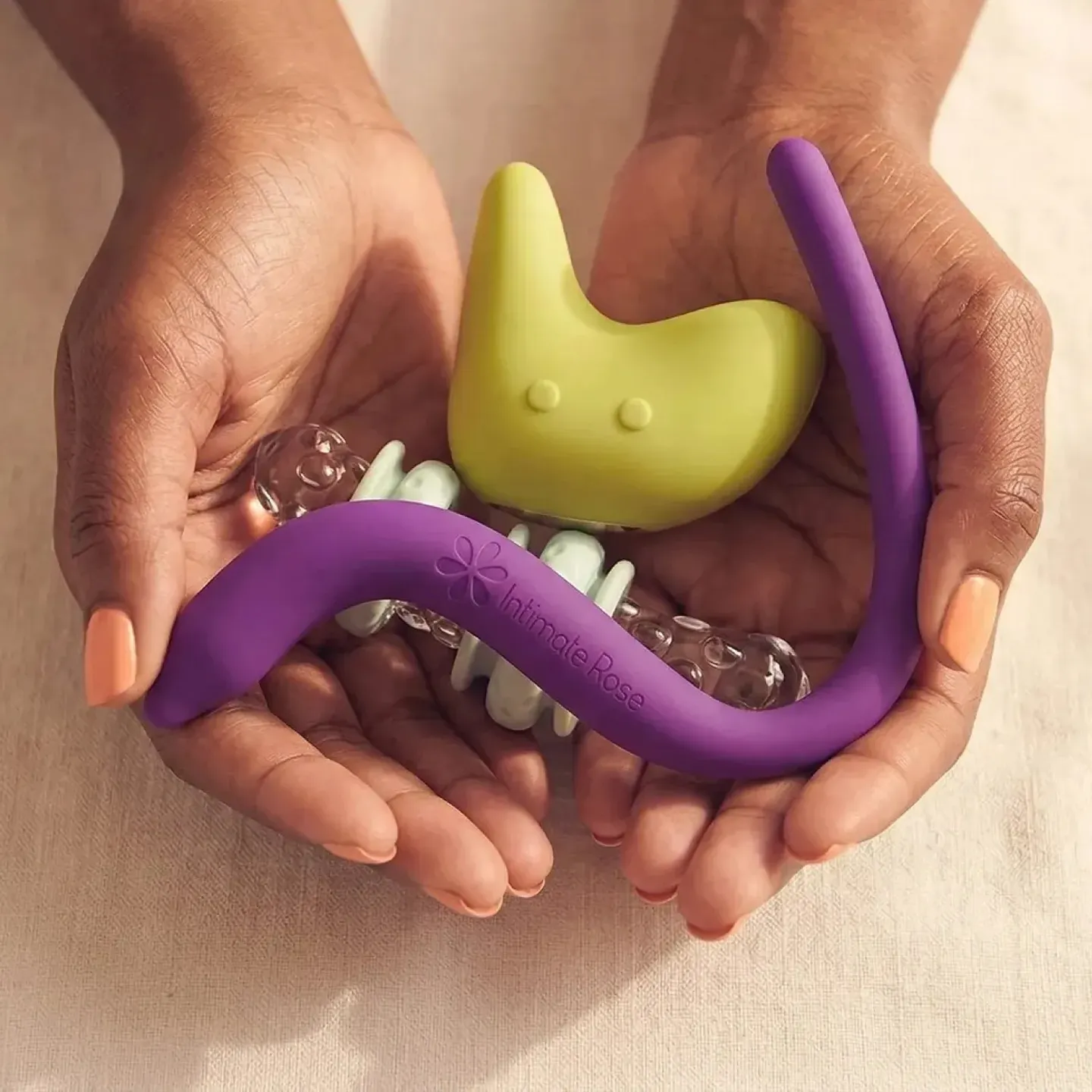
Pain with penetration is more common than many people realize, yet it’s often normalized as something to tolerate rather than treat. The medical term for pain with penetrative sex is dyspareunia. While there are more ways to experience sexual pleasure than through penetrative sex, this article specifically addresses those seeking to reduce and manage pain with penetrative sex.
A tight pelvic floor is one possible contributor to penetrative pain. When these muscles have difficulty relaxing, you may experience discomfort during sex, trouble inserting tampons or toys, or a sensation that your body is resisting penetration altogether.
However not all causes of painful sex are muscular in nature. Conditions such as endometriosis and vaginismus, among other medical conditions can play a role in painful sex. Additionally, life events like surgery (including gender-affirming ones like hysterectomy and vaginoplasty) and giving birth can also play a role.
“Your brain and muscles have to be talking to each other effectively,” explains Origin pelvic floor therapist Dr. Sarah Clampett, PT, DPT. “When that’s not happening, we have to retrain the communication process.”
These experiences can carry an emotional impact, making intimacy, whether with a partner or during masturbation, feel stressful instead of pleasurable. The good news is that penetrative pain is manageable; pain can be reduced and improved through care.
With guidance from a pelvic floor physical therapist and the thoughtful use of pelvic floor therapy tools, many people can reduce pain, rebuild comfort, and reconnect with penetrative pleasure on their own terms.
Evidence supports this approach:
- A 2019 randomized controlled trial of 64 female (likely cisgender) participants demonstrated that pelvic floor care significantly decreased intercourse pain and improved arousal, lubrication, orgasm, satisfaction, and overall sexual function in those experiencing penetrative pain. (These improvements were based on self-report after treatment, and the researcher didn't objectively measure lubrication or arousal for example.)
- A 2024 systematic review found that pelvic floor muscle training effectively reduces penetrative pain, improves sexual function, and enhances quality of life for people with genito-pelvic pain or penetration disorders.
How to relax your pelvic floor muscles
The pelvic floor is closely connected to the nervous system, meaning your brain and body are constantly communicating about whether an experience feels safe. When the body anticipates pain, stress, or pressure, pelvic floor muscles may tighten automatically as a protective response, often without conscious control.
Gradual exposure to comfortable touch, arousal, and low-pressure insertion helps teach the brain that penetration does not equal danger. Over time, this brain-body connection allows muscles to soften more easily and reduces the reflex to guard or brace. A recent 2025 study found that vaginal dilator therapy significantly improved sexual function and reduced pain in those with vaginismus alongside biofeedback, for instance. (Pelvic floor therapy works best when combining treatment techniques!)
Healing a tight pelvic floor isn’t about forcing penetration or “pushing through” discomfort. Instead, it’s about rebuilding safety, confidence, and pleasure at a pace that works for you. The tools mentioned below encourage gradual progress, helping your pelvic floor learn that gentle insertion can feel safe and comfortable on your terms. Throughout your journey, be sure to check in with your body, use the recommended lubrication, and adjust your expectations around penetration.
It’s important to note that wands and dilators aren’t quick, one-size-fits-all fixes. They’re supportive tools often recommended alongside pelvic floor physical therapy to help retrain muscles and build nervous system safety. Preparing your body for penetration often begins before sex itself. Some people choose to use a dilator or pelvic wand days or hours prior to sex to gently release tension before intercourse.
Vaginal dilators
Vaginal dilators are medical tools designed to help gently and gradually introduce penetration, allowing pelvic floor muscles to learn how to relax without creating sensations of pain or pressure. Pelvic floor specialists often recommend dilators for conditions like vaginismus, but they can benefit anyone managing penetrative pain, whether from a tight pelvic floor or other medical conditions.
Dilators typically come in progressively larger sizes: this encourages you to progress slowly and gradually rather than rushing to bigger sizes or pushing through discomfort. Many pelvic floor therapists suggest beginning dilator work as a therapeutic exercise, not a sexual activity, so your body can build tolerance and confidence at its own pace.
Pelvic floor wands
Pelvic wands serve a slightly different purpose than dilators. Designed for internal trigger point release, they function much like massage therapy for tight shoulders or hips, helping target specific areas of muscle tension within the pelvic floor.
Using a pelvic wand alongside slow breathing can help calm the nervous system and reduce guarding during insertion. Because technique and timing matter, working with a pelvic floor physical therapist can help you learn how to safely incorporate both dilators and pelvic wands into a personalized plan for comfortable penetration.
Pelvic floor–friendly sex toys
Certain sex toys can support pleasure while reducing pelvic floor-related pain. Unlike dilators and wands, these pelvic floor–friendly products are designed specifically for sex, whether it is solo or partnered. The idea behind pelvic-floor friendly sex toys is to help interrupt the cycle where pain leads to muscle guarding, which then leads to more pain.
How can pleasure support pelvic floor healing?
“Pleasure and sexual intimacy can be addressed as part of pelvic floor care,” emphasizes Clampett. “You can talk to your pelvic floor therapist about sex, and be informed about the science behind pleasure and arousal throughout your care.”
Sexual arousal, including orgasms, can encourage the pelvic floor muscles to relax, which can make sex feel more comfortable over time. Specific sex toys, optimized for those who experience penetrative pain, can help you ease into this process.
OhNut
The OhNut is a wearable device that gently limits penetration depth during partnered sex. Made of soft, silicone, stackable rings worn at the base of a partner’s penis or phallic toy, it acts as a shock-absorbing buffer that allows couples to customize depth based on comfort.
This tool can make penetration feel more manageable while still allowing closeness and pleasure. Because couples can use the stackable rings to adjust depth in the moment, many also find it helpful as a communication tool to create space to explore intimacy without fear of triggering discomfort.
Kiwi
The Kiwi is designed for pelvic relaxation: it pairs shallow insertion with optional external clitoral stimulation. Its shape and gentle vibration can encourage muscle relaxation and increased blood flow, which may help the pelvic floor soften during arousal.
With two motors offering different vibration sensations from lighter buzzing to deeper, rumbly stimulation, the Kiwi can serve as a beginner-friendly entry point for those reintroducing penetration. Some use it as a bridge between therapeutic tools like vaginal dilators and partnered sex, while others incorporate it into solo or partnered play focused on comfort, exploration, and rebuilding confidence.
How can pleasure be part of pelvic floor care?
Experiencing painful sex can be emotionally heavy. It can affect how you relate to intimacy, pleasure, and even your own body.
“You’re not alone,” adds Clampett. “Many people struggle with painful sex, even if they don’t talk about it. There are lots of options to treat and manage your discomfort. You’re in charge of your care journey and pelvic floor therapists like me are there to support and collaborate with you.”
Pelvic floor–friendly sex toys can be helpful tools along the way, but they don’t replace the guidance of a licensed professional. Working with a pelvic floor therapist can help you better understand your symptoms, learn how to relax your muscles, and navigate intimacy with personalized support.
“There’s no such thing as TMI,” assures Clampett. “We’re here for you and we’ll get you on track and work with you towards your healing goals.”
If you’re ready to manage painful sex, book an appointment with a pelvic floor therapist with sessions costing as little as $0 per visit with insurance.
- Ghaderi F, Bastani P, Hajebrahimi S, Jafarabadi MA, Berghmans B. Pelvic floor rehabilitation in the treatment of women with dyspareunia: a randomized controlled clinical trial. International Urogynecology Journal. 2019;30(11):1849–1855. doi:10.1007/s00192-019-04019-3. PMID: 31286158; PMCID: PMC6834927
- Jokar F, Fani M, Tarkesh Isfahani N, Sabahi R. Effectiveness of biofeedback with dilator therapy for sexual function in women with primary vaginismus: randomized controlled trial study. International Urogynecology Journal. 2024. doi:10.1007/s00192-024-06011-y. PMID: 39692875
- Silva P, Amaral A, Coutinho M. The effects of physiotherapy interventions in the treatment of genito‑pelvic pain or penetration disorder: a systematic review. Continence. 2024;12S:101569. doi:10.1016/j.cont.2024.101569