Mantener un programa de ejercicio de cualquier tipo puede ser muy difícil, especialmente si te preocupa “hacerlo mal”. Nuestros clínicos en Origin encuentran esta preocupación todo el tiempo, especialmente respecto al ejercicio de fortalecimiento muscular: muchas personas asumen que el entrenamiento de resistencia solo vale la pena si están siguiendo el programa “exacto correcto”. Piensan que están perdiendo el tiempo si no tienen el equipo o plan “perfecto” en su lugar.
Para personas con problemas del piso pélvico, a menudo hay otra capa de consternación. Les preocupa que el entrenamiento de resistencia, especialmente levantar pesas pesadas, pueda empeorar sus síntomas del piso pélvico.
Bueno, lectores, tenemos buenas noticias. Ambas preocupaciones, aunque comprensibles, no están justificadas. (¡Tenemos la ciencia para respaldarlo!)
El Colegio Estadounidense de Medicina del Deporte (ACSM) recientemente publicó su primera gran actualización a las directrices de entrenamiento de resistencia desde 2009. Para escribir estas directrices, sus investigadores profundizaron mucho, examinando 137 revisiones sistemáticas que cubrieron datos de más de 30,000 participantes.
Los hallazgos cuestionan mucho de lo que el mundo del fitness nos ha estado diciendo sobre el entrenamiento de resistencia para la longevidad y la salud. Tienen implicaciones reales para cómo pensamos sobre el entrenamiento de fuerza, la longevidad y la salud del piso pélvico, así que vamos a profundizar.
El mejor ejercicio para la longevidad es el ejercicio consistente
La posición actualizada del ACSM hace una recomendación muy clara: los adultos sanos deben entrenar con resistencia al menos dos veces a la semana, poner esfuerzo alto e involucrar todos los grupos musculares principales.
En contraste con sus directrices anteriores, la versión actual elimina las recomendaciones específicas para series, repeticiones o duraciones de sesión. El énfasis ahora está en la consistencia y el esfuerzo, no en un programa meticulosamente diseñado.
La posición encontró que muchas formas de entrenamiento de resistencia produjeron ganancias reales en fuerza, equilibrio, resistencia y función física. El entrenamiento basado en el hogar funcionó. El ejercicio con bandas de resistencia elástica funcionó. Los formatos no tradicionales (léase: no solo el gimnasio) funcionaron.
Resulta que no hay un único mejor entrenamiento para la longevidad y la salud. El tipo de ejercicio de resistencia que hagas importa mucho menos que hacerlo consistentemente.
Reglas del entrenamiento de resistencia: lo que realmente importa
La nueva posición del ACSM también refutó varias creencias populares sobre el entrenamiento de resistencia. Desglosemos las preguntas comunes y los puntos clave del estudio para cada una.
¿Tienes que entrenar hasta el agotamiento muscular?
¡No! Muchos entrenadores abogan por levantar hasta el “agotamiento” muscular completo, en el cual no podrías completar otra repetición con buena forma. Sin embargo, este enfoque no produjo mejores resultados que detenerse justo antes del agotamiento. En resumen: el agotamiento no es necesario, pero poner esfuerzo alto sigue siendo necesario.
¿Tienes que levantar pesado para construir músculo?
No necesariamente. Si bien ciertamente hay muchos beneficios de levantar pesado, no es el santo grial que algunos influencers del fitness querrían hacerte creer. De hecho, si tu objetivo es hipertrofia (construir músculos más grandes), un peso moderado puede ser más útil.
Las directrices del ACSM identificaron que un mayor volumen de ejercicio (10 o más series de ejercicio por semana para un grupo muscular dado) fue mejor para aumentar el volumen muscular. Además, los ejercicios que enfatizan la fase excéntrica (piensa: la parte de bajada de una sentadilla) fueron los mejores para la hipertrofia.
Para realizar ejercicio de alto volumen, principalmente excéntrico, simplemente no puedes levantar tu peso más pesado: tienes que ir un poco más ligero, ¡y está bien!
¿Son mejores las pesas libres o las máquinas de pesas para el entrenamiento de fuerza?
Resulta que ninguna. Usar máquinas en comparación con pesas libres no hizo diferencia significativa en los resultados de fuerza, y no hay suficientes datos para decir si importa para aumentar la masa muscular o la potencia. En resumen, puedes obtener beneficios de uno u otro tipo de pesas o ambos.
¿Es el entrenamiento de fuerza en superficies inestables mejor para mi equilibrio?
Quizás no. Levantar pesas mientras estás de pie o sentado en superficies inestables como almohadillas de espuma o pelotas suizas puede hacer que los ejercicios se sientan más desafiantes e interesantes. Sin embargo, no tenemos suficientes datos para probar que mejora los resultados del equilibrio.
En comparación con el entrenamiento en terreno estable, el entrenamiento en superficies inestables no aumenta las ganancias de fuerza. La conclusión: puedes agregar inestabilidad a tu rutina para un desafío adicional, pero no es necesario.
¿Tengo que mantener los músculos bajo tensión durante mucho tiempo y limitar mis descansos?
No y no. Ni el tiempo durante el cual los músculos estuvieron bajo tensión (piensa: cuánto tiempo te toma realmente realizar una repetición de una sentadilla), ni la duración de los períodos de descanso entre series, tuvieron impactos significativos en los resultados.
¿Qué factores impactan más los resultados del entrenamiento de resistencia?
¡Me alegra que preguntes! Los investigadores del ACSM concluyeron que los siguientes tres factores fueron más importantes para una rutina de entrenamiento de resistencia efectiva:
- Entrenamiento de resistencia al menos dos veces a la semana
- Usar carga o resistencia suficiente para hacer los ejercicios de alto esfuerzo
- Moverse a través del rango completo de movimiento durante cada ejercicio
¡Es tan simple! Si has estado evitando el entrenamiento de fuerza hasta que tengas tiempo para desarrollar el plan de entrenamiento perfecto, esta es tu evidencia de que no necesitas esperar.
¿Trabajar duro o trabajar poco? Entendiendo los máximos de repeticiones
“¡Pero espera!”, podrías estar pensando. “¿Qué significa ‘esfuerzo alto’? ¿Cómo sé que estoy trabajando lo suficientemente duro?”
Esta es una pregunta justa. Algo que se siente un poco difícil para ti podría ser fácil para tu vecino y casi imposible para tu mejor amigo: ¡el sentido del esfuerzo de cada uno es único!
Por eso las nuevas directrices del ACSM apoyan el uso de herramientas individualizadas para evaluar el esfuerzo durante el entrenamiento de fuerza. En entrenamiento de resistencia, el concepto de “máximo de repeticiones” es una herramienta útil para cuantificar el esfuerzo que estás ejerciendo.
Tu máximo de una repetición (1RM) es simplemente el peso más pesado que puedes levantar para una repetición con buena forma. Es un punto de referencia usado en investigación y coaching para describir niveles de esfuerzo relativo. Sin embargo, la mayoría de las personas no necesitan probar formalmente su 1RM: en la práctica, puedes usar el esfuerzo percibido para encontrar tu punto óptimo.
Las nuevas directrices apoyan el entrenamiento de fuerza “cerca del agotamiento” en lugar del agotamiento muscular completo.
En términos prácticos, esto significa terminar una serie cuando tengas aproximadamente dos o tres repeticiones de buena calidad restantes. (Para referencia, esto es aproximadamente el 80% de tu 1RM).
Las últimas repeticiones de una serie deben sentirse difíciles, pero no deberías llegar al punto de sacrificar buena forma o ser incapaz de continuar. Sin embargo, cada ejercicio aún debe sentirse como si requiriera “esfuerzo alto”. Para mantener este esfuerzo a medida que te adaptas y te fortaleces, podrías necesitar hacer más repeticiones o agregar más peso: esto se llama sobrecarga progresiva.
La sobrecarga progresiva para mujeres, hombres y todos en el medio no requiere empujar hasta el agotamiento. No tienes que llegar al máximo, pero sí necesitas desafiarte.
Entrenamiento de fuerza para la longevidad: la clave para envejecer con gracia
Hay mucho más en el entrenamiento de resistencia que aumentar tu tamaño y fuerza muscular. A menos que seas fisicoculturista profesional, probablemente tengas otras razones para entrenar con resistencia.
Quizás lo que más te interesa es mantener tu densidad ósea o evitar la pérdida muscular durante la pérdida de peso intencional. Quizás te enfocas en mejorar tu equilibrio o preservar tu independencia a medida que envejeces. ¡Afortunadamente, el entrenamiento de resistencia puede ayudarte con todos estos objetivos!
El entrenamiento de resistencia es una herramienta poderosa para preservar la salud ósea, particularmente en personas posmenopáusicas en riesgo de osteoporosis. También puede ayudar a las personas que usan GLP-1 para el manejo del peso a combatir la pérdida excesiva de músculo.
Los investigadores del ACSM también encontraron que el entrenamiento de resistencia mejoró consistentemente varias medidas funcionales, incluyendo velocidad de marcha (qué tan rápido caminas), la prueba Timed Up and Go (TUG) y una prueba de levantarse de una silla. Todas estas medidas evalúan la fuerza y función de la extremidad inferior.
Estas pruebas son todas indicadores fuertes de tu capacidad funcional y predictores de resultados de salud en adultos mayores. Están directamente conectadas a la longevidad: múltiples estudios de medidas como el TUG y versiones de la prueba de levantarse de una silla muestran que puntuaciones bajas predicen mayor riesgo de discapacidad e incluso mortalidad en adultos mayores.
Estos resultados nos recuerdan que la fuerza y función de la extremidad inferior son algunos de los indicadores más fuertes que tenemos de qué tan bien y durante cuánto tiempo una persona vivirá de forma independiente. Recuerda: no necesitas una membresía de gimnasio cara o equipo sofisticado para mejorar la función de tu extremidad inferior. La posición confirmó que el entrenamiento de resistencia basado en el hogar y el entrenamiento con bandas elásticas fueron suficientes para mejorar estos resultados funcionales.
El mejor entrenamiento para la longevidad es el que realmente harás, así que elige un enfoque que funcione para ti.
¿Es seguro levantar pesas con disfunción del piso pélvico?
En resumen, ¡sí!
Uno de los mitos más persistentes en la salud del piso pélvico es que el entrenamiento de resistencia, especialmente levantar pesado, puede ser perjudicial para tu piso pélvico. Las personas que sienten síntomas como fugas urinarias, presión pélvica o prolapso de órganos pélvicos (POP) a menudo piensan que deben evitar cualquier tipo de levantamiento de pesas.
¡La investigación viene al rescate! La literatura científica no respalda esta idea.
Una encuesta de 2019 de casi 4,000 personas AFAB* encontró algo interesante: las personas físicamente activas que levantaban pesos más ligeros (menos de ~30 lbs) eran en realidad más propensas a reportar síntomas de POP que aquellas que levantaban más pesado (más de ~110 lbs). ¡Más evidencia de los beneficios de levantar pesado!
Otra investigación respalda los beneficios del entrenamiento de resistencia en combinación con el entrenamiento muscular del piso pélvico. Un ensayo controlado aleatorio dividió a 26 mujeres mayores con incontinencia urinaria de esfuerzo en dos grupos. Un grupo hizo solo entrenamiento muscular del piso pélvico; el otro combinó entrenamiento del piso pélvico con entrenamiento de pesas de intensidad moderada. El grupo de combinación alcanzó la resolución de síntomas más rápido: casi el 60% estaban sin fugas a las cuatro semanas, en comparación con aproximadamente el 15% en el grupo solo de piso pélvico.
Un pequeño estudio de 17 personas mayores con vagina examinó el impacto del entrenamiento de resistencia en el ángulo del cuello vesical, un indicador temprano del riesgo de prolapso e incontinencia. Los grupos realizaron entrenamiento de resistencia con contracciones musculares del piso pélvico simultáneas, solo entrenamiento de resistencia, o ninguno. En comparación con los otros grupos, el grupo de combinación mostró una mejoría en el ángulo del cuello vesical a las 12 semanas.
En conjunto, estos hallazgos sugieren que el entrenamiento de resistencia puede apoyar la rehabilitación del piso pélvico en lugar de retrasarla.
Para personas con síntomas del piso pélvico, la evidencia no respalda retirarse del entrenamiento de resistencia. Con la orientación adecuada, levantar pesado para mujeres con disfunción del piso pélvico no solo es posible sino que puede apoyar activamente la recuperación.
Recuerda: no tienes que levantar súper pesado para obtener los beneficios del entrenamiento de resistencia. Pero si quieres levantar pesado, ¡no tienes que dejar que los problemas del piso pélvico se interpongan en tu camino! La Directora de Educación Clínica de Origin, Liz Miracle, recientemente habló de este tema en el podcast de CNN Chasing Life con el Dr. Sanjay Gupta: ¡escúchalo aquí para aprender más!
*AFAB: asignado femenino al nacer
¿Cómo puedo fortalecerme mientras mantengo un piso pélvico saludable?
Los fisioterapeutas especializados en piso pélvico de Origin son expertos en movimiento y salud pélvica: están aquí para ayudarte a aprender cómo entrenar la fuerza de una manera que apoye tu piso pélvico.
Durante una cita con tu fisioterapeuta especializado en piso pélvico, hablarás sobre cualquier síntoma pélvico que tengas, desde presión vaginal hasta fugas hasta dolor. Tu fisioterapeuta te enseñará estrategias para abordar estos síntomas para que puedas entrenar sin empeorarlos.
Una favorita entre nuestros pacientes es la técnica de “exhalar al hacer esfuerzo”. Exhalas durante la parte más difícil de un movimiento para reducir la presión dentro del abdomen y la pelvis. Esto también facilita la activación de los músculos del piso pélvico durante el esfuerzo. En una sentadilla, por ejemplo, inhalas al bajar y exhalas mientras te empujas hacia arriba para ponerte de pie:
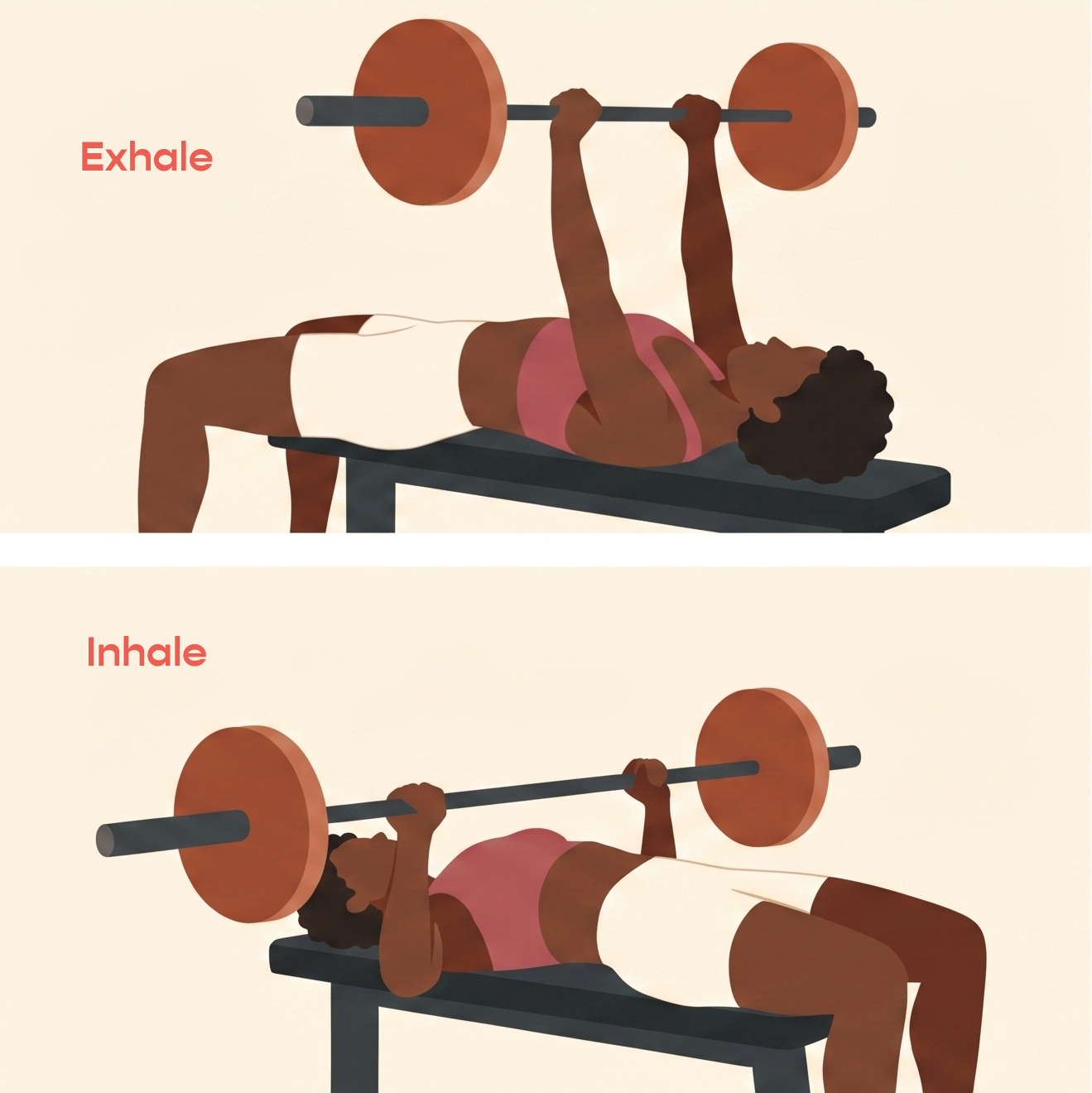
Con la orientación correcta, estarás en camino a levantar sin síntomas. ¿Listo para comenzar? Programa tu primera cita con un clínico de Origin aquí.
- Ascencio, Edson J et al. "Timed up and go test predicts mortality in older adults in Peru: a population-based cohort study." BMC geriatrics vol. 22,1 61. 18 Jan. 2022, doi:10.1186/s12877-022-02749-6
- Currier, Brad S et al. "American College of Sports Medicine Position Stand. Resistance Training Prescription for Muscle Function, Hypertrophy, and Physical Performance in Healthy Adults: An Overview of Reviews." Medicine and science in sports and exercise vol. 58,4 (2026): 851-872. doi:10.1249/MSS.0000000000003897
- Forner, Lori B et al. “Symptoms of pelvic organ prolapse in women who lift heavy weights for exercise: a cross-sectional survey.” International urogynecology journal vol. 31,8 (2020): 1551-1558. doi:10.1007/s00192-019-04163-w
- Helms, Eric R et al. “Application of the Repetitions in Reserve-Based Rating of Perceived Exertion Scale for Resistance Training.” Strength and conditioning journal vol. 38,4 (2016): 42-49. doi:10.1519/SSC.0000000000000218
- Makizako, Hyuma et al. “Predictive Cutoff Values of the Five-Times Sit-to-Stand Test and the Timed "Up & Go" Test for Disability Incidence in Older People Dwelling in the Community.” Physical therapy vol. 97,4 (2017): 417-424. doi:10.2522/ptj.20150665
- Menezes, Enaiane Cristina et al. "Acute and Chronic Effect of Resistance Training on Pelvic Floor Muscle Morphology and Function in Older Women: A Clinical Trial." Movement & Sport Sciences - Science & Motricité, vol. 124, 2024, pp. 1–11. doi: https://doi.org/10.1051/sm/2024004
- Virtuoso, Janeisa Franck et al. “Effect of Weight Training with Pelvic Floor Muscle Training in Elderly Women with Urinary Incontinence.” Research quarterly for exercise and sport vol. 90,2 (2019): 141-150. doi:10.1080/02701367.2019.1571674
- Zhao, Fang et al. “Optimal resistance training parameters for improving bone mineral density in postmenopausal women: a systematic review and meta-analysis.” Journal of orthopaedic surgery and research vol. 20,1 523. 27 May. 2025, doi:10.1186/s13018-025-05890-1